That sound hits the nervous system like an emergency broadcast.
It starts before dawn. It cuts through the quiet dark with zero hesitation. Your heart rate spikes instantly, your palms sweat, and your body floods with cortisol—the exact hormone meant to help you sprint away from a predator in the wilderness. Except there is no predator. There is only a small plastic box on your bedside table demanding that you wake up immediately.
We have normalized this daily shock. Millions of people subject themselves to a miniature panic attack every single morning, wondering why they feel foggy, irritable, and exhausted by noon.
Consider the typical Monday morning. The room is pitch black. The air is cold. Without warning, a digital chirp or a blaring guitar riff tears through the silence. You jolt awake. You slap at the snooze button, plunging back into a restless, fractured half-sleep, only for the violence to repeat nine minutes later. By the time your feet finally hit the floor, your nervous system has already been battered twice.
This is not a natural way to wake up. For thousands of years, human biology evolved to respond to a very different kind of morning signal: the slow, gradual brightening of the horizon.
The Biology of the Rude Awakening
To understand why traditional alarms leave you feeling like a walking zombie, you have to look at what happens inside the brain during the final hours of sleep.
Imagine you are deep in a stage of slow-wave sleep or rapid eye movement sleep. Your brain is busy repairing tissue, consolidating memories, and sorting through the emotional residue of yesterday. Your body temperature drops. Your breathing slows.
Then comes the alarm.
A blaring audio alarm forces an abrupt transition from deep sleep to full alertness. Sleep scientists call this phenomenon sleep inertia. It is that heavy, disoriented fog that makes you feel as though your limbs are filled with lead. When you are yanked out of sleep by a sudden loud noise, your brain stays in a state of cognitive impairment for up to an hour. Your reaction times slow down. Your problem-solving skills plummet.
Worse yet, that sudden spike in adrenaline and cortisol sets a jittery tone for the entire day. You start your morning in a state of physiological stress.
Now, contrast that experience with the way our ancestors woke up. As the sun crept over the edge of the earth, photons filtered through eyelids, hitting specialized photoreceptors in the eyes called intrinsically photosensitive retinal ganglion cells. These cells do not help you form visual images; instead, they communicate directly with the suprachiasmatic nucleus—the master clock in your brain.
This internal clock registers the light and quietly begins dismantling the machinery of sleep. It signals the pineal gland to stop producing melatonin, the hormone that makes you drowsy. It gently nudges your core body temperature upward. It releases a small, measured wave of cortisol and dopamine.
By the time you actually open your eyes, your body has been preparing for wakefulness for twenty minutes. You are not being dragged out of bed; you are arriving there naturally.
Replicating the Dawn Indoors
Most of us do not live in glass huts where the sunrise can wash over our faces. We live in insulated bedrooms with heavy curtains, waking up long before the sun in the dead of winter, or rushing to get to work while the sky is still the color of wet concrete.
This mismatch between modern schedules and ancient biology created a quiet engineering revolution on bedside tables everywhere.
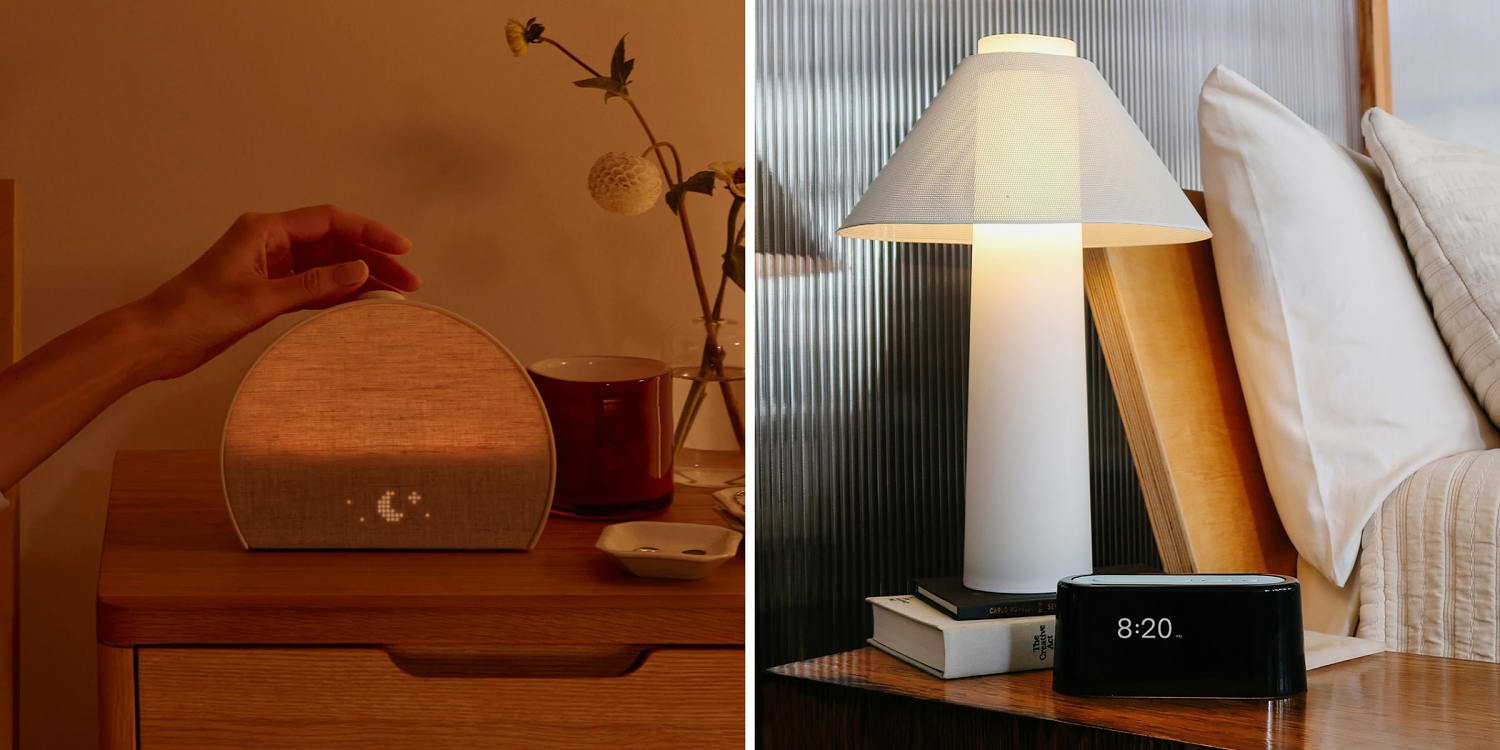
Sunrise alarm clocks attempt to bridge that gap. Instead of relying on a speaker to rattle your eardrums, these devices use a built-in array of gradual LEDs to mimic the earth's rotation. Thirty minutes before your set wake time, the lamp begins to emit a faint, deep red glow, mimicking the earliest light of dawn. Over the next half-hour, that light slowly brightens and shifts from amber to a crisp, warm white, filling the room.
It sounds simple, almost deceptively so. Can a lamp really compete with the blaring siren of a smartphone?
To find out, look at the physiological data. Studies tracking participants waking up to simulated dawn light versus traditional audio alarms show a measurable drop in morning cortisol spikes. People waking up to light report feeling significantly less groggy. Their cognitive test scores immediately after waking are sharper.
One user, a graphic designer named Marcus who spent winters battling chronic fatigue, described the shift vividly. For years, he woke up to a heavy metal guitar riff at maximum volume. He lived with a low-grade sense of dread every night before bed, knowing what awaited him at seven in the morning. When he switched to a sunrise simulator, the change was disorienting at first. There was no panic. There was just a quiet realization that the room was getting lighter.
"The first morning, I thought the power had flickered on," Marcus recalled. "By the third morning, I realized I was sitting up in bed before the audio backup even went off. My body just knew."
Choosing the Right Light for Your Room
Not all sunrise clocks are built the same, and navigating the market can feel like sorting through a tech catalog written in a foreign language.
Some models prioritize ultra-bright lumens, capable of lighting up an entire bedroom like a movie set. Others focus on the audio side, pairing the light gradient with ambient nature sounds—gentle rain, rustling leaves, or distant bird song—rather than digital beeps.
When evaluating these devices, pay close attention to the light spectrum. The best units use multi-colored LEDs that transition smoothly from red to yellow to white, accurately replicating the physics of morning sunlight. Cheap alternatives often just flip on a harsh white light at a low percentage, which feels more like an office fluorescent tube turning on in the middle of the night than a natural dawn.
Another crucial factor is ease of use. If programming your alarm requires navigating a labyrinth of tiny buttons in the dark, the device will end up in a drawer within a week. Look for intuitive controls, reliable backup batteries for power outages, and display dimming features so your bedroom stays pitch black when you actually need to sleep.
The Quiet Power of a Better Morning
Changing how you wake up will not solve all of life's problems. It will not clear your inbox, pay your bills, or make your commute any shorter.
What it will do is change the foundation upon which your day is built.
Think about the difference between starting your day defending yourself against a perceived threat versus waking up as though the morning were arriving just for you. That subtle shift in chemistry ripples outward. It influences how you speak to your family over breakfast, how you handle a crisis at work, and how patient you are with yourself when things go wrong.
We spend a fortune on ergonomic office chairs, high-end mattresses, and expensive supplements, all in the pursuit of well-being. Yet we often neglect the exact moment consciousness returns to us each day.
Turn down the volume. Let the light in. Give your brain the morning it was actually designed to experience.


