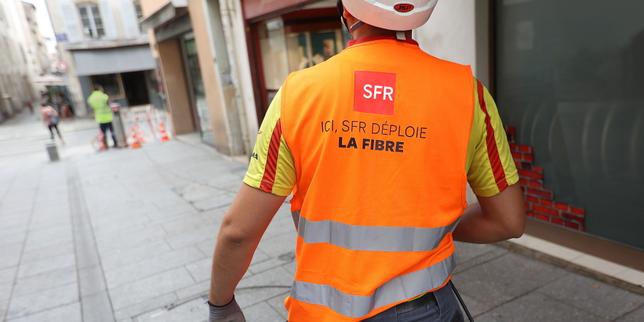
The proposed sale of SFR is not just another corporate liquidation. It represents the definitive collapse of the "buy everything with debt" model that defined European telecommunications for a generation. For years, Patrick Drahi’s Altice empire operated as a high-stakes financial experiment, fueled by cheap credit and an insatiable appetite for acquisition. Now, with interest rates transformed and a multi-billion-euro debt pile looming, the forced deconstruction of France’s second-largest operator is sending shockwaves through Brussels and every major capital on the continent.
This is the beginning of a tectonic shift. For decades, European regulators have clung to the dogma of four-player competition in every national market to keep consumer prices low. That era is over. The disintegration of Altice France serves as the catalyst for a consolidated European market where only the massive survive. Investors are no longer looking at subscriber counts; they are looking at the brutal reality of capital expenditure required for 5G and fiber-to-the-home (FTTH) rollouts.
The Debt Trap and the Death of the Outsider
Patrick Drahi was once the darling of the banking world. By using leveraged buyouts to snap up assets like SFR, he built a giant that seemed untouchable. However, the mechanism was fragile. The strategy relied on the belief that interest rates would remain near zero indefinitely and that cash flow from subscribers would always outpace the cost of servicing the debt.
That math failed. As the European Central Bank raised rates, the cost of maintaining the Altice debt mountain became unsustainable. SFR found itself in a pincer movement. On one side, it faced aggressive price wars from competitors like Free and Bouygues. On the other, it needed to invest billions in infrastructure just to keep its network from becoming obsolete. When a company spends more on interest payments than it does on upgrading its towers, the end is inevitable.
The potential buyers for SFR assets—ranging from rival operators to private equity vultures—are not looking to save a brand. They are looking to strip the infrastructure. This is the "copper-to-gold" transition, where the physical assets of the network are worth more than the brand loyalty of the people using it.
Brussels and the Four Player Myth
For a decade, the European Commission’s competition authorities, led by voices like Margrethe Vestager, fought tooth and nail to prevent mergers that would reduce the number of operators from four to three in any given country. The logic was simple: more players equals lower prices for the average citizen.
It worked, but it came at a hidden cost. European telcos became the "poor men" of the global tech sector. While American and Chinese operators consolidated and used their massive scale to fund innovation in 6G and satellite integration, European firms remained fragmented, small, and burdened by low margins.
The SFR situation forces a change in perspective. Regulators are starting to realize that a bankrupt fourth player is worse for competition than a healthy third player. If SFR is absorbed or carved up, France moves toward a three-player market. This isn't a failure of competition; it is a necessary evolution. To build the "Gigabit Society" that the EU dreams of, companies need massive balance sheets. You cannot build a continent-wide 5G network on the margins of a discount mobile plan.
The Infrastructure Split
One of the most significant trends highlighted by the Altice crisis is the decoupling of "NetCos" and "ServCos." In the old world, a telecom company owned the towers, the cables in the ground, and the relationship with the customer. That model is dying.
Modern telecom giants are increasingly selling off their passive infrastructure—the steel towers and the glass fibers—to specialized infrastructure funds. They then lease back the capacity. This allows them to get debt off their books, but it turns them into mere service providers.
- The NetCo: Owns the physical assets. Enjoys long-term, predictable returns.
- The ServCo: Handles marketing, billing, and customer service. High risk, low loyalty.
SFR’s desperation has accelerated this trend. By selling off bits of its fiber network and data centers, Altice has essentially been selling the furniture to pay the rent. The danger is that once the physical assets are gone, what remains is a shell. Competitors like Orange are watching closely. They know that if they can control the "pipes," it doesn't matter who sells the SIM cards.
The Sovereign Risk of Digital Decay
There is a political dimension to the SFR fire sale that many analysts overlook. Telecom networks are critical national infrastructure. In an age of heightened geopolitical tension, the health of these networks is a matter of national security.
If a major national operator like SFR cannot afford to secure its supply chain or replace aging hardware, the entire country becomes vulnerable. The French government, usually highly interventionist, finds itself in a difficult position. It cannot bail out a private billionaire's debt, but it cannot allow the network that powers millions of homes and businesses to degrade.
The "Europeanization" of the market is the only logical exit. We are likely to see the emergence of "European Champions"—three or four massive groups that operate across borders, similar to how T-Mobile operates in the US. This would allow for the pooling of R&D and a unified front against the dominance of American Big Tech, which currently uses the telecom networks without contributing to their maintenance.
Why the Consumer Will Pay More
Let’s be honest about the outcome: the end of the "low-cost" era. The price wars that made France one of the cheapest places in the world for mobile data are over. Consolidation leads to pricing power.
As the market shrinks to three dominant players, the incentive to undercut each other disappears. They will focus instead on "Average Revenue Per User" (ARPU). You will see more bundling—Netflix, Disney+, and 5G all in one package—making it harder to see exactly how much you are paying for the actual connection.
This isn't necessarily a conspiracy. It is the market correcting itself. The capital required to maintain a modern digital economy is staggering. The "free lunch" provided by over-leveraged companies like Altice is being taken off the menu.
The Private Equity Shadow
While traditional rivals like Orange or Bouygues are the obvious candidates to pick up the pieces, keep an eye on the private equity firms. Companies like KKR, Macquarie, and Blackstone are the new kings of telecom. They have the "dry powder" (cash) that the operators lack.
These firms don't care about the history of the French Minitel or the prestige of the SFR brand. They want the land rights and the physical fiber. If they buy into the SFR wreckage, they will do so with a focus on efficiency that will likely mean massive job cuts and a reduction in customer service. They are looking for "toll-road" assets—utilities that people cannot live without and will pay for regardless of the quality of the service.
The Looming Consolidation Wave
What is happening to SFR is a preview for the rest of Europe. In Italy, Spain, and even the UK, the pressure to merge is becoming unbearable. Vodafone and Three are attempting to join forces in Britain. MasMovil and Orange have already tied the knot in Spain.
The barrier to these deals has always been the regulator's fear of price hikes. But the fear of a total network collapse or a complete loss of technological sovereignty is now greater. The collapse of the Altice model proves that you cannot build a digital future on a foundation of unsustainable debt.
The industry is moving toward a reality where the "telecom company" as we knew it disappears. It is being replaced by a complex web of infrastructure owners and digital service resellers. In this new world, the consumer is no longer the king; the lender is.
Investors should stop looking at quarterly subscriber gains and start looking at the maturity dates of corporate bonds. The next decade of European tech will not be defined by who has the fastest 5G, but by who has the cleanest balance sheet. Those who cannot refinance will be eaten. Those who can will inherit the digital remains of a continent that waited too long to grow up.
The fire sale has only just begun. It will not stop until the map of European telecommunications is unrecognizable to those who drew it twenty years ago. There is no path back to the fragmented, hyper-competitive markets of the 2010s. The only way forward is through the painful, expensive process of merging giants until only the strongest are left standing.
The era of the "cowboy" telecom mogul is dead. The era of the utility-scale infrastructure titan has arrived. Every subscriber in Europe will eventually feel the cost of that transition on their monthly bill. That is the price of stability in a world where "cheap" was actually just another word for "unsustainable."