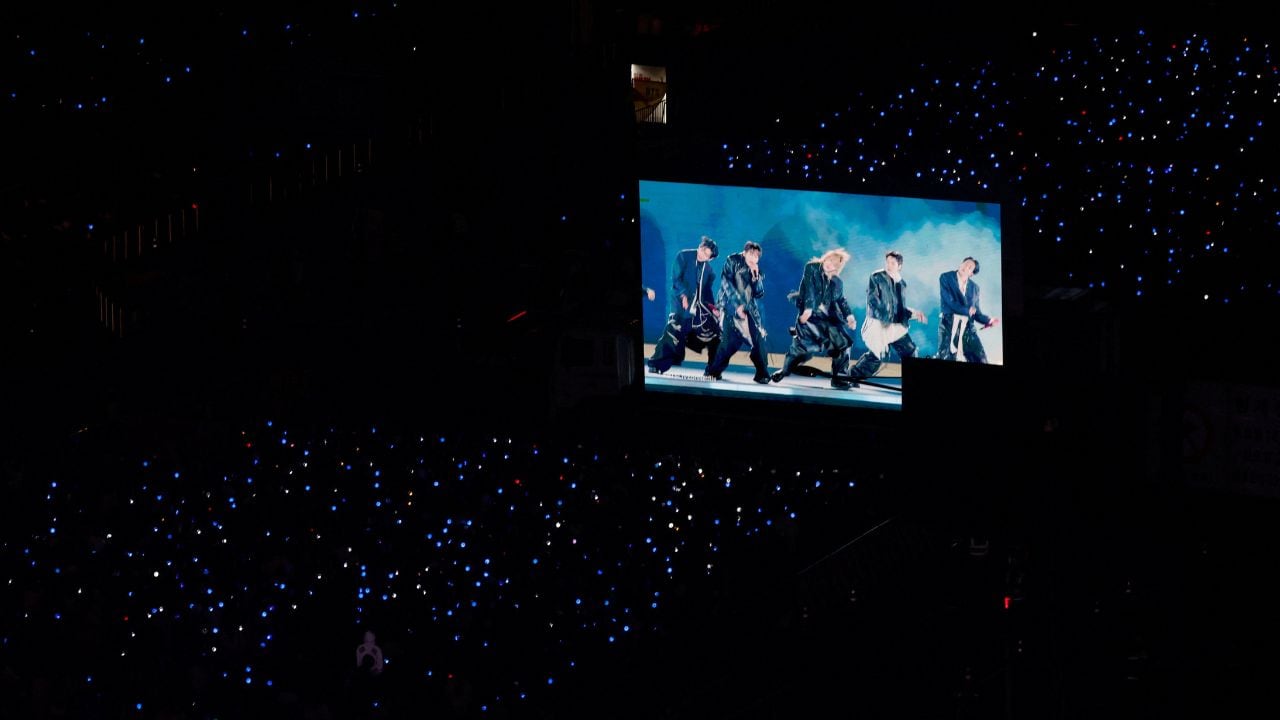
The desert dust hadn’t even settled before the industry post-mortems began. Coachella 2026 was supposed to be the year of the "safe" headliner, a retreat into predictable pop structures and curated nostalgia to save a dwindling festival market. Then Nine Inch Noize took the stage. What the audience witnessed wasn't a standard rock concert or a typical electronic dance music set. It was a calculated, mechanical assault that effectively murdered the traditional "ghoulish rave" aesthetic and replaced it with something far more clinical and terrifying.
Nine Inch Noize succeeded because they stopped trying to make industrial music "danceable" in the way Coachella expects. Instead, they weaponized the physical discomfort of high-frequency distortion and synchronized it with a visual display that felt less like a light show and more like a surveillance state glitching out in real-time. This wasn't just a revamp of industrial rock. It was a total dismantling of how an artist occupies the main stage in an era of TikTok-ready performances. You might also find this similar article insightful: The Balamory Brand Revival and the High Stakes of Nostalgia.
The Engineering of Auditory Violence
To understand why this performance felt different, you have to look at the signal chain. Most modern electronic acts rely on high-fidelity playback systems that prioritize a clean, rounded bass response designed to make people feel "good." Nine Inch Noize did the opposite. Their technical riders demanded a custom-tuned array that focused on the "harshness" frequencies—the mid-high range between 2kHz and 4kHz where the human ear is most sensitive to pain and alarm.
This wasn't an accident. As reported in latest coverage by Deadline, the implications are significant.
The band used a proprietary hardware-software hybrid that processed live instrumentation through granular synthesis engines in real-time. When the lead vocalist hit a sustained note, the system didn't just amplify it. It shattered it into ten thousand digital fragments and redistributed them across the spatial audio field. The result was a disorienting wall of sound that made the open desert feel like a claustrophobic steel box.
By bypassing the standard festival "mastering" limiters, they achieved a dynamic range that made every snare hit feel like a physical percussion on the listener's chest. It was a rejection of the loudness wars. They didn't just play loud; they played with the absence of sound, using silence as a vacuum that sucked the oxygen out of the crowd before slamming them with a distorted low-end that hovered just above the subsonic threshold.
Deconstructing the Ghoulish Aesthetic
For the last decade, "dark" electronic music has relied on a tired visual language of skulls, red lasers, and faux-satanic imagery. It’s a theater of the macabre that has become as predictable as a Saturday morning cartoon. Nine Inch Noize stripped all of that away. There were no ghosts. There were no demons.
Instead, the stage was dominated by massive, high-definition monochromatic screens displaying something far more unsettling: live-rendered thermal imaging of the crowd itself.
The audience became the visual. As people danced, their heat signatures were fed into an AI-driven visualizer that distorted their bodies into pulsing, unrecognizable blobs of orange and white. It turned the "rave" into a biological experiment. You weren't watching a band; you were watching yourself being processed by a machine. This shift from the supernatural to the systemic is what made the "ghoulish" label feel so outdated. The horror wasn't coming from a graveyard; it was coming from the camera lens and the data stream.
The Business of Brutality
From a management perspective, the Nine Inch Noize rollout is a masterclass in controlled scarcity. In an age where every artist is expected to be "on" 24/7—posting behind-the-scenes content and engaging in manufactured intimacy—this collective did the unthinkable. They went dark.
No Instagram stories. No "get ready with me" festival vlogs.
The strategy was to build a brand around the concept of the "Uncanny Valley." By appearing as something not quite human on stage and staying entirely absent off-stage, they created a vacuum that the fans filled with their own projections. This drove a merchandise sell-through rate that defied current festival averages. People weren't just buying a t-shirt; they were buying a relic of a traumatic event.
Revenue Streams and Intellectual Property
The real genius lies in the backend. Nine Inch Noize isn't just a band; it’s a software development house. The custom patches and synthesis tools they used during the Coachella set were released as a limited-edition plugin suite the moment the set ended.
- Direct-to-Consumer Software: They sold the "sound" of the concert to the bedroom producers in the audience.
- Spatial Audio Licensing: The set was recorded using a 360-degree microphone array, destined for a high-priced VR "experience" that mimics the sensory overload of the front row.
- Hardware Partnerships: The brutalist aesthetics of their stage gear have already sparked rumors of a high-end synthesizer collaboration.
This is the new blueprint for the industrial genre. It isn't about selling albums; it’s about selling the ecosystem of the noise itself.
The Death of the Drop
Perhaps the most significant cultural shift witnessed during the set was the total abandonment of the "EDM drop." For years, festival sets have been dictated by a predictable tension-and-release formula. You build for sixteen bars, you cut the bass, and then you "drop" into a heavy beat.
Nine Inch Noize refused to provide that release.
They would build tension for six, seven, even ten minutes, layering white noise and distorted vocals until the pressure in the crowd was palpable. But instead of a cathartic drop, they would pivot into a slow, grinding dirge or a sudden cut to absolute silence. It was musical blue-bolling on a massive scale. It forced the audience to stop waiting for the beat and start paying attention to the texture.
This is a direct challenge to the "playlist culture" that has dominated Coachella for years. You cannot listen to Nine Inch Noize in the background. You cannot put them on a "Chill Lo-Fi Beats" stream. The music demands a level of focus that borders on the religious, or perhaps the pathological.
Why the Critics are Wrong about the Rave
Early reviews called it a "rave for the end of the world," but that misses the point entirely. A rave is an act of communal escapism. It is about "PLUR" (Peace, Love, Unity, Respect) and losing oneself in a shared rhythm.
Nine Inch Noize offered no such comfort.
Theirs was an act of communal confrontation. They didn't want you to lose yourself; they wanted you to find yourself, specifically the version of yourself that is terrified of the future and exhausted by the present. The strobe patterns weren't designed to induce euphoria; they were programmed at specific hertz intervals to trigger a fight-or-flight response.
When you looked around the Sahara Tent, people weren't smiling. They were staring, transfixed, some with their hands over their ears, others gripped by a strange, rhythmic shivering. It was the most honest reaction seen at a music festival in twenty years. It was a recognition that the world outside the festival gates is loud, harsh, and increasingly dominated by cold, indifferent systems.
The Logistics of Chaos
The sheer scale of the production required a logistical precision that belies the "noise" of the music. To achieve the sub-millisecond synchronization between the audio triggers and the thermal imaging software, the band’s tech team had to install a private local 5G node behind the stage. This bypassed the congested festival networks, ensuring that every glitch in the visual was a deliberate artistic choice rather than a lag spike.
Technical Specifications of the Set
| Component | Technology Used | Purpose |
|---|---|---|
| Visual Feed | Long-wave Infrared (LWIR) Sensors | Real-time crowd heat mapping |
| Audio Processing | FPGA-based Granular Engines | Zero-latency distortion and shattering |
| Lighting | Industrial Arc Lamps | High-intensity, non-color-corrected white light |
| Stage Design | Modular Cold-Rolled Steel | Acoustic resonance and reflection control |
By treating the stage as a laboratory, Nine Inch Noize has raised the bar for what "live" music actually means. If you are just pressing play on a laptop, you are no longer a headliner. You are a glorified jukebox.
A New Industrial Revolution
The success of this performance signals a pivot point for the music industry at large. We are moving away from the era of "vibes" and into an era of "impact." The audience is tired of being catered to; they want to be challenged. They want to feel something, even if that something is profound discomfort.
Nine Inch Noize didn't just play Coachella. They occupied it. They took a space traditionally reserved for high-fashion influencers and corporate brand activations and turned it into a temple of mechanical nihilism. They proved that industrial rock isn't a relic of the 90s, but a necessary tool for navigating the mid-2020s.
The "ghoulish rave" is dead. Long live the machine.
In the future, festivals won't be judged by how many people danced, but by how many people were changed by the sound. If you walked away from the Nine Inch Noize set feeling like you’d been through a physical ordeal, that was the intention. The era of the comfortable headliner is over.
Stop looking for the drop. It’s not coming.