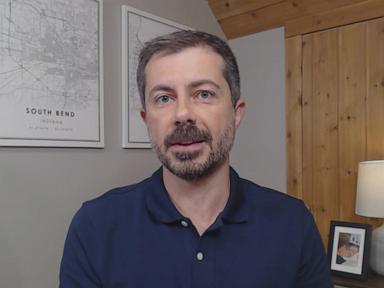
The weaponization of emergency services reached a terrifying milestone when former Transportation Secretary Pete Buttigieg was forced to spend twenty-four hours separated from his four-year-old twin children. The separation was not the result of a legitimate investigation, but a calculated, anonymous hoax designed to exploit the bureaucratic machinery of the state. While traditional political swatting uses heavily armed tactical units to trigger immediate physical danger, this new evolution weaponizes Child Protective Services to inflict deep, prolonged psychological trauma. It represents an asymmetric form of political warfare that bypasses the hardening defenses of high-profile targets by attacking their children through the legal system.
This tactic relies on a structural vulnerability embedded within child welfare protocols. When a caller claims a child is in immediate danger, social workers and law enforcement are legally obligated to act, often stripping targets of their parental rights before the facts can be verified. For Buttigieg and his husband, Chasten, the crisis began when a Michigan State Police officer and a Child Protective Services worker appeared at their home in Traverse City. They were acting on an anonymous report alleging that Buttigieg posed an immediate threat to his twins, claiming he had confessed to violent crimes years earlier during a fictional meeting in Alabama. The machinery of the state operated exactly as designed, but it was driven by malicious intent.
The Mechanics of Bureaucratic Terror
Kinetic swatting aims for a flashpoint of violence. By fabricating an active shooter or hostage situation, the perpetrator hopes to draw armed tactical teams to a target's door, creating an environment where a single misunderstanding can be fatal. This method has targeted lawmakers from both parties, federal judges, and election officials across the country. Yet, kinetic swatting has a significant limitation for the perpetrator: it is resolved quickly. Once law enforcement secures the perimeter and realizes the house is calm, the operation collapses.
The exploitation of child welfare services operates on an entirely different timeline. It turns the state's protective instincts into an instrument of extended harassment. Once a report is flagged with a high priority level, protocol dictates that investigators must interview the children in a neutral environment, often without the parents present. In the case of the Buttigieg family, authorities arranged for forensic interviews of the four-year-old twins and instructed Buttigieg not to be left alone with them until the process concluded.
The resulting twenty-four hours became a masterclass in psychological warfare. The targets are forced into compliance because resisting a child welfare directive can be used as evidence of unfitness or non-cooperation. This creates an impossible dilemma for public officials. They must surrender their children to forensic investigators or risk a full-scale legal battle that could permanently damage their families and careers. The perpetrator achieves their goal without ever pulling a trigger, inflicting a deep, invisible wound that lingers long after the police file is closed.
Exploiting the Mandatory Reporting Loophole
The systemic flaw that allows this harassment to function is the absolute anonymity granted to mandatory and public hotlines. These systems were built to protect whistleblowers and vulnerable neighbors who fear retaliation when reporting real abuse. They were never designed to withstand coordinated, politically motivated campaigns of subversion.
When an anonymous caller contacts a hotline, child welfare agencies use a matrix to determine whether the claim warrants an emergency response. These matrices prioritize the immediate safety of the child above all else, which means the threshold for intervention is remarkably low. If a caller provides specific details, even completely fabricated ones like the alleged Alabama confession used against Buttigieg, the system is forced to treat the claim as credible until proven otherwise.
The Cost of Institutional Compliance
Law enforcement and social workers are left with no margin for error. If a child protective worker decides to ignore an anonymous call because the target is a prominent politician, and that politician turns out to be abusive, the institutional failure is catastrophic. Perpetrators understand this systemic fear. They leverage the bureaucracy's risk aversion against the target.
This institutional compliance creates several distinct crises for the targeted family.
- Forced Separation: Parents are isolated from their children during the most critical hours of the initial investigation.
- Child Trauma: Toddlers and young children are subjected to intensive, forensic questioning by strangers who are trained to look for signs of trauma, which can itself cause psychological distress.
- Resource Depletion: Highly trained investigators and forensic specialists are pulled away from legitimate cases of child abuse to investigate obvious political hit jobs.
The investigation into the Buttigieg incident concluded rapidly once the forensic interviews were completed. The Michigan State Police and Child Protective Services confirmed the report was entirely false, noting that the allegations were likely politically motivated. But the system offers no immediate remedy for the time lost or the emotional toll extracted during those twenty-four hours.
A Legal System Unprepared for Digital Asymmetry
The current statutory framework is wholly inadequate for punishing those who weaponize social infrastructure. Most state laws treat false reports to emergency services or child welfare agencies as misdemeanors. Even when states upgrade these offenses to felonies if they result in serious injury, the statutes rarely account for the unique harm of forced family separation through fraudulent means.
Tracing these actors presents a massive technological hurdle. Sophisticated harassers use internet-protocol calling services, virtual private networks, and synthetic voice generation to mask their identities. In many cases, the calls originate from overseas jurisdictions beyond the reach of local prosecutors. For example, when a massive wave of traditional swatting targeted dozens of politicians, judges, and state capitols, the subsequent federal investigation eventually traced the conspiracy to foreign nationals residing in Serbia and Romania.
[Anonymous Digital Actor] -> [VPN / Spoofed VoIP] -> [State Welfare Hotline] -> [Mandatory Law Enforcement & CPS Response] -> [Target Family Separated]
When the perpetrator is located outside domestic borders, local law enforcement agencies lack the jurisdiction and resources to pursue them. The local police department in a town like Traverse City is built to handle community policing, not international cyber-forensics. This creates an accountability vacuum where the perpetrator faces near-zero risk while the target bears an immense burden.
The Chilling Effect on Public Service
The escalation from targeting politicians to targeting their young children marks a dangerous shift in the American political environment. It raises the cost of entry for public service to an unsustainable level. When public officials must accept that their career choices could result in their four-year-old children being interrogated by state agents, the talent pool for public office inevitably shrinks.
This tactic operates as a form of structural veto. It is designed to silence public figures by demonstrating that their security detail cannot protect their family from institutional overreach. It exploits the open nature of a democratic society, turning the protective mechanisms of the state into weapons against the people who help run it.
The resolution of the Buttigieg case offers a grim blueprint for future attacks. Although the family was reunited and the case was closed without referral to prosecutors, the vulnerability remains completely unaddressed. The system worked exactly as it was programmed to work, and because it worked, it proved to the perpetrators that the loophole is wide open. Stopping this trend requires more than just public statements and expressions of outrage. It demands a fundamental reevaluation of how anonymous reports are vetted when they intersect with high-profile public targets, without compromising the core mission of protecting vulnerable children. The balance between institutional responsiveness and protecting families from malicious state weaponization is broken, and until it is fixed, no public servant with a family is truly safe.
This educational report on the Buttigieg swatting incident provides a direct broadcast summary of how child services and law enforcement were deployed in this specific case.