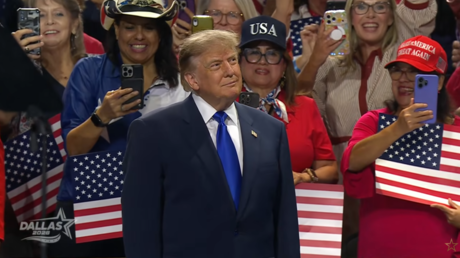
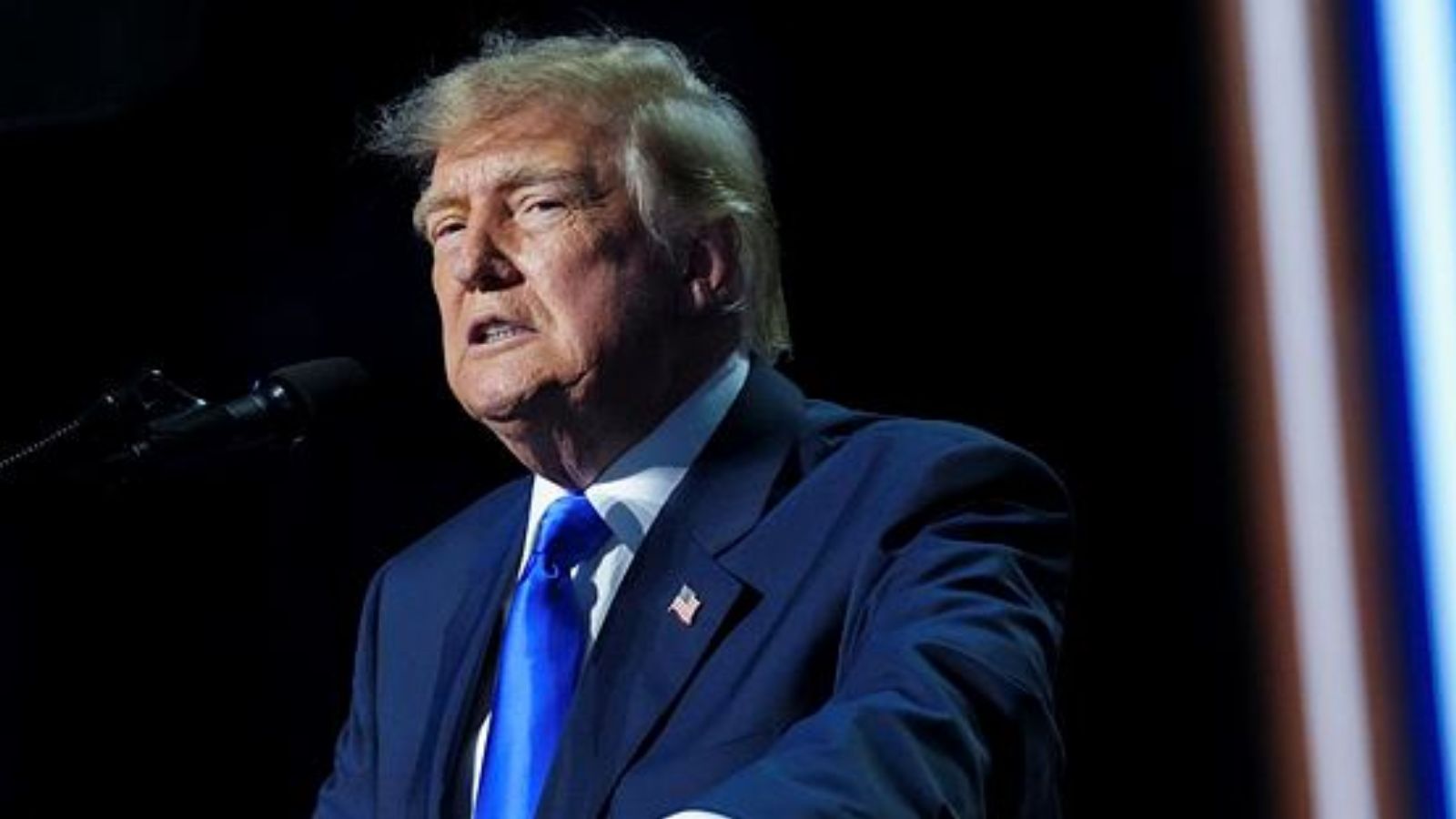
President Donald Trump took the stage at the Republican Party's inaugural midterm convention in Dallas and dropped a massive fiscal proposal. If voters hand Republicans control of both the House and Senate, every adult citizen will receive a five-thousand-dollar payout dubbed the Trump Dividend. It is a striking gamble. It also lays bare the raw transactional mechanics driving modern political survival.
Decades of covering political strategy reveal a persistent truth. When a party faces an uphill battle for legislative control, conventional policy debates vanish. They get replaced by high-stakes populist offerings designed to override rational skepticism.
The Anatomy of a Trillion Dollar Pledge
The arithmetic behind the proposal demands immediate scrutiny. Distributing five thousand dollars to the adult population of the United States requires an astronomical sum. The total crosses the one-trillion-dollar threshold easily. Yet the Dallas address offered zero structural details on how Congress would fund or implement such a massive transfer.
Economists immediately point to the inflationary pressures of injecting a trillion unbudgeted dollars directly into the domestic market. Supporters argue the funds require domestic spending, locking capital inside national borders to stimulate domestic retail and manufacturing sectors. Critics counter that such a sudden monetary injection risks accelerating consumer price indexes just as the administration attempts to stabilize affordability concerns.
This tension defines the core contradiction of contemporary fiscal populism. Voters want relief from cost-of-living pressures. Lawmakers must balance the immediate dopamine hit of a direct deposit against long-term national debt trajectories.
Personalizing the Ballot Box
Beyond the fiscal promise, the convention highlighted an unprecedented strategic shift. Trump explicitly instructed attendees to pretend his name appeared directly on the midterm ballot.
This tactical framing reflects a deep anxiety among vulnerable Republican incumbents. Midterm elections historically serve as referendums on the sitting executive. Candidates fighting in swing districts often prefer to localize races, focusing on community issues rather than national polarization. By demanding that the electorate treat November as a referendum on his personal mandate, the party leadership forces every candidate to anchor their campaign entirely to the presidential brand.
Some strategists worry this approach alienates independent voters who might favor local governance checks and balances. Others argue that enthusiastic base turnout matters far more than appealing to moderate fence-sitters. History shows that presidential gravity pulls everything into its orbit. Candidates rarely escape the gravitational pull once the national leader steps onto the field.
Geopolitical Realities and Domestic Distractions
The speech did not dwell solely on domestic payouts. It ventured far into international friction zones. The ongoing military engagement involving Iran loomed large over the proceedings. Administration officials defended the necessity of strikes against foreign nuclear infrastructure, even as public polling indicates deep skepticism regarding the conflict's value.
Interspersed between grave warnings of foreign adversaries and fierce attacks on political opponents, the address featured eccentric logistical flourishes. Proposing to rename the Strait of Hormuz the Trump Strait or floating alternative geographic titles served a dual purpose. These moments dominate digital news cycles, pushing complex legislative debates out of the headlines and replacing them with viral talking points.
Political theater often relies on these sharp tonal shifts. One moment features serious discussions of military deterrence and economic nationalism. The next features casual linguistic rebranding meant to entertain a packed arena.
The Stakes for Legislative Control
The immediate reality remains stark. Roughly three dozen congressional contests will ultimately decide whether the executive branch retains a sympathetic legislature or faces a divided government.
If the gambit succeeds, the winning coalition will confront an immediate test of legislative reality. Passing a trillion-dollar dividend through a fractured Congress requires absolute party discipline. It also demands legislative gymnastics that few modern majorities have successfully performed. If the strategy fails, the post-election landscape will feature intense recriminations over whether populist promises could substitute for traditional retail politics.
The national conversation moves fast. The five-thousand-dollar promise has changed the baseline of campaign rhetoric. Every speech, every rally, and every digital ad now operates under the shadow of this massive financial stake. The clock ticks down toward November, leaving voters to weigh an unprecedented proposition against the unpredictable currents of the broader economy.