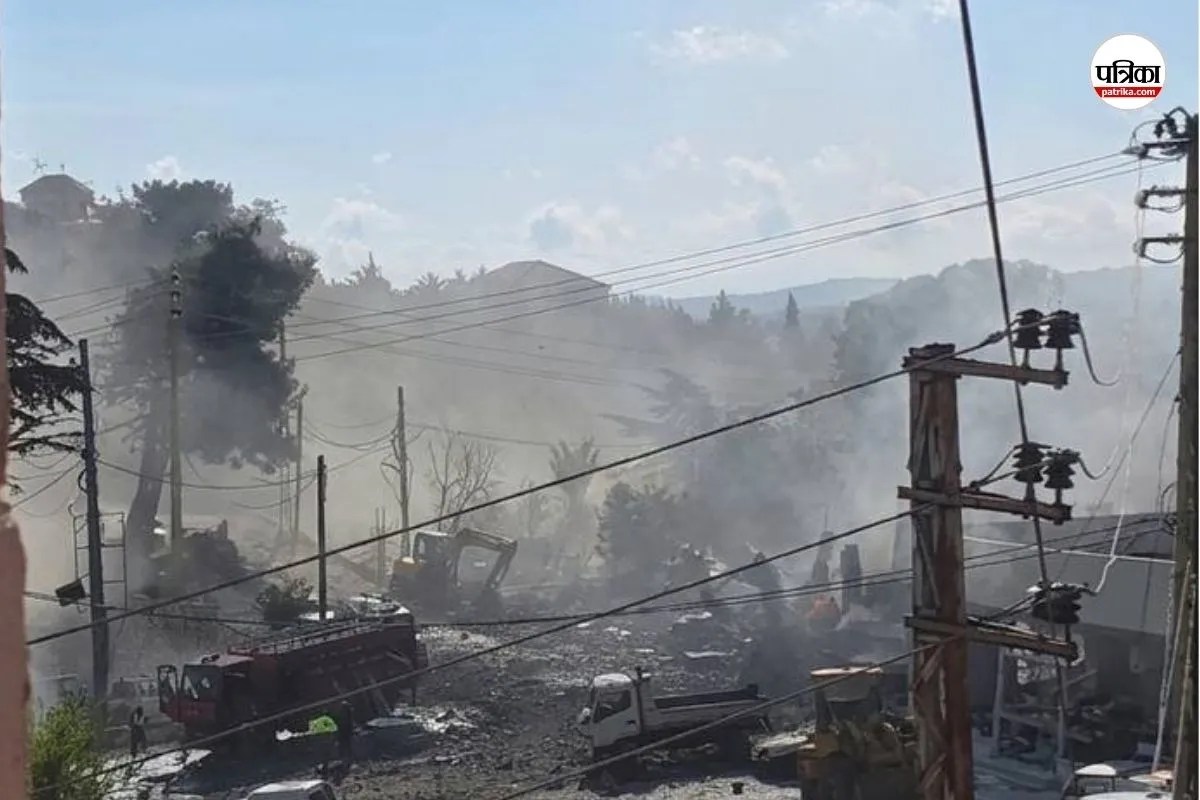
The recent deaths of three medical workers in Southern Lebanon mark a grim escalation in a conflict that increasingly ignores the protected status of healthcare infrastructure. This isn't just about the tragic loss of life in a single strike; it represents a systemic breakdown of international humanitarian law that threatens to leave entire regions without a functioning safety net. When paramedics and nurses become targets, the civilian population loses its last line of defense, turning a kinetic military operation into a long-term humanitarian catastrophe.
The strike, which hit a medical center in the heart of the border zone, has sent shockwaves through the international community. While military spokespeople often cite the presence of tactical assets near civilian sites as justification, the reality on the ground is far more complex. We are seeing a pattern where the "red cross" or "red crescent" on an ambulance no longer provides the shield it once did. This erosion of safety for first responders is the primary reason the conflict risks spiraling from a border skirmish into a scorched-earth campaign that neither side can truly control.
The Disappearing Shield of International Law
For decades, the Geneva Conventions provided a clear, if fragile, framework for combat. Medical personnel were to be treated as neutrals. They were the ghosts on the battlefield, moving between the lines to collect the broken and the dying. That framework is currently in tatters.
In the current theater of Southern Lebanon, the distinction between a combatant and a non-combatant is being blurred by high-intensity urban warfare. The military logic often hinges on the idea of "collateral damage," but when medical staff are killed while performing their duties, that label feels like a hollow excuse. Investigative evidence from similar strikes suggests that the threshold for engaging targets near medical facilities has dropped significantly. Intelligence is often flawed, and the speed of modern drone warfare leaves little room for the human verification that used to prevent these tragedies.
The Mechanics of a Targeted Strike
Modern precision munitions are designed to hit specific coordinates with terrifying accuracy. This means that when a medical center is hit, it is rarely a "stray" missile. It is a calculated decision based on intelligence that claims the building is being used for dual purposes. However, the burden of proof for such claims is rarely met before the trigger is pulled.
The fallout is immediate. Beyond the dead and injured, the psychological impact on surviving staff is profound. Hospitals in Tyre and Sidon are already operating on shoestring budgets and exhausted personnel. When news hits that their colleagues were killed in the field, the remaining doctors face an impossible choice: stay and risk execution by proxy, or flee and leave their patients to die. This is how a healthcare system collapses—not through a single explosion, but through the systematic extraction of hope.
The Strategic Failure of Targeting Healthcare
From a purely tactical perspective, neutralizing medical assets might seem like a way to sap an opponent's resilience. If you can’t treat your wounded, you can’t keep fighting. But this is a fundamental misunderstanding of regional dynamics.
Every time a paramedic is buried, the narrative of the war shifts. It ceases to be about border security or geopolitical influence and becomes a struggle for survival against an existential threat. This fuels recruitment, hardens the resolve of local militias, and alienates the very civilian populations that need to be "won over" in any long-term stability plan.
- Radicalization: Civilian deaths, especially those of respected community figures like doctors, serve as the most effective recruitment tool for non-state actors.
- International Isolation: Constant reports of medical casualties make it politically impossible for Western allies to maintain unconditional support for military operations.
- The Refugee Surge: When hospitals close, people move. This creates a massive internal displacement crisis that spills over borders, destabilizing neighboring countries and creating a fresh set of security headaches.
A Broken Chain of Command
There is a growing suspicion among analysts that these strikes are not always the result of top-down strategic orders. Instead, they may be the product of "autonomous" decision-making at the tactical level, where mid-level commanders prioritize immediate threat elimination over long-term legal or ethical considerations.
The integration of AI-driven target selection has further complicated this. When algorithms identify "patterns of life" that suggest militant activity, they don't always account for the fact that a medical clinic is a high-traffic area by definition. A group of men entering a building at night might be a cell planning an attack, or it might be a team of exhausted surgeons changing shifts. If the machine can't tell the difference, and the human operator is too pressured to check, the result is a pile of rubble and a headline that sparks a global outcry.
The Myth of Surgical Precision
The term "surgical strike" is one of the great lies of modern warfare. It suggests a cleanliness that does not exist. Even the most precise missile creates a blast radius that shatters windows, collapses nearby structures, and sends shrapnel through anything in its path. In the dense, ancient streets of Lebanese villages, there is no such thing as an isolated hit. A strike on a suspected weapons cache in a basement inevitably affects the clinic next door.
The Regional Powderkeg
Lebanon is not a vacuum. The death of medical staff acts as a catalyst for other actors in the region to escalate their involvement. We are seeing increased pressure on the Lebanese Armed Forces to take a more active stance, and the rhetoric from Tehran and Damascus has sharpened.
The danger is that we are approaching a point of no return. Once the infrastructure of daily life—water, electricity, and medicine—is systematically destroyed, the war enters a new, more chaotic phase. This is the "scorched earth" reality that many feared but few expected to see so clearly in 2026.
The international community's response has been characterized by "grave concern," a phrase that has become a punchline in the Middle East. Sanctions and strongly worded letters do nothing to protect a nurse in a rural outpost. Without a genuine enforcement of the protected status of healthcare workers, the conventions that have governed war for a century will become nothing more than historical curiosities.
The Economic Aftermath
The destruction of medical facilities creates a long-term economic drain that lasts for decades after the last shot is fired. Replacing high-end diagnostic equipment, rebuilding specialized operating theaters, and—most importantly—luring back trained professionals who have fled the country is an almost impossible task for a nation already in the throes of a financial meltdown.
Lebanon’s brain drain is accelerating. The doctors who could have led the country's recovery are now setting up practices in Dubai, Paris, and London. They aren't coming back to a place where they are seen as legitimate targets. This void will be filled by whoever can provide basic services, often radical groups who use social welfare to cement their political power. By destroying the secular healthcare system, the military operations are inadvertently building the foundations for the very entities they claim to be fighting.
Accountability and the Fog of War
Who pays for the death of a paramedic? In the current climate, the answer is nobody. Investigations are typically internal, handled by the same military that authorized the strike. The findings are almost always the same: a tragic mistake occurred due to the presence of enemy combatants.
This lack of independent oversight ensures that the same mistakes are repeated. Without a credible threat of legal consequences at the international level, there is no incentive for military planners to change their ROE (Rules of Engagement).
Beyond the Border
This crisis is a mirror reflecting the broader state of global conflict. From Ukraine to Sudan, the "medical target" is becoming a standard feature of modern war. It is a shortcut to victory that ignores the long-term cost of the peace.
If the goal is truly security, then the destruction of Lebanon's medical capacity is the ultimate counter-productive move. You cannot kill your way to a stable border if the price of that operation is the complete moral and physical collapse of the neighboring society. The three medical workers who died this week were not just casualties of war; they were symptoms of a world that has forgotten how to fight without losing its soul.
The path forward requires more than a ceasefire. It requires a fundamental re-establishment of the red lines that once kept some parts of human existence off-limits to the machinery of death. If we can't protect the people who heal the wounded, then we have already lost the war, regardless of what the final maps show.
The immediate need is for an independent, international commission to investigate these specific strikes on medical personnel. It needs to happen now, while the evidence is fresh and the survivors are still there to speak. Anything less is a betrayal of the very principles of civilization that these conflicts are supposedly fought to defend.
The situation in Lebanon is a warning. It is a demonstration of what happens when technological capability outpaces ethical restraint. The rubble of that medical center is a monument to a failure of leadership, a failure of law, and a failure of basic human empathy. The fire is already burning; the only question left is how much more of the region we are willing to let it consume before we admit that some lines should never be crossed.
Healthcare is not a luxury of peace; it is a necessity of war. When that necessity is removed, the only thing left is the void.