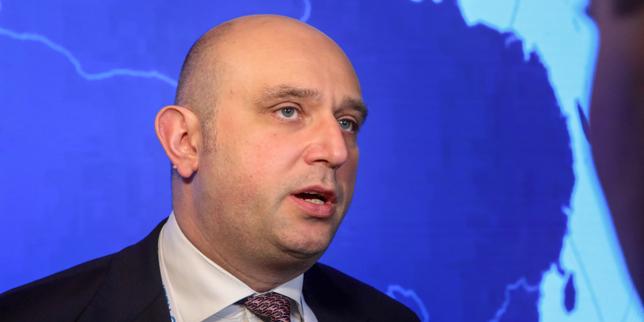
Brussels has officially cleared UniCredit to proceed with its acquisition of Commerzbank, framing the decision as a long-overdue step toward building a competitive European banking sector. The European Commission's antitrust clearance removes a primary regulatory hurdle for Milan-based UniCredit, led by chief executive Andrea Orcel, in its pursuit of Germany's second-largest listed lender. While EU competition regulators found that the overlapping operations of the two banks would not distort market fairness, the approval sets off a fierce political, economic, and structural clash between supranational European ambition and deeply entrenched German national interests.
The numbers look clean on paper. UniCredit already holds a significant footprint in Germany through HypoVereinsbank (HVB), which it acquired in 2005. Merging HVB with Commerzbank creates a powerhouse in German corporate and retail banking, particularly among the Mittelstand—the small and medium-sized enterprises that form the backbone of Europe's largest economy. Yet regulatory permission from Brussels does not guarantee a smooth execution in Frankfurt or Berlin.
Why Brussels Said Yes When Berlin Said No
For over a decade, policymakers at the European Central Bank and the European Commission have lamented the fragmentation of the continent's financial system. American giants like JPMorgan Chase, Bank of America, and Goldman Sachs dominate global investment banking and capital markets, dwarfing their European counterparts in market capitalization and balance sheet capacity. The European Union's single market remains incomplete without a genuine Banking Union, and cross-border consolidation has long been viewed in Brussels as the fastest cure.
Competition regulators in Brussels evaluated the UniCredit-Commerzbank tie-up strictly on market concentration metrics. Because European banking remains heavily Balkanized along national borders, the combined entity would still face stiff domestic competition from Deutsche Bank, regional savings banks (Sparkassen), and cooperative lenders (Volksbanken). From an antitrust perspective, the deal posed little threat of creating a monopoly.
Berlin saw things entirely differently. When UniCredit quietly built up its stake in Commerzbank using derivatives and open-market purchases—taking advantage of the German government's partial exit from the bailout-era shareholding it held since the 2008 financial crisis—German officials reacted with open hostility. Unions warned of tens of thousands of job cuts. Politicians across party lines denounced the move as an aggressive, uncoordinated raid on a critical national institution.
The core friction comes down to a simple question of control. Who funds German industry during an economic downturn? A locally headquartered lender subject to domestic political pressure, or a parent company in Milan answering to international shareholders?
The Mechanics of a Cross-Border Bank Merger
Acquiring a major European bank is rarely as straightforward as buying out shareholders and slapping a new logo on the branches. Even with antitrust clearance from the European Commission, UniCredit must navigate a labyrinth of prudential supervision, capital requirements, and local corporate governance laws.
Supervisory Hurdles and Capital Traps
Alongside competition clearance, any acquisition pushing a bank's ownership stake past key thresholds requires formal approval from the European Central Bank's Single Supervisory Mechanism (SSM). The ECB examines whether the combined entity will hold enough capital to withstand severe economic shocks, whether its risk management systems can handle the integration, and whether the leadership team has a credible operational blueprint.
Then there is the persistent problem of ring-fencing. Despite years of talk about a unified European banking market, national regulators still restrict how easily a banking group can move capital and liquidity across borders. In a hypothetical crisis where an Italian subsidiary faces sudden deposit outflows, German supervisors would move quickly to prevent excess cash sitting in Frankfurt from being drained to cover losses in Milan. This structural barrier limits the financial efficiency of cross-border mergers, preventing banks from treating their European balance sheets as a single, fluid pool of capital.
The German Co-Determination Wall
Inside Germany, corporate governance rules give employees extraordinary institutional power. Under German law, large corporations operate with a two-tier board structure consisting of a management board (Vorstand) and a supervisory board (Aufsichtsrat). Half of the seats on Commerzbank's supervisory board are held by employee and union representatives.
These representatives have already voiced fierce opposition to a takeover. Any effort by UniCredit to strip away back-office functions, consolidate IT infrastructure, or shutter overlapping branches between HypoVereinsbank and Commerzbank will run straight into this governance wall. Cost savings—the primary financial justification for any bank merger—become extraordinarily difficult to extract when labor representatives hold half the votes on the board that appoints top executives and approves major strategic shifts.
What History Tells Us About European Mega-Mergers
We have seen this movie before, and the ending is rarely triumphant. European banking history is littered with cross-border deals that looked compelling in boardroom presentations but stumbled in execution.
Consider the disastrous 2007 acquisition of Dutch bank ABN AMRO by a consortium led by Royal Bank of Scotland, Fortis, and Santander. Executed at the peak of the credit cycle, the deal shattered one of Europe's oldest financial institutions and required massive taxpayer bailouts within months. Even UniCredit's own history offers cautionary lessons. Following its rapid expansion across Central and Eastern Europe and its 2005 purchase of HVB, the Italian lender spent years digesting bad loans, raising emergency capital, and restructuring bloated operations.
More recently, domestic mergers have outperformed cross-border ones by a wide margin. When banks merge within the same country—such as Intesa Sanpaolo's acquisition of UBI Banca in Italy, or CaixaBank's absorption of Bankia in Spain—they can close overlapping branches on the same street, merge identical legal frameworks, and consolidate single national IT platforms. Cross-border deals offer far fewer overlapping branches to cut while introducing conflicting tax codes, distinct insolvency laws, and incompatible consumer protection rules.
| Merger Dimension | Domestic Consolidation | Cross-Border Consolidation |
|---|---|---|
| Branch Overlap | High; allows immediate closures and real estate savings | Low; mostly limited to existing foreign subsidiaries |
| Regulatory Friction | Single national supervisor and unified legal code | Multiple national authorities and capital ring-fencing |
| IT and Operations | Shared domestic payment systems and compliance rules | Fragmented legacy systems and localized reporting |
| Political Resistance | Manageable if framed as creating a national champion | High; triggers fears of losing domestic credit control |
UniCredit's bid occupies an unusual middle ground. Because it already owns HypoVereinsbank in Germany, a merger with Commerzbank does offer genuine domestic overlap inside the German market. Combining HVB and Commerzbank would allow UniCredit to strip out duplicate corporate headquarters, merge two German IT networks, and rationalize branch networks across major German cities. That local overlap is precisely why Andrea Orcel targeted Commerzbank in the first place—and precisely why German unions are terrified.
The Unspoken Stakes for Europe's Economy
The battle over Commerzbank exposes an uncomfortable contradiction at the heart of the European project. European leaders routinely call for deeper integration, stronger capital markets, and globally competitive champions capable of financing the green transition and defense spending. Yet the moment a European company actually attempts a major cross-border acquisition, national governments reach for defensive shields.
Germany is hardly alone in this hypocrisy. France, Italy, and Spain have all deployed political pressure or regulatory roadblocks over the past two decades to protect their own flagship lenders from foreign buyers. The European Union wants the economic benefits of an integrated continental banking market without relinquishing national sovereignty over who allocates credit.
Meanwhile, the broader financial industry is shifting beneath the feet of traditional lenders. Non-bank financial institutions, private credit funds, and American investment banks are steadily capturing market share in European corporate lending. While European politicians argue over whether an Italian bank should be allowed to buy a German bank, Blackstone, Apollo, and JPMorgan are quietly financing European infrastructure and mid-sized companies without worrying about national borders.
For Commerzbank's corporate clients, the immediate concern is not geopolitical symbolism but credit availability. During periods of economic stagnation, foreign-owned banks historically pull back lending to peripheral markets faster than domestic lenders tied to local political establishments. German Mittelstand companies rely heavily on long-term, relationship-driven credit lines that survive cyclical downturns. Replacing a locally anchored management team with executives focused on maximizing return on equity across multiple jurisdictions introduces real uncertainty for borrowers.
The Hard Road From Approval to Integration
Antitrust clearance from Brussels is a green light to race, not a trophy at the finish line. UniCredit still faces a grueling campaign to win over skeptical institutional investors, pacify hostile politicians in Berlin, and negotiate with unions determined to protect every back-office job in Frankfurt.
Andrea Orcel has built a reputation as one of Europe's sharpest dealmakers, squeezing remarkable profitability out of UniCredit through aggressive cost discipline and massive share buybacks. Turning Commerzbank into an equally lean profit engine will test the limits of that playbook. Merging two massive, unionized German banking institutions while navigating cross-border supervisory constraints leaves almost zero margin for operational error.
Brussels has made its bet that scale and cross-border integration are worth the political upheaval. Whether that bet pays off will be decided not in the commission's antitrust offices, but in the boardrooms of Frankfurt and the factory floors of the German Mittelstand.