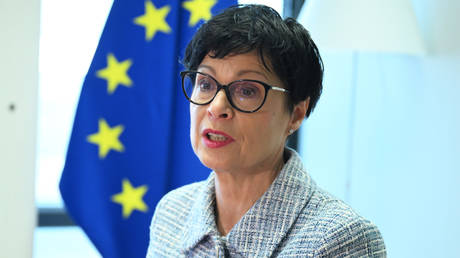
Brussels has finally lost patience with Belgrade's geopolitical balancing act, issuing an explicit warning that Serbia's access to billions in European Union integration funds and its long-stalled accession bid depend on immediate alignment with European foreign policy, domestic democratic reforms, and verifiable progress on normalizing ties with Kosovo. For over a decade, Serbian leadership has played East against West—pocketing European development grants while maintaining close energy, military, and diplomatic ties with Moscow and Beijing. That era of strategic ambiguity is effectively over, replaced by strict financial conditionality that threatens to choke off Serbia's primary economic lifeline if President Aleksandar Vučić refuses to choose a side.
The warning from the European Commission and key member states in the European Council does not arrive in a vacuum. It represents the culmination of years of quiet frustration in Berlin, Paris, and Brussels over what diplomats privately describe as a steady regression in Serbia's rule of law, media freedom, and electoral integrity. While Belgrade officially maintains that EU membership remains its primary strategic goal, its actions on the ground tell a remarkably different story.
The Anatomy of the Ultimatum
To understand why the European Union's latest threat carries far more weight than previous diplomatic wrist-slaps, you have to follow the money. Historically, the accession process for Western Balkan states relied on the carrot-and-stick approach, though the stick was rarely used with any real force. Candidate countries opened and closed negotiating chapters, receiving pre-accession assistance funds along the way with minimal structural clawbacks when reforms stalled.
That mechanism has been fundamentally rewired through the EU Growth Plan for the Western Balkans. Designed to accelerate economic convergence before formal membership, the multi-billion-euro package of grants and concessional loans comes with a razor-sharp catch. Disbursements are no longer automatic or based on vague promises of future legislation. Instead, every tranche of funding is tied directly to strict, measurable benchmarks in judicial independence, anti-corruption enforcement, and alignment with the EU's Common Foreign and Security Policy.
If Belgrade fails to meet these targets, the money stays in Brussels. For an economy deeply integrated with the European single market, losing access to these funds is not a minor budgetary inconvenience. It is a structural shock.
Why Diplomatic Patience Evaporated
Several converging crises forced Brussels to abandon its traditional caution and adopt a harder line toward Belgrade.
- The Sanctions Standoff: Following Russia's full-scale invasion of Ukraine, the European Union enacted sweeping sanctions against the Kremlin. Serbia remains the lone EU candidate country in Europe to refuse alignment with those measures, maintaining direct flights to Moscow and relying heavily on Russian natural gas.
- Security Flashpoints in Northern Kosovo: Recurrent violent clashes in northern Kosovo—most notably the deadly paramilitary ambush in Banjska—shattered the illusion that the Belgrade-Pristina dialogue was gradually stabilizing the region. European intelligence services concluded that the scale of weaponry involved pointed to severe security failures, if not tacit complicity, within Serbian state structures.
- Electoral and Democratic Backsliding: International observers from the OSCE documented widespread irregularities during Serbia's parliamentary and local elections, including media bias, misuse of public resources, and voter migration. Continuing to fund a government while its own parliament passes resolutions condemning those electoral practices became politically untenable for European leaders.
The Multi-Vector Illusion
For years, Aleksandar Vučić mastered what foreign policy analysts call the "four pillars" doctrine—balancing relationships between the European Union, the United States, Russia, and China. In Belgrade, this was sold to the domestic public as savvy, sovereign statecraft that allowed a small Balkan nation to extract maximum value from competing global powers without sacrificing its independence.
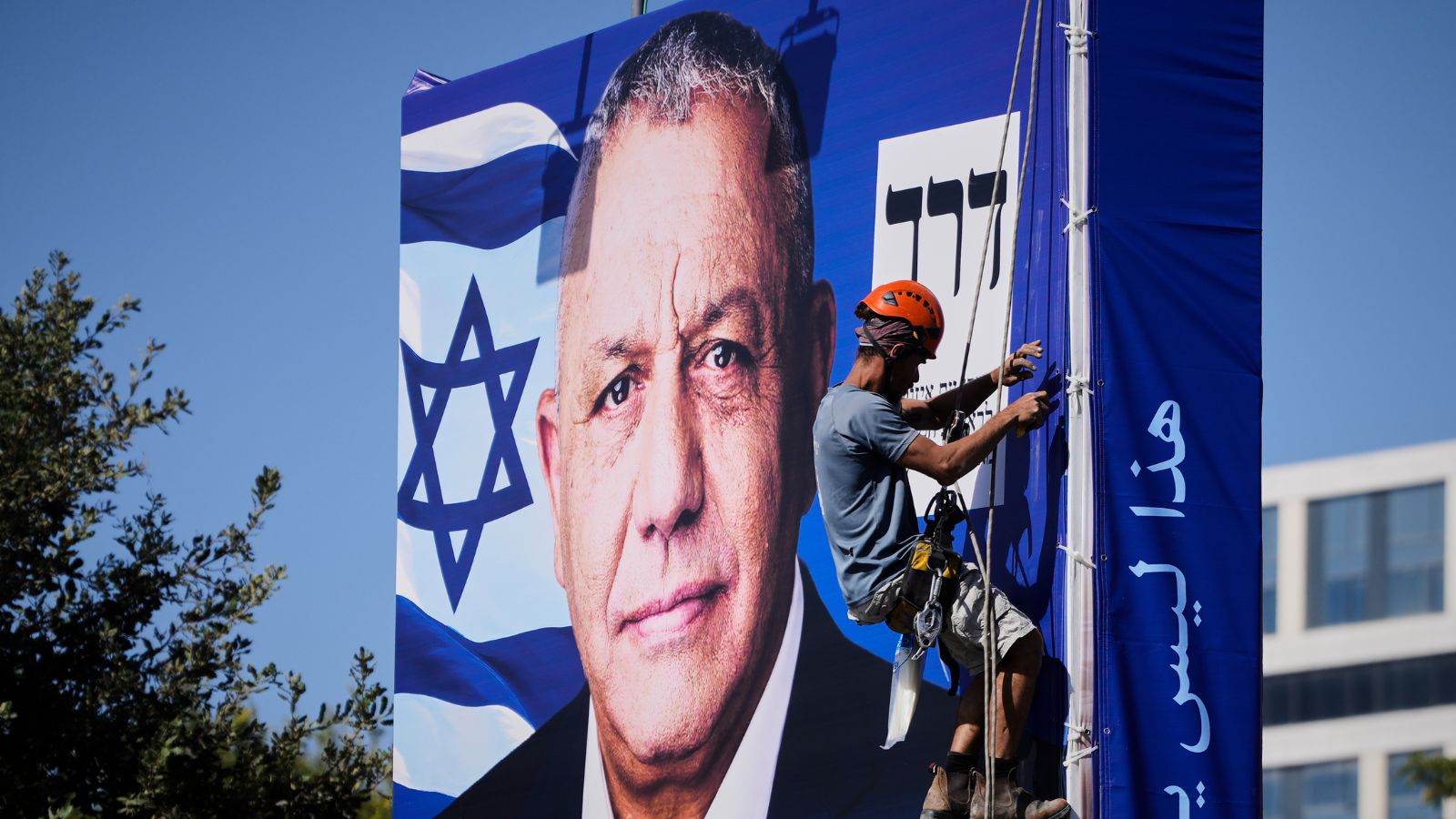
In reality, the four pillars are wildly unequal in their economic impact. When you strip away the nationalist rhetoric and state-sponsored billboards thanking Beijing or Moscow for their friendship, Serbia's economic survival rests almost entirely on the West.
Over 60 percent of Serbia's total trade is conducted with European Union member states. European companies—predominantly from Germany, Italy, and Austria—are the largest foreign direct investors in the country, employing hundreds of thousands of Serbian citizens in manufacturing, automotive components, and services. Russian investment, by contrast, is heavily concentrated in the energy sector, largely stemming from the controversial sale of a majority stake in Serbia's state oil monopoly, NIS, to Gazprom Neft in 2008. Chinese capital has flowed primarily into heavy industry, mining, and state-backed infrastructure loans that carry opaque terms and add to Belgrade's sovereign debt rather than generating broad-based private sector growth.
Belgrade's leadership knows these numbers intimately. The political calculation has always been that Brussels would never risk pushing Serbia fully into the Russian or Chinese orbit by cutting off economic ties. By threatening stability in Bosnia and Herzegovina or stalling negotiations with Kosovo, Belgrade effectively held regional peace hostage to extract concessions and tolerance from European capitals.
Brussels' latest posture signals that European policymakers have called that bluff. The geopolitical reality in Europe changed permanently after 2022. With war on the continent's eastern flank, the EU can no longer afford a strategic blind spot in its southeastern backyard—a candidate country that acts as an economic and informational conduit for adversaries while enjoying the financial perks of European integration.
The Kosovo Gordian Knot
At the absolute center of the EU's pressure campaign sits the unresolved dispute between Serbia and Kosovo. Serbia refuses to recognize the 2008 declaration of independence by its former province, a stance backed by Russia and China at the United Nations Security Council, as well as five EU member states that face their own domestic separatist pressures.
To bypass the immediate political impossibility of formal recognition, European mediators brokered the Ohrid Agreement, a roadmap intended to achieve de facto normalization. Under its terms, Serbia would not formally recognize Kosovo, but it would cease blocking Kosovo's membership in international organizations, accept Kosovo's national symbols and documents, and respect its territorial integrity. In return, Pristina committed to establishing an Association of Serb-Majority Municipalities, granting ethnic Serbs in Kosovo a degree of administrative autonomy.
Neither side has implemented the agreement in good faith. Pristina has dragged its feet on the municipal association, fearing it would create a dysfunctional, Russian-influenced enclave similar to Republika Srpska in Bosnia. Meanwhile, Belgrade has openly boasted to domestic audiences that it will never implement the provisions allowing Kosovo into the United Nations, even lobbying aggressively against Kosovo's bid to join the Council of Europe.
The European Union has now formally embedded the Ohrid Agreement into Chapter 35 of Serbia's accession negotiations. This technical maneuver is devastating for Belgrade's stalling tactics. Chapter 35 acts as a master switch for the entire membership process; if Serbia fails to fulfill its normalization commitments, the entire accession framework freezes automatically, regardless of progress made in trade, agriculture, or environmental standards.
Domestic Pressures and the Lithium Factor
Complicating the diplomatic standoff is a profound shift in Serbia's internal politics and Europe's own industrial priorities.
On the streets of Belgrade and smaller Serbian towns, the government faces persistent, widespread civic unrest. Mass protests—initially sparked by tragic mass shootings and later galvanized by opposition to electoral fraud and environmental degradation—have revealed deep cracks in the ruling party's monopoly on power. The focal point of this domestic resistance is the Jadar Valley lithium project, a massive proposed mine backed by mining giant Rio Tinto.
Here, European interests collide awkwardly with European values. The EU desperately needs secure, domestic-adjacent sources of lithium to power its electric vehicle transition and reduce its overwhelming dependence on Chinese mineral processing. Brussels signed a strategic partnership with Belgrade on critical raw materials, a move that critics across the Balkans immediately seized upon as proof that European leaders are willing to overlook authoritarian governance and environmental risks in exchange for battery-grade lithium.
This contradiction gives Belgrade a dangerous sliver of leverage. Serbian officials subtly remind European counterparts that only a strong, centralized government in Belgrade can push through a deeply unpopular mining project against fierce public opposition. Yet even this card has limits. If political instability in Serbia spirals out of control due to heavy-handed state repression of protesters, no European corporation will be able to operate safely in the Jadar Valley anyway.
The Media Ecosystem and Public Opinion
To understand why Belgrade cannot simply pivot overnight to meet Brussels' demands, one must look at the information environment inside Serbia. Over the past decade, pro-government tabloids and national television networks have relentlessly fed the Serbian public a steady diet of anti-Western, pro-Russian, and nationalist narratives.
Polls consistently show that a plurality of Serbs view Russia as their country's greatest friend and believe China provides the most financial aid, despite Eurostat data proving that the EU is by far the largest donor and investor. Having spent years demonizing the West and portraying EU integration as a humiliating imposition, the Serbian government is now trapped by the public sentiment it engineered. Making sudden concessions on Kosovo or imposing sanctions on Moscow carries the immediate risk of alienating the ruling party's core nationalist voter base and triggering backlash from far-right factions.
What Happens When the Money Stops
The immediate consequences of Brussels enforcing its threat will not look like a dramatic overnight severing of diplomatic ties. Instead, it will manifest as a slow, suffocating financial squeeze that steadily erodes the patronage networks keeping Belgrade's political machine running.
First, pre-accession grants earmarked for infrastructure, green energy transitions, and public administration modernization will be suspended or redirected to neighboring Western Balkan states like Albania and Montenegro, both of which have aligned fully with EU foreign policy and accelerated their reform agendas. Watching smaller neighbors overtake Serbia on the European path will inflict severe political damage on Belgrade's narrative of regional dominance.
Second, European institutional lenders—such as the European Investment Bank and the European Bank for Reconstruction and Development—will tighten their risk assessments for Serbian sovereign projects. When multilateral development banks pull back, borrowing costs on international bond markets climb. Serbia will be forced to seek more expensive financing from bilateral lenders in the Middle East or Asia, deepening its debt burden without gaining access to high-value technology transfers.
Third, the private sector will begin pricing in geopolitical risk. Foreign manufacturers looking to "near-shore" supply chains closer to Western Europe have poured capital into Serbia over the last five years. If Serbia remains outside the EU's regulatory and customs orbit—or worse, faces secondary sanctions or visa-regime reviews due to irregular migration routes passing through its territory—those factories will quietly relocate to EU member states like Romania, Bulgaria, or Croatia.
The End of the Road for Strategic Ambiguity
For more than ten years, Brussels treated the Western Balkans as a management problem rather than a strategic priority, content to buy short-term stability at the expense of long-term democratic transformation. That era produced a hybrid political system in Belgrade that mimics the formalities of European integration while hollowing out the institutions required to actually join the bloc.
The latest warning from Brussels strips away the comfortable illusions on both sides. The European Union is no longer pretending that Serbia is making steady progress toward membership, and Belgrade can no longer pretend that it can pocket European billions while actively undermining European security and values. Either Serbia begins the painful, concrete work of dismantling state capture, normalizing relations with its neighbors, and aligning with European foreign policy, or it accepts permanent relegation to the geopolitical periphery of Europe—poorer, isolated, and entirely dependent on patrons who offer plenty of rhetoric and very little future.