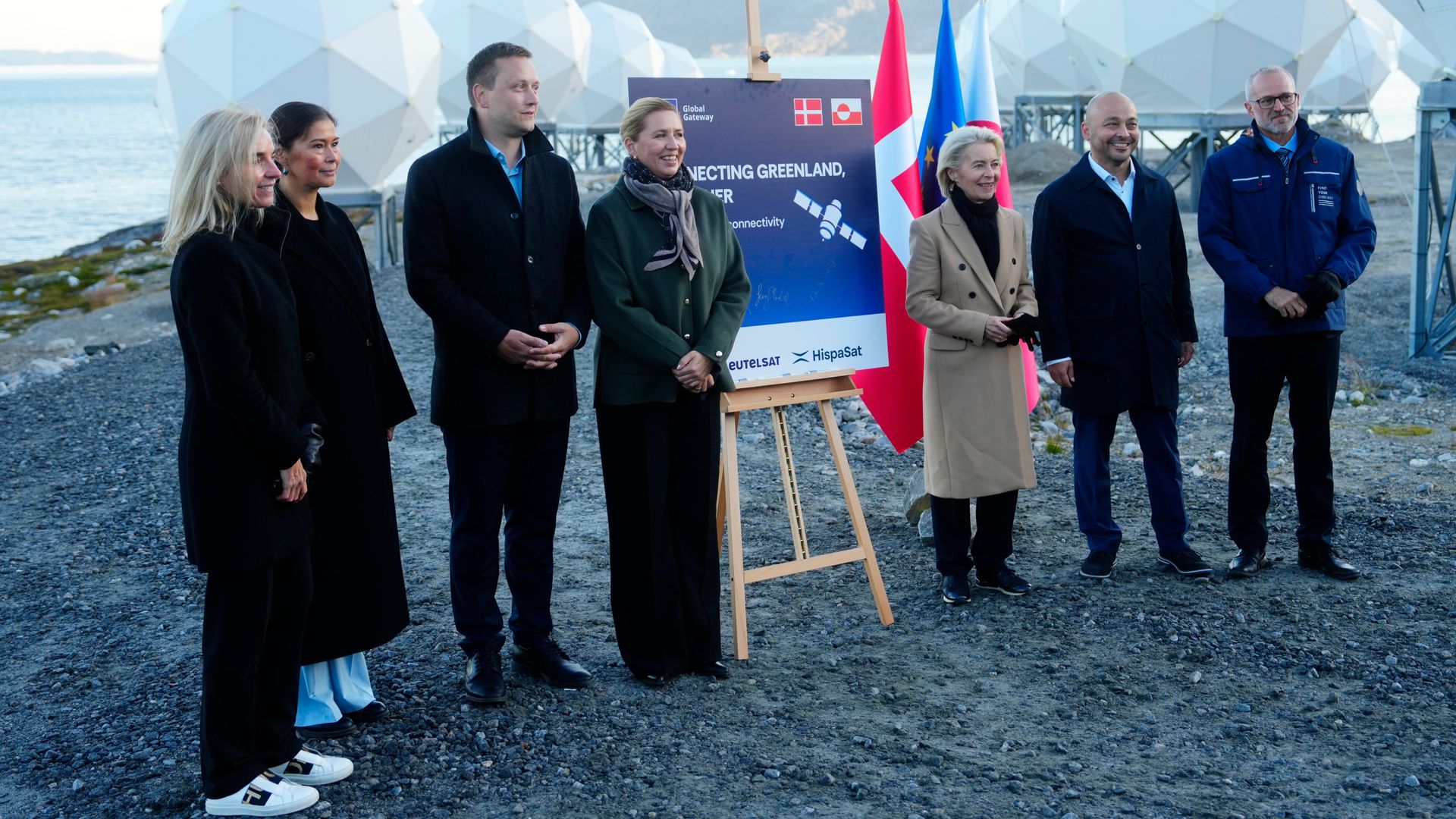
The lazy consensus in international relations is remarkably simple. Money solves geopolitics. Throw enough cash at a patch of ice, slap a flashy price tag on a press release, and watch the strategic panic evaporate. That is the exact delusion driving the European Union's latest $232 million funding splash for Greenland, timed precisely to counter renewed political friction from Washington.
Everyone in the press room nodded along, treating this aid package as a masterclass in modern diplomacy. They called it a defensive moat. They called it a stabilizing force.
They are dead wrong.
I have watched bureaucrats blow millions on vanity grants that ignored local market realities. Brussels is not securing critical supply chains or outmaneuvering superpowers. They are funding a very expensive PR exercise that treats an autonomous nation like a strategic pawn while completely misreading what the island actually needs.
The Subsidized Illusion of Influence
Let us look at the actual mechanics of this deal. The EU package is not a liquid cash infusion designed to build massive rare-earth processing facilities overnight. It is a scattershot collection of educational grants, sustainable energy subsidies, and institutional capacity-building.
Good luck processing heavy metals with a training seminar.
The core premise of the lazy narrative is that Greenland sits helpless between competing empires, waiting for the highest bidder to write a check. That view ignores the reality on the ground in Nuuk. Greenlanders are not passive actors in a great power struggle. They are navigating a complex path toward full economic independence, primarily driven by fisheries and cautious mineral exploration.
When Brussels drops $232 million into local development funds to ward off perceived threats, they are practicing checkbook diplomacy from a bygone era. Money without local infrastructure execution is just noise. I have seen companies try to buy market share with vanity capital, and the result is always the same: bloated bureaucracies, frustrated locals, and zero strategic leverage.
The Mineral Trap Nobody Mentions
If you ask the mainstream foreign policy crowd why Greenland matters, they point straight to the ground. Neodymium. Dysprosium. The critical minerals powering the electric vehicle transition.
The consensus argument assumes that whoever funds Greenland first gets exclusive access to the mine shafts. This betrays a total misunderstanding of resource extraction economics.
Extraction requires three things: capital, regulatory stability, and water-tight logistics. Greenland has plenty of rock, but the infrastructure to pull it out of the ground does not exist. A $232 million EU package does not even cover the cost of a deep-water port capable of handling heavy industrial mining equipment in sub-zero fjords.
Furthermore, local political leadership has strict environmental protections. They will not trade pristine ecosystems for a batch of European grants aimed at stopping trade tensions with the United States. Pretending that a chunk of development money buys mineral exclusivity is a fantasy cooked up by desk analysts who have never coordinated a supply chain audit in the Arctic Circle.
What Real Strategy Looks Like
If the European Union genuinely wanted to build a strategic partnership with Greenland, they would stop treating the island like a charity case or a geopolitical buffer zone.
Real strategy looks like commercial skin in the game. It looks like private equity matching local capital to build shipping lanes, energy grids, and processing plants that make economic sense on a balance sheet, not just a diplomatic memo.
Brussels is trying to substitute actual trade integration with bureaucratic patronage. It fails every time because sovereignty cannot be rented for the price of a regional development fund.
Stop pretending money equals muscle. The Arctic does not care about press releases.