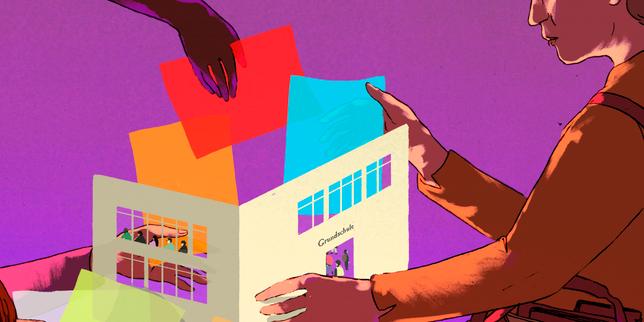
The traditional image of the German school system—an orderly, hierarchy-driven machine—is dead. In its place, a volatile culture of constant negotiation has emerged, turning classrooms into diplomatic zones where teachers, parents, and students engage in a perpetual struggle for control. This shift isn't just a change in classroom etiquette. It is a fundamental breakdown of institutional trust that leaves teachers exhausted and students caught in the middle of a power vacuum.
In the past decade, the "Lehrauftrag" or teaching mandate has been eroded by a consumerist approach to education. Parents no longer view teachers as the ultimate authority on pedagogy but as service providers whose decisions are subject to appeal, debate, and legal threats. When a grade is lower than expected or a disciplinary measure is enacted, the modern German parent doesn't ask the child what they did wrong. They ask the teacher to justify their existence.
The Death of the Pedagogue’s Word
German education was long built on the "Beamter" (civil servant) status of the teacher. This status carried an unspoken weight of objectivity. If a teacher said a child was struggling with mathematics, the parents focused on the math. Today, that objectivity is under siege.
We are seeing a transition from "instruction" to "justification." Teachers now spend nearly as much time documenting their interactions and grading rubrics as they do actually teaching. They are building a paper trail to defend against the inevitable emails that arrive on Sunday evenings. These are not just messages of concern; they are often demands for specific outcomes.
The psychological toll is immense. When every decision can be contested, the decision-maker becomes risk-averse. Teachers are becoming hesitant to give honest, critical feedback because they lack the institutional backing to survive the backlash. This creates a feedback loop of mediocrity.
Helicopter Parents and the Legalization of the Gradebook
The rise of the "Helikopter-Eltern" is well-documented, but the specific German flavor of this phenomenon involves a sharp legal edge. In Germany’s highly stratified school system, the jump from primary school to the Gymnasium (the academic track leading to university) is a high-stakes gatekeeping moment.
For parents, a "4" (the equivalent of a D) is not just a grade. It is a threat to the child’s future social class. This desperation has fueled a surge in "Widersprüche"—formal legal objections to grades.
Imagine a teacher trying to explain the nuances of German literature to a room of thirty teenagers while knowing that three of their sets of parents have lawyers on speed dial. This isn't a hypothetical fear. Administrative courts in states like North Rhine-Westphalia and Bavaria deal with a steady stream of litigation regarding school transitions and exam results.
The result? "Noteninflation" or grade inflation. To avoid the headache of a legal battle, it is often easier for a teacher to bump a student up from a "3-" to a "2." This short-term peace comes at a long-term cost. The value of the Abitur, Germany’s gold-standard school-leaving certificate, is being diluted by a sea of top marks that don't always reflect actual competence.
The Classroom as a Political Arena
It isn't just about grades. The very concept of "Erziehung" (upbringing/education) has become a battleground. There is a widening gap between the values taught at home and those mandated by the state-run school system.
In many urban centers, teachers find themselves mediating between secular state curricula and the deeply held religious or cultural beliefs of a diverse student body. In rural areas, the tension might be more about progressive social policies versus traditionalist family structures.
Teachers are expected to be social workers, psychologists, and integration experts, all while teaching the complexities of chemical bonds or historical timelines. The authority they once held was based on a societal consensus that has since evaporated. Without a shared understanding of what a "good student" or a "good citizen" looks like, the teacher is left to invent the rules on the fly.
The Burden of the New Democracy
Supporters of this shift argue that the "democratization" of the school is a positive step. They claim that the old authoritarian model stifled creativity and ignored the individual needs of the child. There is some truth here. The "Schwarze Pädagogik" (black pedagogy) of the mid-20th century, which relied on fear and rigid obedience, deserved to be dismantled.
However, the pendulum has swung so far that we have reached a state of "Laissez-faire" chaos. True democracy requires a framework of rules. In many German schools, the "Mitbestimmung" (co-determination) of students and parents has been misinterpreted as a right to veto any uncomfortable reality.
When a student knows that their parents will override a teacher’s disciplinary action, the teacher’s power in the classroom vanishes instantly. You cannot run a room of thirty diverse individuals based on "negotiation" alone. Someone has to be the captain of the ship.
Why the System is Burning Out
The data is grim. Germany is facing a massive teacher shortage, with some estimates suggesting a gap of 25,000 to 30,000 educators by the end of the decade. The reasons cited by those leaving the profession rarely focus on the salary—which is relatively high for German civil servants—but on the "psychische Belastung" (psychological strain).
- Continuous Conflict: Dealing with dozens of high-conflict parents every week.
- Administrative Bloat: Documenting every minor incident to avoid lawsuits.
- Lack of Support: School principals who side with parents to keep the peace.
- Social Fragmentation: Managing classrooms where students lack a common language or cultural baseline.
Young, idealistic teachers enter the "Referendariat" (teacher training) and are hit with the reality that their job is less about inspiring minds and more about managing egos. Many quit before they even receive their full certification.
The Myth of the "Easy" Teacher Job
There is a persistent myth in German society that teachers have it easy—short workdays and long summer holidays. This "Halbtagsjob" stereotype is a relic of the 1970s. Modern German teachers are often working 50 to 60 hours a week during the term, much of it spent on "Elternarbeit" (parent work).
The school has become the dumping ground for every societal problem that parents are too busy or too overwhelmed to solve. From screen addiction and cyberbullying to basic manners and hygiene, the school is expected to fix it all. But when the school tries to set boundaries to address these issues, parents often push back against the "infringement" on their private sphere. You cannot have it both ways.
Reclaiming the Educational Space
To fix this, the German educational system needs more than just more tablets and faster internet. It needs a "Renovierung" of the social contract between the school and the home.
States like Hamburg have tried to streamline the transition to secondary school to reduce parental anxiety, but the core issue remains the same: the loss of trust in the professional judgment of the educator.
We must move back toward a system where the teacher’s expertise is respected as a baseline, not a suggestion. This doesn't mean returning to the days of the cane and the corner. It means creating clear, enforceable boundaries where the school's authority in the realm of education is protected by law and social custom.
If parents want their children to succeed in a complex, competitive world, they must stop treating the teacher as the enemy. A child who never learns to respect a fair authority figure in the classroom will struggle to navigate the hierarchies of the workplace and the responsibilities of citizenship. The negotiation must end where the learning begins.
Parents need to step back. The state needs to provide more than just lip service to teacher protection. Until the classroom is once again a place of structured learning rather than a forum for parental litigation, the German school system will continue its slow slide into dysfunction.
Educators deserve the right to teach without looking over their shoulders. Students deserve to learn in an environment where the rules are consistent and the grades are earned, not negotiated in an exchange of emails. The future of the country's intellectual capital depends on restoring the teacher's role as the undisputed head of the classroom.
Stop checking the gradebook and start checking the behavior.


