The Ghost in the Machine
Science does not always break with a thunderclap. Sometimes, it happens in the quiet glow of a lab monitor at three in the morning, where a statistician stares at a spreadsheet that refuses to care about forty years of accumulated assumptions.
For decades, the medical community held a tidy map of the human heart. It was a mechanical blueprint, clean and logical. When a specific protein plaque began to accumulate in the arterial walls, the consensus pointed the finger directly at inflammation. The narrative was comforting in its simplicity: stop the inflammation, clear the pathway, and save the muscle. Millions of research dollars chased this single theory. Pharmaceutical giants poured fortunes into forging chemical keys designed to lock down the inflammatory pathways suspected of driving cardiovascular decline.
Then came the clinical trial results.
They did not whisper defeat. They shouted it. The drug, hailed for years as the definitive answer to a stubborn disease mechanism, failed. Not partially. Completely. It lowered the inflammatory markers with surgical precision, exactly as it was engineered to do. Yet, the patients kept getting sicker. Their hearts continued to stiffen. The expected clinical benefit evaporated into the cold air of statistical insignificance.
To understand why this matters, you have to step away from the lab benches and look at the human cost of a broken hypothesis.
A Familiar Story in the Clinic
Imagine walking into a consultation room where the air smells of rubbing alcohol and quiet anxiety. A patient sits across from a cardiologist, holding a printout of an echocardiogram like a fragile bird.
"The numbers look stable," the doctor says, offering a reassuring smile that doesn't quite reach their eyes.
"But I can't walk to the mailbox anymore," the patient replies.
This disconnect is the daily reality of modern cardiology. We have mastered the art of measuring the smoke while remaining entirely blind to the fire. For years, the medical establishment treated inflammation as the primary arsonist in heart disease. It was an easy villain to target. Blood tests could quantify it. Biopsies could map it. Drug compounds could suppress it.
Yet, biology is notoriously uncooperative with human desire for simple narratives.
When the experimental drug suppressed the targeted inflammatory pathway, researchers assumed healing would naturally follow. They treated the body like an automobile engine, believing that if you clean a fouled spark plug, the car will roar back to life. But the human heart is an ecosystem, not a machine. By neutralizing one specific pathway, the researchers inadvertently disrupted a complex biological network of checks and balances that scientists are only beginning to comprehend.
Consider a hypothetical scenario in a forest. A forest manager notices a surplus of dead brush and concludes it is the sole cause of soil degradation. They clear every stick of wood from the forest floor. They achieve their metric: zero brush. But two seasons later, the soil erodes completely, moisture vanishes, and the trees wither. The manager successfully solved the metric while destroying the habitat.
That is precisely what happened in the clinical trial. The drug cleared the biological brush, but in doing so, it destabilized the broader physiological terrain.
The Weight of an Error
There is a profound humility required when a grand theory collapses. In medical research, ego is an expensive luxury.
When the trial data hit the desks of principal investigators, the initial reaction was denial, quickly followed by the quiet dread that accompanies a paradigm shift. Decades of peer-reviewed papers, academic careers, and billions of venture capital dollars had been anchored to the inflammatory hypothesis. To question the hypothesis was to question the foundation of modern cardiovascular drug development.
This is where the human element of science collides with corporate inertia.
Behind every failed clinical trial are thousands of volunteers. These are people diagnosed with progressive cardiovascular conditions who roll up their sleeves month after month, submitting to blood draws, ECGs, and invasive biopsies. They do not do this for fame or financial gain. They do it because they carry the weight of a ticking clock in their chests. They volunteer out of hope.
When a drug fails, the headlines focus on the stock market drop of the pharmaceutical sponsor. Wall Street analysts wring their hands over lost market share. But the true casualty of a failed drug is not a balance sheet. It is the stolen time of the patient who placed their faith in a flawed premise.
We must confront an uncomfortable truth. Medical science often advances by building elaborate scaffolding around incorrect assumptions. We refine the tools, accelerate the delivery systems, and sharpen the diagnostics, all while marching steadily in the wrong direction.
Mapping the Unknown
If inflammation is not the primary driver we thought it was, what is?
The fallout from the failed trial has forced researchers to look deeper, past the surface-level markers into the cellular machinery itself. Scientists are now investigating metabolic exhaustion—the idea that heart cells simply run out of fuel long before they succumb to structural damage. Others are looking at genetic expressions that dictate how myocardial tissue responds to mechanical stress over decades of wear and tear.
It is messy work. There are no clean, patentable chemical targets yet. There is only confusion, debate, and the slow, grinding process of reinvention.
To watch this unfold from the outside is to witness the scientific method at its most raw. It lacks the shiny certainty of a commercial advertisement. It looks more like a detective novel where the detective realizes halfway through the investigation that they have been chasing the wrong suspect the entire time.
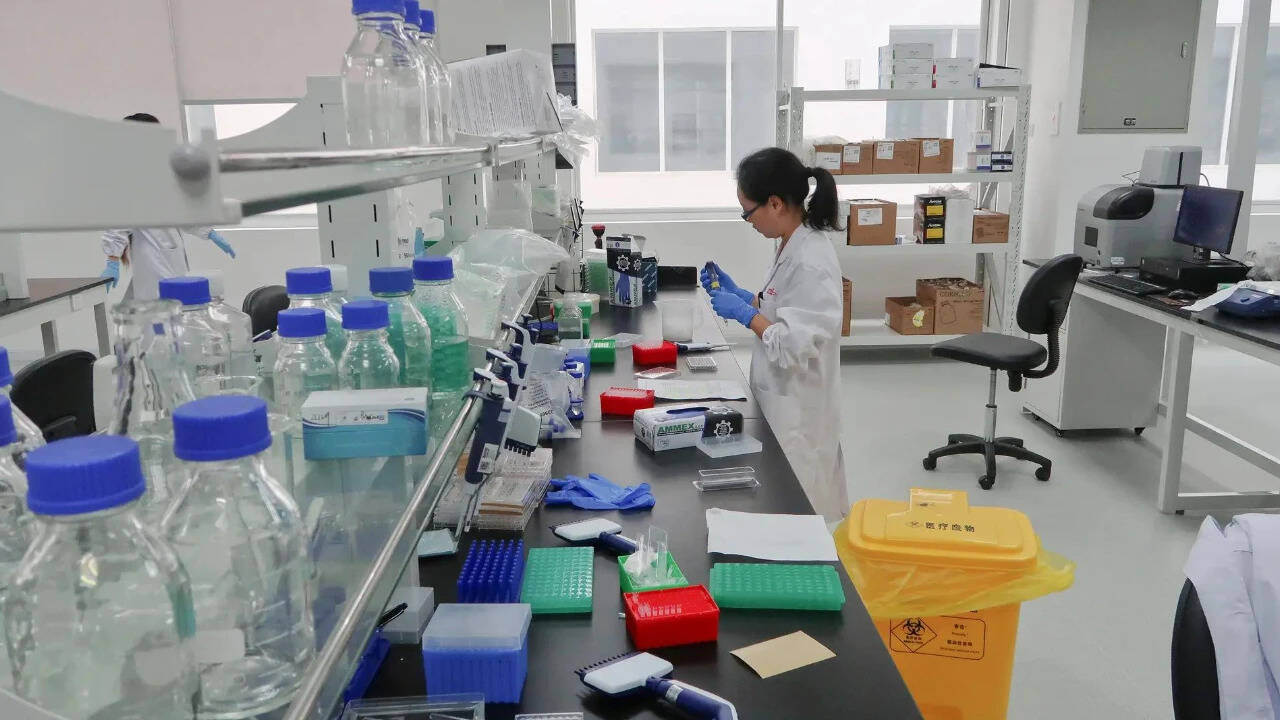
The laboratory lights stay on late into the night. Microscopes hum. Coffee cups pile up. Somewhere in that quiet intensity, the next generation of hypotheses is being born—one that respects the terrifying complexity of the human body rather than trying to force it into a convenient box.
The map is gone. The territory remains. And for the millions of hearts beating out time in the dark, the search for the truth cannot afford another false turn.