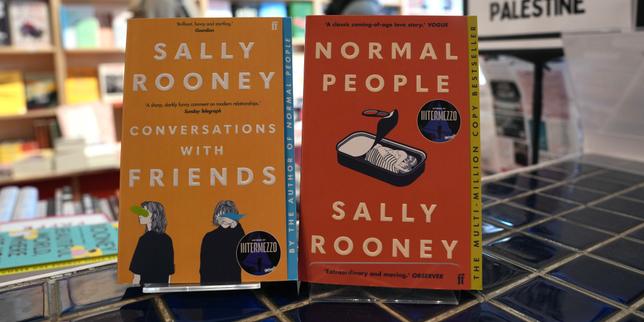
In the United Kingdom, a coalition of 160 prominent cultural figures has formally condemned the British government over a counterterrorism statute that forced publishers and retailers to pull novels by bestselling Irish author Sally Rooney from UK shelves. The controversy centers on the Terrorism Act 2000 and its sweeping proscription provisions, which criminalize providing financial or material support to designated organizations. Because Rooney publicly pledged her literary royalties to support direct-action groups facing terror designations, major publishing houses and distributors preemptively froze sales of her books across Britain to shield themselves from prosecution under strict-liability corporate compliance laws.
This is not a story about a government censor marching into a warehouse with a matchbox. It is much quieter, and far more effective. Modern censorship in Western democracies rarely relies on explicit bans or burning paper. Instead, it operates through financial compliance, corporate risk aversion, and broadly drafted national security statutes that force private companies to police speech on the state's behalf. When 160 writers, actors, and public intellectuals signed an open letter calling the situation a "repressive absurdity," they were pointing at a legal trap that turns bookstores into reluctant enforcers of anti-terror legislation.
The Anatomy of a Preemptive Book Pull
To understand how novels like Normal People and Conversations with Friends became toxic assets for British retailers overnight, you have to look at the mechanics of UK counterterrorism law rather than literary criticism. Under the Terrorism Act 2000, once the Home Secretary proscribes an organization, that group becomes illegal in the United Kingdom. The law does not stop at membership. Section 15 and Section 17 make it a severe criminal offense to invite support for, fundraise for, or provide money and property to a proscribed group, even if the donor or intermediary has no intention of funding violence.
When an author announces that proceeds from book sales will be directed toward a group targeted by proscription—such as Palestine Action, whose designation under anti-terror statutes triggered widespread legal panic across British civil society—the financial pipeline of publishing suddenly intersects with national security law.
Publishing is a chain of payments. A reader buys a paperback at a high-street shop. The retailer pays the wholesaler. The wholesaler pays the publisher. The publisher pays royalties to the literary agency, which transfers the funds to the author. If the author has publicly declared an intent to route those specific funds to a proscribed entity, every corporate link in that chain faces an acute legal dilemma.
Corporate legal departments do not gamble with counterterrorism statutes. Under UK law, strict liability and corporate facilitation offenses mean that knowingly processing funds destined for a banned group can trigger asset freezes, criminal investigations, and catastrophic reputational damage. Faced with even a fractional risk of violating anti-terror financing rules, distributors and booksellers did what risk-averse corporations always do. They hit the kill switch.
Why 160 Cultural Figures Intervened
The open letter signed by 160 prominent figures—spanning novelists, playwrights, academics, and performers—did not merely defend Sally Rooney's right to hold controversial political views. The signatories targeted the underlying statutory architecture that allowed an anti-terror law designed to stop armed cells from buying explosives to be weaponized against literary distribution.
Their argument rests on three foundational pillars that expose the widening gap between the stated intent of national security legislation and its real-world enforcement.
The Collapse of Proportionality
Counterterrorism laws were sold to the British public in the aftermath of domestic bombings and international militant networks. Parliament granted the executive branch extraordinary powers—including the ability to ban organizations by ministerial order with minimal parliamentary debate—on the premise that these tools were necessary to prevent mass casualties.
Applying those exact same financial sanctions to an author donating royalties to a direct-action protest movement destroys any pretense of proportionality. The signatories argued that when the state blurs the line between violent extremism and civil disobedience, it delegitimizes the entire framework of national security. A law that treats a novelist's royalty check identically to an arms shipment has lost its moral and legal compass.
Chilling Effects by Proxy
The British government can truthfully claim that no minister signed an order banning Sally Rooney's books. From a strict procedural standpoint, Downing Street's hands look clean. Yet the cultural coalition highlighted how this plausible deniability makes the censorship more insidious.
By expanding the definition of terrorism and criminalizing adjacent financial support, the state creates an environment of regulatory terror. Private corporations—publishers, banks, payment processors, and bookshops—become hyper-vigilant gatekeepers. They over-comply to protect their balance sheets. The result is identical to state censorship, achieved without a single parliamentary vote or judicial warrant.
The Erosion of Artistic Autonomy
Writers have always used their platforms and earnings to fund political causes, from anti-apartheid movements to suffragette campaigns. Historically, a clear firewall existed between an artist's political philanthropy and the distribution of their art. You could sell a book in London even if the author sent the profits to a radical union in Dublin or a dissident group in Prague.
The intervention by the 160 figures warns that this firewall has collapsed. If an author's political donations can retroactively taint their entire backlist as contraband, then every writer in Britain is effectively writing under a suspended financial sentence.
The Legal Mechanics of Proscription in Britain
To grasp why publishers panicked, one must examine how uniquely powerful the British Home Secretary's proscription authority actually is. Compared to constitutional frameworks in the United States, where the First Amendment erects massive barriers against prior restraint and protects political advocacy up to the threshold of imminent lawless action, the UK operates under parliamentary sovereignty with no codified bill of rights capable of striking down primary legislation.
Under Section 3 of the Terrorism Act 2000, the Home Secretary may add an organization to the proscribed list if they believe it is "concerned in terrorism." The statutory definition of terrorism in Section 1 is famously expansive. It covers not just serious violence against a person, but also serious damage to property, provided the action is designed to influence the government or intimidate the public and is made for the purpose of advancing a political, religious, racial, or ideological cause.
Consider the implications of that phrasing. Property damage—smashing a window, spray-painting a defense contractor's facade, or blocking a factory gate—can legally be classified as terrorism if the political motive fits the criteria. Once a direct-action group is proscribed under this definition, the full weight of British anti-terror financing law descends upon anyone connected to its funding.
- Zero De Minimis Threshold: There is no minimum financial amount required to trigger an offense. Routing ten pounds of book royalties carries the same statutory prohibition as wiring ten million pounds.
- Reverse Burden of Proof: In certain financing scenarios, defendants must prove they had no reasonable cause to suspect the funds might be used for terrorism—a near-impossible standard when an author has announced their intentions in national newspapers.
- Bank De-risking: Even if a publisher wanted to stand on principle and keep printing Rooney's novels, their commercial banks and credit card processors would likely threaten to terminate their accounts rather than risk secondary compliance breaches.
This is the hidden machinery behind the headlines. A bookshop chain does not pull a bestseller because its executives despise the author's politics. It pulls the book because its clearing bank refuses to process transactions linked to a potential Section 17 violation.
The Counter-Argument From National Security Hawks
Dismissing the government's position as pure authoritarianism misses the genuine legal and security dilemmas that counterterrorism officials face. Defenders of Britain's strict proscription regime argue that carving out exceptions for artists, intellectuals, or popular novelists would blow a fatal hole in anti-terror financing laws.
From the perspective of the Home Office and security agencies, money is fungible. When an organization is proscribed, the state's primary objective is to starve it of oxygen—financially, logistically, and rhetorically. If the law allowed high-profile authors to publicly funnel royalties into banned groups under the banner of free expression, wealthy sympathizers of far more dangerous organizations would immediately exploit the same loophole.
Security analysts also point out that corporate compliance must be uniform to work. You cannot ask a mid-level compliance officer at a publishing house or a retail bank to conduct a philosophical assessment of whether a proscribed group is "really" violent or merely engaging in robust protest. Either the proscription list is an absolute red line for financial transactions, or it is unenforceable.
In a hypothetical scenario, if a radical far-right organization were proscribed for vandalizing religious sites and threatening minorities, the public would rightly demand that bookstores stop selling books whose proceeds funded that group. The state's defenders argue that the law must apply blindly across the ideological spectrum, regardless of how acclaimed the author happens to be.
How Compliance Culture Replaced the Censor
The Rooney controversy reveals a profound shift in how speech is regulated in the twenty-first century. For centuries, censorship was a visible, confrontational act. The state appointed a censor—like Britain's Lord Chamberlain, who vetted theater scripts until 1968—and that official openly banned works deemed subversive or obscene.
Today, the state rarely bans a book. Instead, it constructs a web of financial and regulatory liabilities so dense that private intermediaries voluntarily remove the work to survive. We have seen this pattern repeat across multiple sectors over the past decade:
- Payment Processors as Moral Arbiters: Companies like Visa, Mastercard, and PayPal routinely dictate what legal content can be sold online by threatening to cut off merchant accounts.
- Banking De-platforming: British banks have closed thousands of accounts belonging to activists, charities, and political figures simply because their compliance algorithms flagged potential regulatory friction.
- Publishing Risk Aversion: Major publishing conglomerates, now owned by massive multinational media corporations, prioritize shareholder stability and legal insulation over defending controversial authors.
When Sally Rooney's books vanished from UK retail channels, there was no court order to appeal. There was no banned-books list published in the London Gazette. Readers simply encountered "out of stock" notices, quiet delistings, and corporate silence. This frictionless disappearance is precisely what alarmed the 160 signatories. You can fight a censor in court, yet you cannot easily sue a distributor for making a "commercial risk assessment."
The Global Ripple Effects for Publishing
The fallout from this clash extends far beyond British borders and Rooney's immediate readership. London remains one of the twin capitals of English-language publishing alongside New York. Decisions made by UK distributors, insurers, and legal departments directly shape what gets printed, stocked, and read across the Commonwealth and Europe.
International literary agents are already reassessing standard morality and indemnity clauses in publishing contracts. Historically, indemnity clauses protected publishers if an author committed libel or copyright infringement. Now, legal teams are drafting language that allows publishers to suspend contracts, withhold advances, and pulp existing stock if an author's public statements or charitable donations create compliance risks under national security or sanctions regimes.
For younger, less established writers without Rooney's global fame or independent wealth, the message is unmistakable. Expressing solidarity with controversial protest movements—or pledging proceeds to legal defense funds for activists—can result in instant commercial erasure. Self-censorship does not require an arrest warrant; it only requires the threat of losing your livelihood.
The Structural Flaw in Britain's Anti-Terror Architecture
Ultimately, the crisis over Sally Rooney's novels is a symptom of a legislative addiction that has plagued Westminster for a quarter-century. Since 2000, successive British governments—both Labour and Conservative—have passed major counterterrorism bills every few years, each time expanding the definition of extremism and lowering the threshold for criminal liability.
Laws enacted to dismantle covert paramilitary networks have steadily migrated into the policing of public order, climate protests, and political dissent. Because proscription relies on an overly broad definition of terrorism that equates property damage with lethal violence, the statute lacks the precision required to distinguish between an existential threat to the state and an inconvenient political protest.
The 160 cultural figures who signed the open letter forced a rare moment of public reckoning over this statutory creep. By highlighting the absurdity of treating bestselling romance and literary fiction as contraband, they exposed how far Britain's national security apparatus has drifted from democratic accountability. Until Parliament narrows the statutory definition of terrorism and restores a clear boundary between criminal violence and political speech, high-street booksellers will remain trapped on the front lines of counterterrorism enforcement, pulling novels off the shelves to satisfy compliance officers.