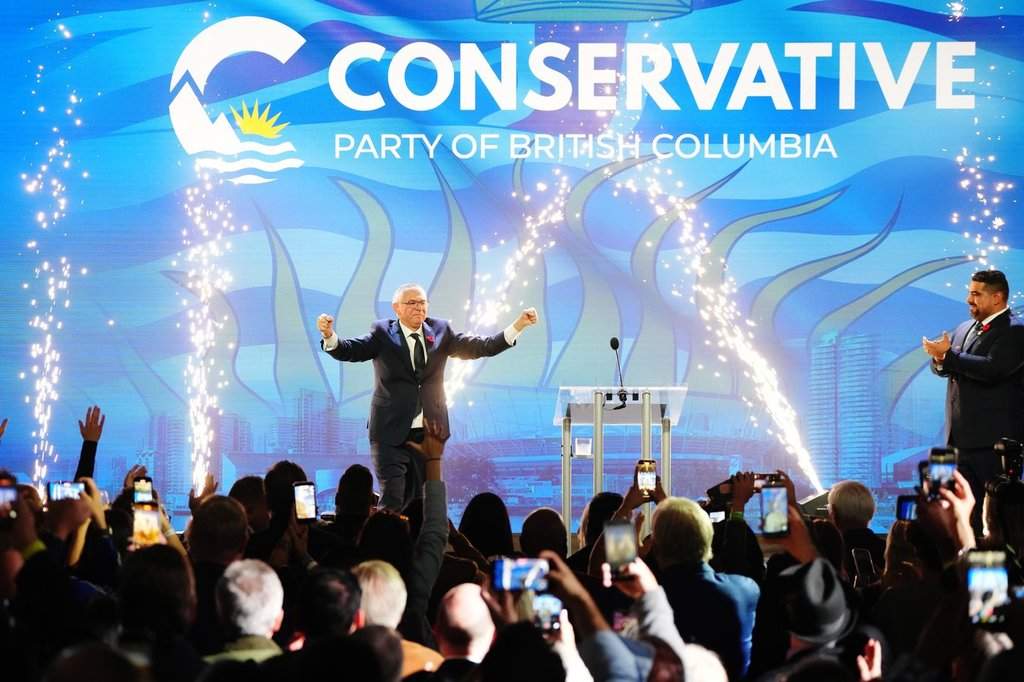
When political leaders declare that voters "chose change" following a provincial election, they are repeating the oldest, safest cliché in modern campaigning. In the wake of British Columbia’s recent election, premier-designate Doerkson framed the outcome as a decisive mandate for a new direction. That narrative fits neatly into a standard victory speech, and it is the exact consensus most political coverage immediately adopts.
Looking closely at the structural realities of British Columbia’s electorate, governance, and economy suggests a much more complicated picture. Voters rarely hand over a blank check for wholesale transformation, especially in a province defined by razor-thin margins, deep regional divides, and entrenched institutional constraints. You might also find this related story useful: Fifty-Five Stitches and the Silent Geography of Family Rage.
The Myth of the Monolithic Mandate
Standard post-election commentary treats an electoral victory as a unified ideological awakening. According to the "voters chose change" framing, the electorate examined the incumbent record, rejected its core philosophy, and enthusiastically endorsed a distinct alternative.
Electoral behavior in British Columbia consistently defies this neat storyline. Over the past decade, provincial elections in BC—including the deadlocked 2017 race and the pandemic-era 2020 vote—have demonstrated that small shifts in a handful of swing ridings in Metro Vancouver, the Fraser Valley, and Vancouver Island determine who forms government. When power changes hands under a first-past-the-post system, a shift of a few thousand ballots across a dozen battleground districts can flip the legislature without representing a massive ideological realignment across the broader population. As highlighted in detailed coverage by Al Jazeera, the effects are widespread.
Political scientists who study Canadian provincial voting behavior, such as those affiliated with the Canadian Election Study, have repeatedly noted that retrospective voting—punishing an incumbent for immediate economic pressures like housing costs, inflation, and healthcare wait times—often outweighs prospective enthusiasm for an incoming platform. Saying voters "chose change" conflates dissatisfaction with the status quo with consensus on the cure.
The Structural Reality Governing Any BC Premier
Even when an incoming premier arrives in Victoria with genuine intentions to overhaul policy, the machinery of British Columbia’s economy and public sector limits how fast or far any government can move.
Consider the primary issues dominating provincial politics:
- Housing Affordability and Supply: Municipal zoning bottlenecks, high interest rates set nationally by the Bank of Canada, construction labor shortages, and development financing costs do not disappear when a new cabinet is sworn in. Whether a government favors market-driven deregulation or public-sector housing investment, physical supply takes years to permit, finance, and build.
- Healthcare Delivery: British Columbia’s health authorities face demographic pressures from an aging population and a nationwide shortage of physicians and nurses. Reorganizing administrative structures or shifting funding models takes multiple budget cycles to yield measurable improvements in emergency room wait times.
- Resource Economy and Reconciliation: Major infrastructure, forestry, mining, and energy projects operate within a complex legal framework shaped by constitutional rights, environmental assessments, and the province's Declaration on the Rights of Indigenous Peoples Act (DRIPA). Any incoming administration must navigate binding legal precedents and established consultation protocols rather than simply issuing executive decrees.
In practice, incoming administrations spend their first year discovering that much of the provincial budget is already committed to statutory programs, collective bargaining agreements, and multi-year capital projects.
What Voters Actually Signal in Tight Elections
When commentators ask whether an election represents a mandate for sweeping change, they often miss the more nuanced signal embedded in the results. In closely contested races, the electorate is frequently delivering a warning rather than an endorsement.
Imagine a scenario where a voter in Surrey or Langford casts a ballot against the incumbent party because their rent increased by thirty percent and their local clinic closed. That same voter may have significant reservations about the incoming party's approach to public transit funding, environmental policy, or public-sector unions. By grouping every non-incumbent ballot under the banner of "change," political leaders and pundits flatten millions of distinct, often contradictory priorities into a single talking point.
Furthermore, a narrow legislative majority—or a minority parliament dependent on cross-party cooperation—forces moderation. In British Columbia’s parliamentary history, tight seat counts have repeatedly compelled governments to soften their sharpest campaign pledges in order to survive confidence votes and maintain stability.
The Limitations of the Contrarian View
Challenging the "mandate for change" narrative does not mean elections are inconsequential. A change in leadership alters cabinet priorities, shifts regulatory tone, reshapes crown corporation boards, and redirects billions of dollars in discretionary spending. Over a four-year term, incremental adjustments to taxation, permitting timelines, and social program eligibility accumulate into tangible differences for households and businesses.
Dismissing campaign rhetoric entirely overlooks the real power of executive authority. A new premier sets the agenda, controls the legislative calendar, and determines which crises receive immediate political capital.
Reading the Next Phase of BC Politics
To understand what actually happens next in Victoria, observers should look past victory-night slogans and track concrete institutional indicators:
- The First Fiscal Update: Campaign promises meet Treasury Board reality in the first budget cycle. Watching how the incoming government balances tax pledges, program spending, and the provincial deficit reveals its true priorities.
- Deputy Minister Appointments: Changes at the top of the non-partisan public service indicate whether the premier intends to disrupt existing ministry operations or rely on institutional continuity.
- Municipal and Indigenous Relations: Early interactions with Metro Vancouver mayors and First Nations leadership will demonstrate whether the new administration plans to pursue collaboration or confrontation on housing and resource development.
Elections mark a transfer of responsibility, not an instant transformation of underlying conditions. Whether premier-designate Doerkson’s government delivers meaningful change will depend far less on the rhetoric of election night than on how it navigates the stubborn economic and institutional realities waiting in Victoria.


