The "big tent" of BRICS just hit a very hard, very public pole. If you thought the expansion of the bloc was going to create a smooth alternative to Western hegemony, the recent New Delhi meeting is a cold bucket of water. For the first time in years, a high-level BRICS gathering ended without a joint statement. No handshake photos could hide the fact that the group is currently vibrating with internal friction that might actually be terminal.
India took the presidency this year with the hope of being the "Vishwa Mitra" or the global friend. Instead, New Delhi just presided over a family feud where the members aren't even speaking the same language. The failure to produce a joint communique last week wasn't a scheduling fluke. It was a symptom of a bloc that's grown too fast, too soon, and with too many conflicting agendas.
The Middle East wedge
The immediate culprit for the stalemate in Delhi is the war in the Middle East. It's not just a disagreement over wording; it's a fundamental split in worldviews. On one side, you have Iran—one of the newest members—demanding fire and brimstone rhetoric against Israel. On the other, you have the UAE and India, who have deep, strategic, and economic ties with the West and Israel that they aren't willing to torch for a press release.
India tried to soften the language. They wanted to move away from direct condemnation of Israel and drop specific mentions of East Jerusalem as the Palestinian capital—a position India has held quietly since 2017 but one that remains a red line for Moscow, Beijing, and Tehran. When India suggested replacing "Israel" with "occupying power" to keep things vague, the room essentially went cold.
The irony is thick here. BRICS was built on the idea of non-interference. But when your members are actively involved in or adjacent to a shooting war, "not taking sides" becomes a form of paralysis. You can't be a global powerhouse if you can't even agree on what to call a war happening in your own backyard.
Too many cooks in the kitchen
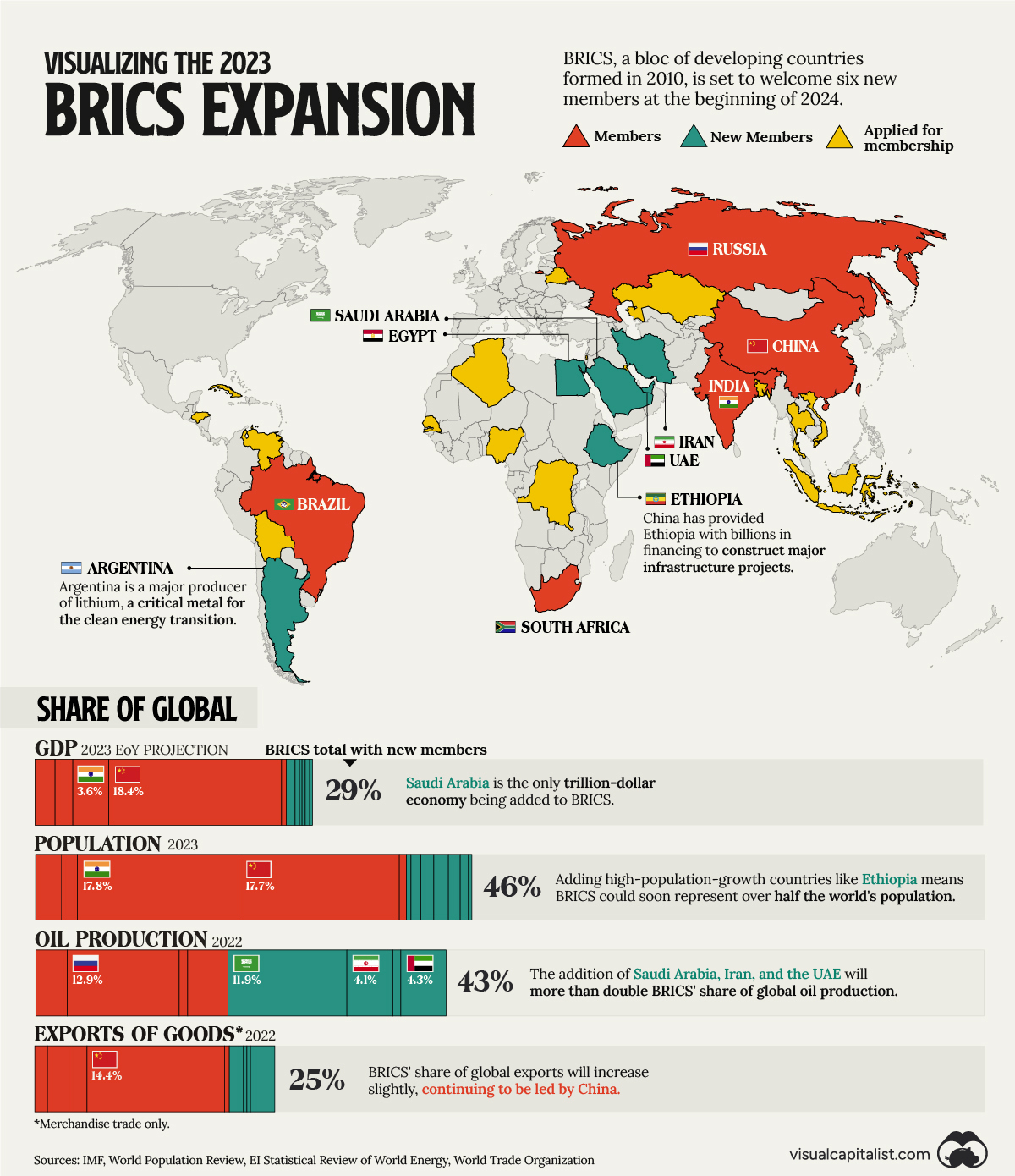
Expansion was supposed to be the masterstroke that made BRICS the definitive voice of the Global South. By adding Egypt, Ethiopia, Iran, and the UAE, the bloc now represents over 40% of the world's oil production and a massive chunk of its population. But bigger isn't always better.
In the old days—the "BRICS 5" era—it was already hard to get India and China to agree on anything. Now, you've added the Iran-UAE rivalry into the mix. You have Ethiopia and Egypt, who are at each other's throats over water rights and the Grand Ethiopian Renaissance Dam.
The bloc has no permanent secretariat. No headquarters. No binding rules. It operates on consensus. In a group of five, consensus is a chore. In a group of eleven, it's a miracle. We’re seeing a "two-speed" BRICS emerge:
- The Agitators: Russia, China, and Iran, who want the bloc to be an explicitly anti-Western shield.
- The Balancers: India, Brazil, and South Africa, who want to reform the global system without burning the house down.
The China problem won't go away
Let’s be honest about the elephant in the room. India's biggest nightmare is BRICS becoming a tool for Chinese dominance. Beijing loves the expansion because it gives them a larger choir to lead. New Delhi, meanwhile, is doing a frantic tightrope walk. They want to lead the Global South, but they also want to stay in the good graces of the Quad (the U.S., Japan, and Australia).
During the Delhi meet, it became clear that China and Russia are more than happy to let the Middle East conflict polarize the group. It paints the U.S. into a corner and forces "neutral" countries like India to pick a side. India’s refusal to sign a statement that echoed the Beijing-Moscow line wasn't just about Israel; it was a "no" to Chinese leadership of the bloc.
The de-dollarization pipe dream
Everyone talks about the "BRICS currency" like it's coming next Tuesday. It isn't. The Delhi meeting barely touched on it because the members can't even agree on a payment system, let alone a coin. While Russia and Iran are desperate to escape the dollar because of sanctions, India is perfectly happy using the dollar for most of its trade.
India doesn't want to replace the dollar with the Yuan. That's the part people miss. Moving from a U.S.-led financial system to a China-led one isn't "independence"—it's just switching masters. Until the bloc can solve this internal trust deficit, all the talk about a new global reserve currency is just noise for the headlines.
What happens next
The September summit in New Delhi is the real "do or die" moment. If India can't bridge these gaps by then, BRICS risks becoming the new Non-Aligned Movement: a group that talks a lot, meets often, but achieves absolutely nothing of substance.
If you're watching this as an investor or a policy wonk, stop looking at the expansion numbers. Start looking at the joint statements—or the lack of them. The fact that deputy ministers couldn't even agree on a basic document in Delhi suggests that the "brick wall" is actually a pile of loose gravel.
Don't expect a sudden collapse. These things linger. But don't expect a unified global force either. India's job now isn't to grow the bloc; it's to stop it from breaking into pieces before the first toast is made at the summit. Watch for India to pivot the conversation back to "safe" topics like supply chain resilience and digital infrastructure. If they can't talk about the war, they'll talk about the weather and the web. It's the only way to keep everyone in the room.