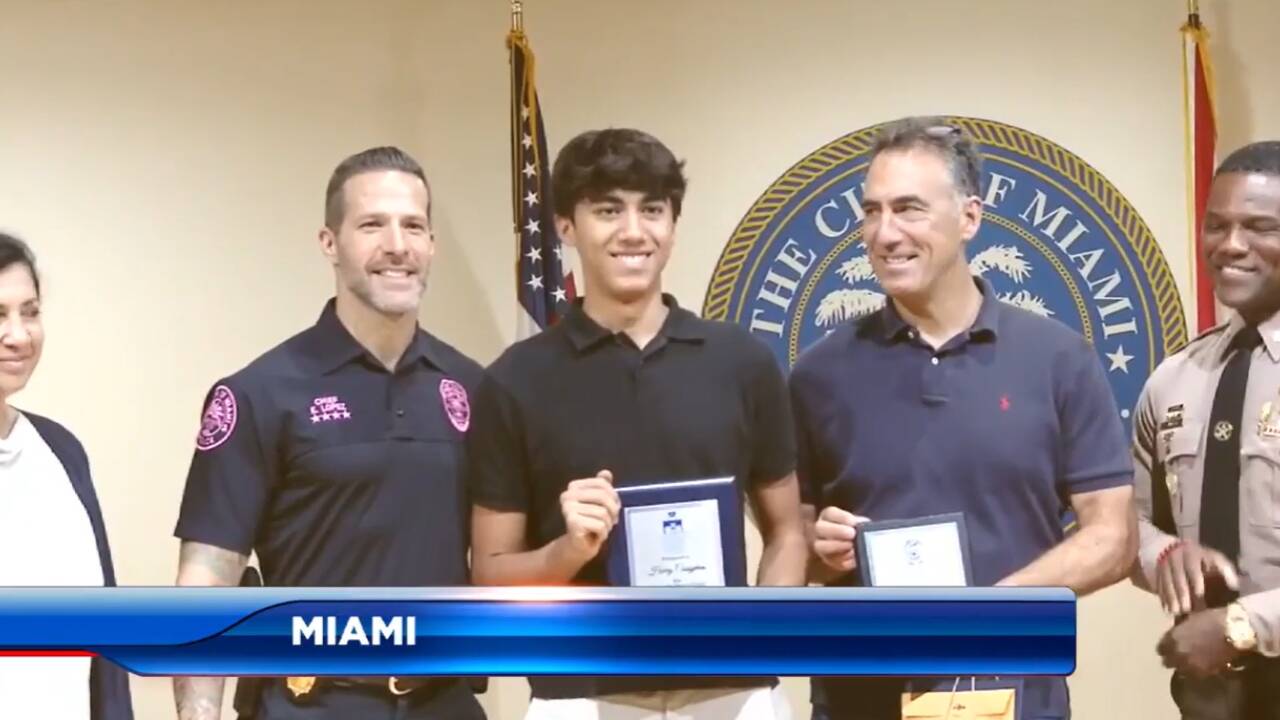
Calling a teenager a real-life Spider-Man after a high-stakes chase through Brickell makes for a great headline. It also misses almost everything worth understanding about urban risk, viral hero worship, and why spectators keep mistaking adrenaline for competence.
The standard media reflex is predictable. Spot a dramatic pursuit in a dense financial district, find a catchy nickname, frame the kid as a fearless vigilante, and move on to the next clip. That lazy consensus turns a chaotic street event into a comic-book fable. Real life does not run on comic-book physics or script immunity. Concrete does not care how brave you feel. Traffic in downtown Miami does not pause for main-character energy. In similar developments, read about: Press Risk in Contested Territory Why Incident Reports Miss Systemic Exposure.
When audiences watch a teenager sprint, climb, or chase someone through high-rises, glass towers, and busy intersections, they project heroism onto motion. Speed looks like certainty. Courage looks like control. In reality, high-speed chases in dense urban environments amplify error on every side—the pursuer, the pursued, bystanders, and responding officers.
The Myth of Street Heroism in High-Density Cities
Hero narratives are comforting because they simplify messy situations into good guys, bad guys, and a thrilling finish. Brickell is not a quiet neighborhood cul-de-sac. It is a vertical bottleneck packed with commuters, delivery riders, rideshare drivers, tourists, and tight sightlines. Adding an uncoordinated foot pursuit into that mix does not automatically make the street safer. Often, it just multiplies variables nobody can control. The Washington Post has analyzed this fascinating issue in extensive detail.
Let’s define the terms properly before handing out capes. Bravery is choosing to act despite fear when the stakes and risks are reasonably understood. Recklessness is acting on impulse or adrenaline while ignoring catastrophic downside. Bystander intervention in public safety and criminology refers to civilians stepping into a developing situation—ideally in ways that de-escalate or summon trained help without creating secondary hazards.
People routinely mash those three concepts together because the footage looks exciting. Someone runs fast through traffic, a crowd cheers, a nickname sticks, and suddenly a split-second gamble gets rebranded as civic virtue.
I have watched organizations and public campaigns burn massive budgets trying to manufacture "community engagement" and "everyday hero" narratives around impulsive street behavior, only to face harsher blowback when someone gets hurt. Good intentions and viral applause are terrible substitutes for situational awareness.
What People Actually Ask After a Viral Chase
Whenever a story like this breaks, the follow-up questions follow the exact same script. Most of them start from a flawed premise.
- "Should everyday people step in and chase suspects when crimes happen?" That question assumes chasing someone is the main way a citizen helps. In most real-world street incidents, chasing a fleeing person escalates panic, draws the pursuit into unpredictable traffic or blind corners, and puts an untrained person directly into physical danger. Stepping in smartly usually means creating distance, observing carefully without escalating, protecting vulnerable people nearby, and giving accurate information to emergency responders.
- "Why do viral nicknames like 'Spider-Man' catch on so fast?" Because short metaphors travel faster than nuance. A nickname compresses a complicated, potentially reckless moment into an instant identity. Once a label sticks online, people defend the label rather than examine the actual sequence of events.
- "Does public praise encourage copycats?" Yes, especially among teenagers and young adults who already face heavy social pressure to chase clout, views, and approval. When risk gets rewarded with affection and fame, the incentive structure tilts toward doing something dumber next time for a bigger reaction.
Adrenaline is a terrible strategist. It narrows your peripheral vision, spikes your heart rate, and convinces you that you are moving faster and thinking clearer than you actually are.
Why Brickell Turns Small Mistakes Into Big Hazards
Urban planners and safety researchers who study dense commercial districts—think figures like Jane Jacobs on street life and eye on the street, alongside modern traffic-safety and emergency-response analysts—have long pointed out how vertical density changes human behavior. Tall buildings funnel wind, block GPS accuracy, create sudden blind spots around corners, and compress thousands of people into narrow sidewalks and crosswalks.
Imagine a scenario where a teenager takes off in a sprint through Brickell during peak hours. A delivery moped swerves to avoid him. A driver looking for a garage entrance brakes late. A pedestrian steps off a curb watching a phone instead of a runner. Nobody planned a crash. Nobody wanted anyone hurt. Yet one sudden movement cascades across three different lanes of activity in under four seconds.
That is the part viral clips crop out. A phone camera has a narrow frame and a short memory. It captures the sprint, the leap, the tense standoff, or the dramatic finish. It rarely captures the blind intersection fifty feet ahead, the uneven pavement, the fatigue setting into a teenager's legs, or what happens if the person being chased panics and lashes out.
The Incentive Trap of Main-Character Culture
We live in an era where almost every public moment is auditioning to be a clip. Teenagers grow up watching creators turn ordinary streets into obstacle courses and high-stakes stunts. When a real-life incident happens nearby, the line between genuine impulse, peer pressure, and wanting to be the person everyone talks about at school gets blurry fast.
Praise pours in from strangers who face zero consequences if things go sideways. A comment section can cheer a dangerous decision from five hundred miles away without paying a single cent of the medical bill or legal fallout.
That disconnect matters. Spectators get entertainment. The person on the pavement gets the physics.
| Perspective | What It Focuses On | What It Ignores | Real-World Consequence |
|---|---|---|---|
| Viral Hero Framing | Speed, guts, dramatic footage, catchy nickname | Blind corners, traffic flow, escalation risk, aftereffects | Rewards impulse and glamorizes unnecessary danger |
| Cynical Dismissal | Mockery, calling the teen foolish or clout-chasing | Genuine split-second adrenaline, lack of training, context | Misses how ordinary people react under sudden stress |
| Risk-Aware Realism | Scene dynamics, bystander safety, de-escalation, accountability | Cool headlines and easy moral labels | Encourages smarter choices when chaos breaks out |
The Blind Spots in My Own Argument
Being contrarian has its own traps, and pretending otherwise would make me just another loud voice on the internet.
First, criticizing a reckless chase from a comfortable chair is easy. When something sudden erupts ten feet in front of you, nobody gets a slow-motion replay or a risk-assessment worksheet before their pulse jumps. Human beings are wired for fast emotional reactions, not textbook calm.
Second, over-correcting into pure passivity has real costs too. A society where nobody cares what happens on the street, where everyone looks away and shrugs, breeds its own kind of rot. Courage isn't the enemy. Uncalibrated risk is.
Third, context matters enormously. Without seeing every angle and every second of what unfolded, sweeping judgments about a specific teenager's motives can easily overshoot the mark. Calling out a flawed narrative about the chase is different from pretending to read one kid's mind.
How to Actually Respond When Chaos Breaks Out on the Street
If you want real safety instead of movie moments, change what you reward and how you prepare. Stop handing out superhero titles for high-risk improvisations. Start treating calm judgment as the actual flex.
- Anchor your feet before you move your legs. When trouble starts, your first instinct may be to run toward the action or chase someone down. Pause for two seconds. Scan for moving vehicles, glass, crowds, and exits before taking a step.
- Prioritize distance and visibility over proximity. You cannot help much if you become the next person needing rescue. Keep space between yourself and escalating threats so you can see the whole picture and react cleanly.
- Be a useful witness, not an extra variable. If emergency services are needed, clear accurate details—exact cross streets, directions of travel, descriptions, and immediate hazards—do far more good than turning a sidewalk into a footrace.
- Audit what your group praises. Pay attention to how you and the people around you talk about viral stunts and street chases. If you joke about safety and celebrate recklessness, do not act surprised when someone takes the bait.
- Learn practical skills in boring places. First aid, situational awareness, and calm communication are built through practice long before an emergency happens—not discovered mid-sprint on a crowded avenue.
Brickell does not need a teenaged Spider-Man dodging traffic for clout. It needs fewer preventable collisions, clearer heads when stress spikes, and a culture smart enough to tell the difference between a thrilling video and a safe street.