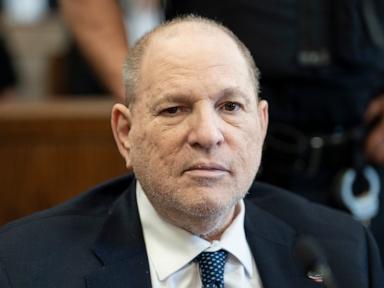
The room where it ends is sterile, stripped of the cinematic lighting that once defined his empire. Harvey Weinstein sits in a wheelchair, a neutral mask pinned to his 74-year-old face. For decades, his name was synonymous with Oscar gold, a gatekeeper who could make or break a career with a single nod. Now, the final, lingering New York rape charge against him has dissolved not because the system found him innocent, but because the human cost of proving him guilty became too heavy to bear.
Justice is often depicted as a blind scale, cold and mechanical. We track it through dockets, legal filings, and structural terminology. But in a Manhattan courtroom, the machinery ran directly into the limits of human endurance. Jessica Mann, the woman at the center of this specific, grueling legal saga, reached her breaking point. After three trials, five days on a witness stand in the most recent iteration, and years of public dissection, she sent a letter to the court.
"I can no longer endure going through this," she wrote. The words were read aloud by prosecutor Nicole Blumberg, echoing in a quiet room. It was an admission of deep trauma, a declaration that the legal process itself had begun to inflict more damage than any potential verdict could repair.
Consider what happens to a person when their worst memories are turned into a public asset. Mann, a hairstylist and actor, first took the stand to describe an encounter from 2013 in a Manhattan hotel room. She described being cornered, ignored, and physically pressured despite saying no. She also testified about a complex, on-and-off consensual relationship with Weinstein before and after that afternoon. It is the kind of human complexity that legal frameworks struggle to hold—nuance that defense attorneys weaponize.
During the recent retrials, defense lawyers dug into her personal life, pulling out a diary-like note written forty-eight hours after the alleged assault. The note was deeply personal, yet it contained no mention of the violence. To a defense team, this was a discrepancy to exploit. To a human being under a microscope, it was an exhausting, public flaying. On the stand, Mann began to suffer headaches and dizziness, the lingering effects of a recent concussion. She confessed to the court that she was "disassociating." The court had to adjourn early simply because the witness was fading.
This is the hidden tax of the legal system. To secure a conviction, a victim must repeatedly return to the theater of their trauma, performing their pain for twelve strangers while a highly paid defense team attempts to tear their character to shreds. Weinstein’s lawyers maintained their baseline defense: these were consensual encounters with a powerful studio boss, transactions chosen by ambitious women looking for a break in show business. Weinstein himself once summarized his stance with a phrase that attempts to straddle the line between defense and admission: "I acted wrongly, but I never assaulted anyone."
The legal history here is a messy, circular track. In 2020, a New York jury believed Mann, convicting Weinstein. But the legal machinery jammed. An appeals court later overturned that initial verdict on procedural grounds completely unrelated to Mann’s actual testimony. The system reset. A retrial in 2025 ended with a hung jury. Another retrial in the spring of 2026 ended the exact same way—deadlocked.
The charge itself was a low-level felony, carrying a maximum sentence of four years. Weinstein has already spent more time than that behind bars. Pursuing a fourth trial for a four-year maximum sentence while the primary witness is physically and emotionally fracturing under the weight of the testimony simply no longer made sense to the prosecution.
But do not mistake this dismissal for a clean escape. The dropped charge is a single thread unspooling from a heavily locked knot. The former producer remains behind bars, his empire permanently dismantled. The architecture of his confinement rests on other, surviving verdicts. He still faces a twenty-year prison term for a separate sexual assault conviction in New York involving another woman, with sentencing set for September. Beyond that lies a sixteen-year sentence waiting for him in California, stemming from the rape of an Italian actor in Los Angeles. He is appealing both, but the prison walls remain very real.
When the judge formally dismissed the Mann case, Weinstein left the courtroom without a word, rolled back into the shadows of the correctional system. His lawyers declared victory outside, claiming the charges should never have been brought. But the reality outside the courtroom door is far more complex than a win-loss record.
The true baseline of this story isn't the legal technicality that ended it, but the exhaustion that forced the ending. It is a reminder that the pursuit of truth within a rigid legal framework demands a pound of flesh that sometimes costs too much to give. Jessica Mann’s withdrawal wasn't an admission of falsehood; it was a reclamation of her own life. She chose to walk away from the witness stand, leaving the remaining convictions to hold the weight of the man in the wheelchair.