Brazil's Senate just handed President Luiz Inácio Lula da Silva a legislative win. They passed his $10 billion fiscal package by a 45-to-31 vote, and the lower house followed suit a few days later with a 353-to-128 margin. On paper, saving 50 to 60 billion reais in 2027 sounds like a solid start to cleaning up the mess left behind by costly election spending.
It isn't enough. Not even close. In other news, we also covered: What Most Investors Miss About Anthropic’s Trillion-Dollar IPO Experiment.
If you've been watching emerging markets since Lula won his fourth non-consecutive term in late October, you already know how Wall Street and Faria Lima feel about Brasília's math. The Brazilian real has plunged between 16% and 19% since election night, making it the worst-performing major currency tracked by Bloomberg. It briefly breached the psychological threshold of 6 reais to the U.S. dollar right before the lower house vote. Even after Congress cleared the bill, investors treated the news with a collective shrug rather than a sustained rally.
When a government spends billions to win an election and then offers a band-aid to fix the balance sheet, bond vigilantes notice immediately. Here is what is actually inside Lula's fiscal plan, why the market remains deeply skeptical, and what this means for anyone holding Brazilian assets right now. The Wall Street Journal has analyzed this critical topic in great detail.
The Real Cost of Lula's Reelection Victory
To understand why the Senate's approval of this fiscal package feels like too little too late, you have to look at the tab Lula ran up to defeat right-wing Senator Flávio Bolsonaro in October.
Elections in Brazil are expensive, and incumbents rarely hold back on public handouts when their political survival is on the line. Just look at the numbers from October. The government bumped the minimum monthly social benefit per family from 600 reais ($102) up to 691 reais ($117). The average family benefit jumped even higher, moving from 675 reais ($115) to 777 reais ($132).
Those increases helped secure Lula's victory, sure. They also blew a massive hole in a budget that was already straining under structural deficits.
Since Lula returned to office in 2023, Brazil's gross public debt has climbed by more than 11 percentage points, hitting a staggering 82.9% of gross domestic product. For an emerging market economy, carrying that kind of debt load while interest rates sit in double digits is a dangerous game. You can't just print your way out of it without destroying your currency, and you can't tax your way out of it without choking off growth.
Investors were hoping Flávio Bolsonaro would win because they viewed him as more market-friendly and willing to slash state bloat. When Lula pulled off the win instead, capital fled the country at breakneck speed. The real's nearly 19% drop wasn't just a knee-jerk political tantrum. It was a cold, hard repricing of Brazil's sovereign risk.
Breaking Down the $10 Billion Fiscal Package
So what did Brazil's Congress actually approve to stop the bleeding?
The legislation—which cleared the Senate first after rejecting three opposition amendments and then sailed through the Chamber of Deputies under Speaker Hugo Motta—targets roughly 56 to 60 billion reais in fiscal adjustments for 2027. At current exchange rates, that works out to right around $9.5 billion to $10 billion.
The administration designed the bill around three main levers:
- Tightening the spending cap. Starting next year, the government's fiscal framework will lower the ceiling on annual real spending growth from 2.5% above inflation down to 2% above inflation.
- Expanding budget freezes. The new rules give Brasília broader authority to block discretionary spending whenever the budget threatens to miss its primary fiscal targets.
- Squeezing corporate tax breaks. Rather than cutting popular social programs, the bill limits tax exemptions across various sectors and restricts how companies can use tax credits to offset their liabilities when fiscal goals are at risk.
Finance Minister Dario Durigan has been out in force defending the plan. His argument is straightforward. Brasília needs to prove it can hit next year's primary surplus target of 0.5% of GDP so the central bank finally feels safe enough to cut interest rates.
On paper, there is nothing wrong with capping spending growth at 2% or closing corporate tax loopholes. In fact, under normal circumstances, international investors would applaud a leftist administration for pushing spending limits through a divided Congress.
The problem is that Brazil isn't operating under normal circumstances.
Why Wall Street and Faria Lima Aren't Buying It
If you talk to emerging market fund managers right now, they will tell you the exact same thing. Tinkering around the edges of discretionary spending and corporate tax credits doesn't solve Brazil's core disease.
The Mandatory Spending Trap
Roughly 90% of Brazil's federal budget is locked up in mandatory expenses. We are talking about public pensions, civil servant salaries, and constitutionally mandated health and education minimums.
This $10 billion fiscal package doesn't touch those structural drivers. When you cap overall spending growth at 2% above inflation, and mandatory programs automatically grow faster than that due to demographic shifts and minimum wage indexation, the math breaks down fast. Discretionary spending—the money used to fix roads, fund universities, and run basic government agencies—gets squeezed to zero. Eventually, the government either breaks its own fiscal rules or cooks the books with accounting gimmicks. Investors have seen this movie in Brasília dozens of times before.
The Revenue Over-Reliance Problem
Look closely at how Lula plans to save those 56 billion reais. A massive chunk of the adjustment relies on raising revenue by restricting corporate tax credits and cutting tax breaks.
Tax hikes and credit restrictions look great in a spreadsheet, but they rarely yield the exact amount of cash the Finance Ministry projects. Companies litigate. Economic activity slows down when you raise the tax burden. Worse, relying on revenue increases to balance the budget signals to the market that the administration still refuses to rein in its own appetite for spending.
Mixed Signals From State Giants
It's also hard for investors to take fiscal restraint seriously when Brazil's state-controlled enterprises are gearing up for massive capital outlays. While Congress was debating how to scrape together $10 billion in budget savings, reports surfaced that state oil giant Petrobras is preparing a five-year investment plan exceeding $120 billion. Even if Petrobras's balance sheet is technically separate from the federal treasury, international funds view Brazil's public sector as a single risk profile.
The Central Bank's 13.75% Chokehold on Growth
You can't separate Brazil's fiscal drama from what is happening at the central bank. Right now, the benchmark Selic interest rate sits at a punishing 13.75%.
In inflation-adjusted terms, Brazil has the highest interest rates in the world. That rate is actively suffocating the domestic economy. Corporate borrowing costs are through the roof, household incomes are getting crushed by debt service, and private investment is stalling out.
Lula wants the central bank to slash rates so he can push Brazil's investment rate above 20% of GDP. He constantly complains about the high cost of borrowing. Yet the central bank can't cut rates while fiscal policy is pouring gasoline on inflation.
When the real falls nearly 19% against the dollar, imports become drastically more expensive. Combine a weak currency with global energy price pressures from conflicts in the Middle East, and inflation expectations start drifting away from the central bank's target. A recent central bank survey of economists now projects the Selic rate will still be sitting at 13% by the end of 2027. That is more than a full percentage point higher than what analysts expected before the October election.
Higher interest rates also create a vicious fiscal feedback loop. Because a huge portion of Brazil's 82.9% debt-to-GDP load is tied to the Selic rate, every time the central bank keeps rates at 13.75%, the government's interest bill explodes. You end up borrowing more money just to pay the interest on the money you already borrowed.
Political Friction on the Left and Right
Passing this bill wasn't a walk in the park for Lula, even with the final vote tallies looking comfortable. The legislation exposed deep cracks in his political coalition just weeks before he is set to be inaugurated for his new term in January.
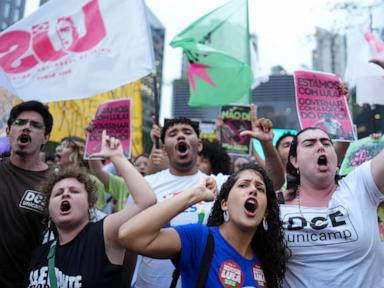
On the street, progressive allies are furious. The National Union of Students and several left-wing social movements immediately called for protests against the fiscal adjustments, arguing that Lula is caving to financial speculators at the expense of working-class Brazilians. For now, major labor unions have stayed on the sidelines. They aren't thrilled with the spending caps, yet they aren't ready to declare war on a president they just spent months campaigning to reelect.
Meanwhile, inside Congress, lawmakers know the real fight hasn't even started.
Following the lower house vote, local outlets like CNN Brasil and O Globo reported that Lula is already backing a second round of fiscal measures. Unlike this first bill, which only required simple majorities to tweak ordinary laws, a second package will likely require a constitutional amendment to address mandatory spending rules.
Passing a constitutional amendment in Brazil requires a three-fifths supermajority in both chambers, voted on twice. If Lula couldn't get major labor unions to endorse a modest $10 billion trim, convincing three-fifths of Congress to touch pensions or constitutional spending floors is going to be a brutal, months-long slog.
What Investors and Businesses Need to Watch Next
If you have capital exposed to Brazil—whether through equities on the Bovespa, sovereign debt, or direct business operations—don't get lulled into a false sense of security by Tuesday's brief 2% bounce in the real. Headlines about Congress passing a fiscal bill are great for short-term algorithmic trading, not long-term portfolio safety.
Instead of reacting to legislative victory laps from Brasília, keep your eyes on three concrete triggers over the next sixty days:
- Lula's pick for Finance Minister. Lula still hasn't confirmed who will lead the Finance Ministry when his new term kicks off in January. Dario Durigan has been saying the right things to calm markets, but personnel is policy in Brazil. If Lula appoints a political loyalist or a heterodox economist who favors heavy state spending, the real will blow right past 6 per dollar and stay there.
- The actual text of the second fiscal package. Ignore rumors and leaks from anonymous aides. Wait until the administration formally sends the second bill to Congress. If it doesn't directly reform mandatory spending indexation—specifically how minimum wage hikes automatically inflate pension and benefit payouts—treat any currency rally as an opportunity to reduce your exposure.
- The 2027 primary surplus revisions. Watch how the Planning Ministry updates its revenue forecasts in the first quarter. If tax collections fall short of the government's optimistic assumptions, Brasília will be forced to trigger those new budget freezes immediately, testing whether Lula actually has the political stomach to turn off the spending tap when his approval ratings dip.
Brazil has incredible long-term fundamentals, massive agricultural and energy reserves, and one of the most resilient private sectors in the developing world. Right now, though, fiscal credibility is the only currency that matters in Brasília, and Lula hasn't earned it back yet.