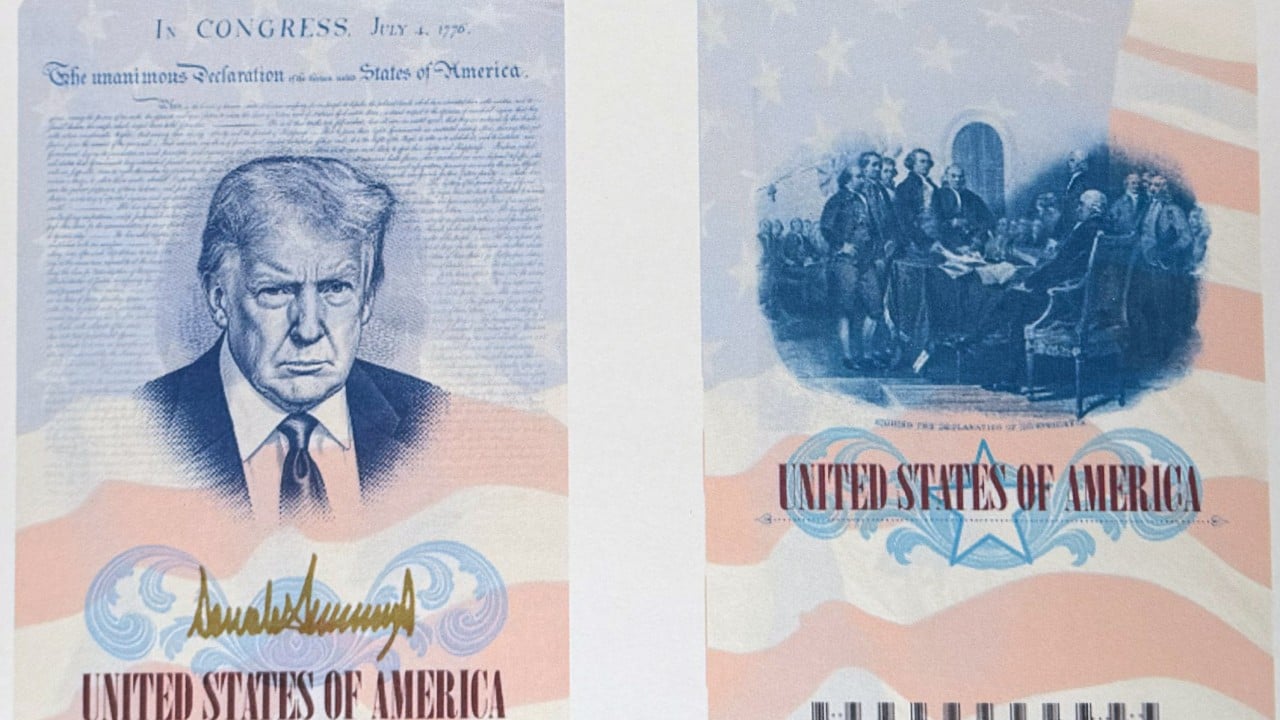
The United States Department of State is preparing to release a limited-edition passport featuring the image of President Donald Trump. Scheduled for rollout in July 2026, the document marks a departure from two centuries of bureaucratic tradition by placing a sitting president's likeness within the primary travel document of millions of citizens. This move, framed by the administration as a tribute to the 250th anniversary of the United States, integrates the president’s portrait and signature into the high-security architecture of the American passport.
Critics view the redesign as an unprecedented personalization of the federal government. Proponents argue it is a bold celebration of national identity during a historic milestone. Regardless of the political lens, the technical and diplomatic reality is that the American passport—a document designed for international recognition and legal protection—is being transformed into a commemorative asset.
The Mechanics of the Redesign
The new document is not a total overhaul of the Next Generation Passport (NGP) architecture but a targeted aesthetic intervention. The President’s face will appear on the inside cover, rendered in a stylized format overlaid onto the text of the Declaration of Independence. Below the portrait, his signature will be printed in gold ink.
Security remains the official justification for the specific printing methods used. The State Department maintains that the "enhanced imagery" utilizes the same laser-engraving technology and polycarbonate materials introduced in the NGP series. By embedding the portrait into the physical layers of the page, the administration claims it adds a complex level of detail that is difficult for counterfeiters to replicate.
Distribution will initially be restricted. The limited-edition books will first be available to those applying in person at the Washington Passport Agency. While the general public can still receive the standard design through online renewals and regional offices, the Washington-based rollout ensures that the first wave of these documents will likely be held by officials, diplomats, and those with the means to navigate the central agency.
Symbols and the State
The decision to place a living president on a passport breaks a long-standing unwritten rule in American civic design. Historically, the U.S. has avoided putting the faces of living leaders on currency or identification to distance the Republic from the monarchies of Europe. This tradition began with George Washington, who famously declined to have his likeness on the first U.S. coins.
This redesign follows a pattern of recent changes. The Treasury Department has already integrated the president’s signature into paper currency, and national park passes for 2026 now feature Trump alongside Washington. By placing his image in the passport, the administration is securing a ten-year presence in the pockets of American travelers. Even if a different administration takes office in 2029, these passports will remain valid and in circulation well into the 2030s.
Diplomatic and Legal Questions
International travel relies on the mutual trust of border officials. A passport is essentially a formal request from one government to another, asking for the safe passage of its citizen. Introduction of a controversial political figure’s image into this document raises questions about how foreign customs agents will perceive the credential.
While international law generally dictates that a country can design its own travel documents as long as they meet ICAO (International Civil Aviation Organization) security standards, the visual shift is significant. If a traveler presents this passport in a nation with strained diplomatic ties to the current administration, the document itself becomes a political statement.
Internally, the State Department is also navigating a shift in production. A recent notice indicated a move toward a single-sized, 38-page book to replace the current 26 and 50-page options. This consolidation, aimed at reducing waste at the Government Publishing Office, coincides with the anniversary redesign.
The Broader Context of 2026
The passport is one piece of a larger "America 250" initiative. Plans include a grand prix in the capital and a high-profile mixed martial arts event at the White House. The renaming of the Kennedy Center to the Trump Kennedy Center and the rebranding of the U.S. Institute of Peace further suggest a strategy of permanent institutional marking.
For the average citizen, the choice is currently optional. Those who prefer the existing design can utilize the Online Passport Renewal (OPR) platform. However, as the limited edition moves into wider circulation, the distinction between a state document and a personal brand continues to blur. The 2026 passport is no longer just a proof of citizenship. It has become a permanent record of a specific political era.