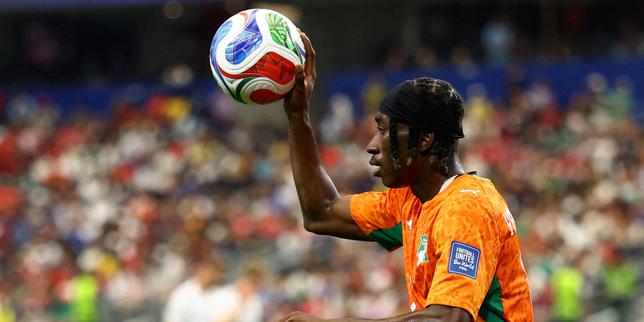
The red clay of Abidjan does not forgive mistakes. It sticks to your boots, heavy and unforgiving, demanding absolute precision with every touch of a deflated ball wrapped in twine. It was on those makeshift pitches, under the heavy, humid weight of an Ivorian afternoon, that Yan Diomande first learned the grammar of survival. Football there is not a pastime. It is a language spoken with the soles of your feet, a desperate, beautiful dialect shared by millions who dream of escape.
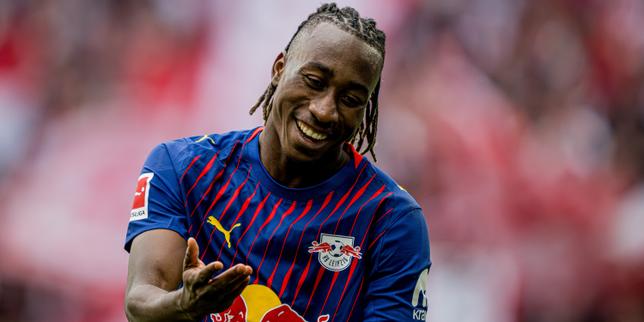
Years later, that language translated onto the immaculate, manicured lawns of the Bundesliga with RB Leipzig.
Cold winds cut across Saxony. The stadiums roared with a different kind of hunger. Yet, beneath the tactical rigidity of German football, Diomande retained that barefoot audacity. He did not merely run; he glided across the grass as though untethered by gravity. Scouts watched him from the warmth of press boxes, clicking their ballpoint pens, writing frantic notes about his recovery speed, his astonishing positional maturity, his absolute refusal to blink when a seasoned striker bore down on him.
They saw a profile.
They saw a defensive asset.
They did not see the boy from Abidjan staring up at the stadium lights, wondering if the distance between where he started and where he stood was real.
Real Madrid does not sign players. They collect myths.
To step through the iron gates of Valdebebas is to walk among ghosts. Alfredo Di Stefano left his footprints in the corridors. Zinedine Zidane still lingers in the arched doorways. Every locker has a weight to it, a pressure so immense it has crushed prodigies whose names now fade like old photographs in flea markets.
When the white shirt is pulled over a player’s head for the first time, cameras flash like summer lightning. Flash. Flash. Flash. Millions of eyes across the globe dissect the smirk, the posture, the way the collar sits.
Diomande stood in that blinding white light with a stillness that felt almost unnatural for a teenager.
Consider what happens next: the silence of the training pitch at dawn. The cameras are gone. The roaring fans are fast asleep in their beds across four continents. There is only the damp turf, the sharp whistle of the manager, and the heavy thud of leather against boot. Carlo Ancelotti—or whoever steers that glittering tactical ship—does not care about the price tag or the headlines in Madrid sports dailies. Ancelotti cares about whether you can clear a cross under the agonizing, scorching pressure of a ninety-minute Champions League night at the Santiago Bernabeu when the referee holds a yellow card like a loaded weapon.
That is where the scouting ends and the crucible begins.
Let us be entirely honest about the machinery of modern football transfers.
When a superpower like Real Madrid moves for a young defensive talent from a club like RB Leipzig, it is rarely a impulsive gamble. It is a calculated chess match played over months of encrypted phone calls, stealthy hotel meetings in Frankfurt, and tense negotiations over add-ons and sell-on clauses.
Leipzig builds brilliant machines. They unearth raw diamonds, polish them in the pressure cooker of the Red Bull talent ecosystem, and prepare them for the apex predators of Europe. They knew what they had in Diomande. They also knew that when Madrid comes calling, waving a checkbook and the seductive promise of immortality, resisting becomes an exercise in futility.
You do not block a boy’s path to the stars. You cash the check, tip your hat, and look for the next fourteen-year-old running barefoot on a dusty pitch somewhere else in the world.
For Diomande, the transition from the structured, high-pressing laboratory of Leipzig to the aristocratic chaos of Madrid will demand an emotional gymnastics routine few can master. In Germany, the system is king. The collective press dictates everything. Every movement is a cog in a precise, industrial engine.
In Madrid, systems matter, but individual brilliance and psychological armor matter more. You are expected to solve unsolvable problems with a smile. You are expected to pocket world-class forwards while ninety thousand people chant your name, and then wake up the next morning and do it again against a relegation-threatened side on a rainy Tuesday in Vigo.
I remember standing near the players' tunnel at a major European fixture years ago. The air smelled of wintergreen liniment, freshly cut grass, and sheer, unfiltered adrenaline. You could hear the studs clacking against the concrete floor like the hooves of cavalry horses before a charge.
A young player, newly arrived from a modest club, stood waiting to enter the arena. His hands were shaking. Not from cold. From the terrible, beautiful realization that his entire life had compressed into this single, narrow corridor.
That is where Yan Diomande stands right now.
He is not just a defensive reinforcement for a squad chasing domestic and continental glory. He is a proxy for every kid who ever kicked a taped-up ball on a dirt patch in West Africa. He is the latest chapter in an ancient Madrid tradition of scouring the earth for rare, flickering talents and attempting to turn them into blinding suns.
The papers will write their columns. The pundits will argue whether the transfer fee was a masterstroke or an overpay. Fans on social media will clip his best defensive interventions into ten-second looping videos set to aggressive hip-hop beats.
None of that matters when the whistle blows.
On the pitch, there are only green grass, white lines, and an opponent who wants to take away everything you have earned. Diomande knows this. His feet remember the red clay. They remember the stakes when failure meant going home empty-handed. Now, the stakes are different, but the hunger remains identical.
The stadium lights flicker on against the Spanish dusk. The white jersey hangs in the locker room, waiting.