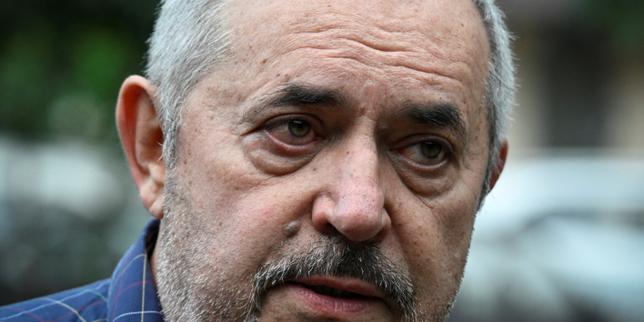
The illusion of tolerated dissent in Russia has officially expired. When veteran politician Boris Nadezhdin surfaced in Paris after a brief detention and a targeted judicial campaign in Moscow, it marked the end of an era where playing by the Kremlin's rules offered temporary immunity.
For years, Nadezhdin carved out a specific, narrow niche. He criticized the military strategy in Ukraine. He questioned state trajectories. Yet, he carefully avoided crossing the red lines that landed other dissidents in penal colonies or graves. He insisted on working within the established legal framework. He didn't use crude insults against Vladimir Putin. He rejected unsanctioned street protests.
That strategy worked until it didn't.
The Breaking Point of Tolerated Opposition
The shift happened when the system's tolerance wore completely thin ahead of parliamentary elections. Nadezhdin attempted to mount a challenge during the 2024 presidential race, mobilizing citizens who quietly opposed the war to sign petitions in his favor. That surge of public visibility alarmed authorities. Even though election officials barred him from the ballot, his continued political footprint remained a threat to the monopoly of United Russia.
By mid-2026, the velvet glove came off entirely.
Authorities slapped him with a foreign agent designation. Police detained him in Dolgoprudny. A Russian court convicted him on charges of displaying extremist symbols—referencing an online video from 2023 that briefly featured an image of the late opposition figure Alexei Navalny. The conviction handed him a fine, but its true purpose was structural: it disqualified him from running in upcoming legislative races.
Faced with a choice between long-term imprisonment and leaving the country, Nadezhdin chose exile, appearing near the Eiffel Tower in Paris to signal his exit from the immediate reach of Russian security services.
What This Means for Dissent Inside Russia
The targeted neutralization of Nadezhdin sends a stark message to anyone contemplating moderate opposition. The Kremlin no longer has room for systemic dissenters who try to operate as a loyal opposition. Total conformity is the baseline requirement.
When a politician who spent decades inside the legal architecture of Russian politics gets labeled an extremist and forced out, the political space shrinks to absolute zero. Independent voices are left with a grim binary choice. They either submit completely, face harsh penal sentences, or pack a bag for foreign capitals.
The door to change from within is sealed shut.
Russie : la justice condamne l'opposant Boris Nadejdine
This video provides direct context on the judicial hearings and legal charges that forced Boris Nadezhdin out of the Russian political landscape.