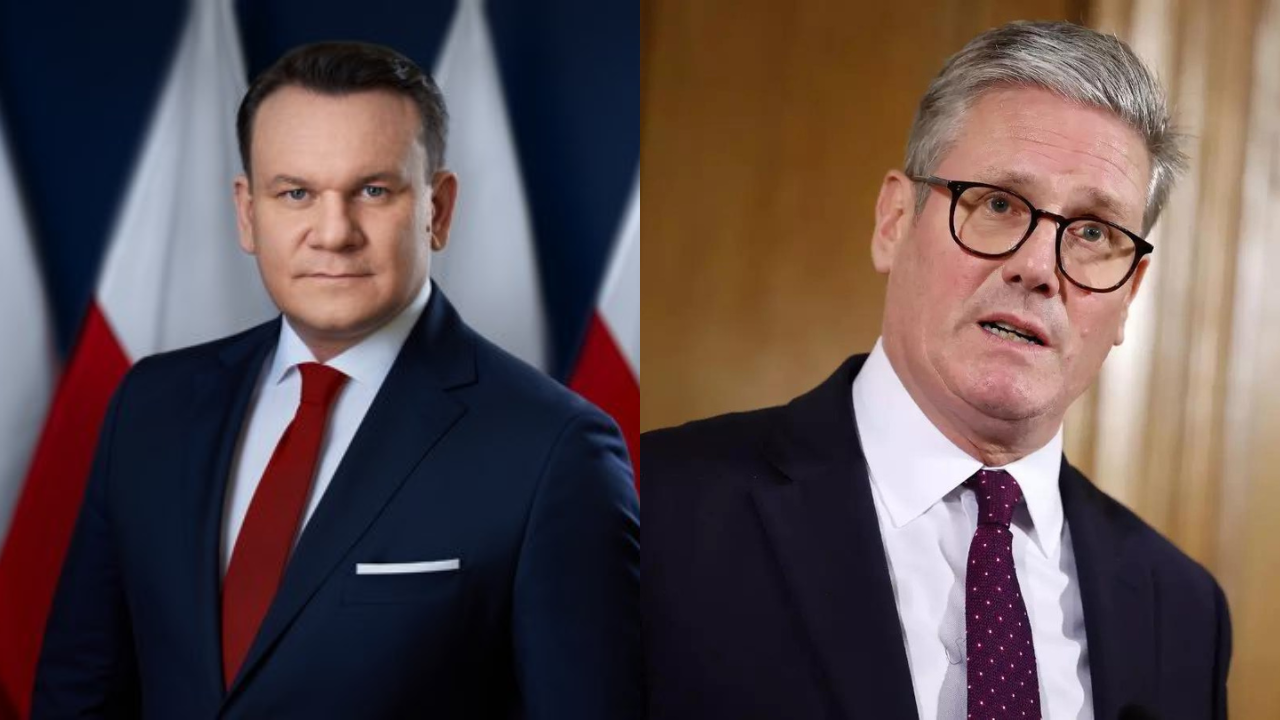
British Prime Minister Keir Starmer has initiated a high-stakes geopolitical confrontation by weaponizing the UK Home Office's border controls against elected European politicians. By revoking the Electronic Travel Authorisation of Polish Member of the European Parliament Dominik Tarczynski and at least ten other international right-wing figures, Starmer attempted to decapitate the speaker lineup for the massive Unite the Kingdom rally in London. The move backfired into a diplomatic and legal firestorm, with Tarczynski threatening to sue Starmer personally in a British court the moment the Prime Minister loses office.
This confrontation is not merely a localized spat over border control. It represents an unprecedented use of state machinery to pre-emptively police political speech by foreign dignitaries on British soil.
The Sovereignty Clash
The immediate catalyst for the crisis was the cancellation of Tarczynski's travel clearance. The Home Office issued a curt notice stating that his presence in the UK was not considered conducive to the public good.
Starmer followed this up with a combative video message, accusing the rally organizers of peddling hatred and division, branding them convicted thugs and racists.
Tarczynski, an MEP representing Poland's national-conservative Law and Justice party, reacted with fury. He argued that blocking an elected representative of an EU nation is an authoritarian overreach. The Polish politician declared that Starmer would pay for calling him a hate-mongering agitator, promising a personal lawsuit once Starmer is cast onto the ash heap of history.
The legal strategy is precise. Tarczynski is deliberately targeting Starmer as an individual rather than suing the Home Office as a state entity. This bypasses traditional crown immunities and aims directly at Starmer’s personal liability post-premiership.
The Extradition of Political Speech
This border enforcement strategy marks a significant escalation in how Western democracies handle transnational political movements. Governments routinely block entry to suspected terrorists, war criminals, or individuals inciting imminent physical violence.
The ban list for this London rally targets a different tier: mainstream European politicians, authors, and digital commentators. Alongside Tarczynski, the UK barred:
- Belgian politician and commentator Filip Dewinter
- Dutch anti-immigration activist Eva Vlaardingerbroek
- Spanish commentator Ada Lluch
- American political influencers Valentina Gomez and Joey Mannarino
By extending the definition of "not conducive to the public good" to encompass European lawmakers who hold legal mandates in their home countries, the British state is drawing a new line. The administration is effectively declaring that opinions acceptable in the European Parliament are too dangerous for the streets of London.
Former British Prime Minister Liz Truss criticized the decision, pointing out the irony of the situation. She observed that if Starmer achieved his long-term ambition of re-integrating the UK into European frameworks, he would lack the legal mechanism to block an MEP.
Domestic Desperation Met with Foreign Ambition
To understand why Downing Street chose this aggressive path, one must look at the domestic political landscape. Starmer’s Labour government is reeling from devastating local and regional election results that have left his leadership fractured.
With internal party rivals calling for a leadership transition timetable, the Prime Minister needed a dramatic display of authority. Cracking down on foreign right-wing figures allowed Downing Street to signal strength to its base while attempting to control the narrative surrounding immigration, the central vulnerability of the government.
However, the international targets of these bans are using the moment to their own advantage. For a politician like Tarczynski, who built his brand on a zero illegal migration policy, being banned by a struggling center-left British government is a badge of honor.
The move validates his anti-establishment credentials back home in Poland, where the domestic political arena is equally polarized. Polish Foreign Minister Radoslaw Sikorski, a political opponent of Tarczynski, sought to de-escalate the diplomatic friction by calling Tarczynski an unhinged extremist who is dangerous for Poland.
Yet, the condemnation from Warsaw’s ruling centrist coalition only cements Tarczynski's status among nationalist voters across Europe.
The Transnational Populist Network
The true anxiety within Downing Street is the growing organization of the European right. The Unite the Kingdom rally is no longer just a British phenomenon led by local activists. It has evolved into a hub for a sophisticated, continent-wide network.
Tarczynski spoke at the same rally previously, leading crowds in chants against illegal immigration. His involvement reveals a deliberate effort to link the British working-class protest movement with established, well-funded political parties in Eastern and Western Europe, as well as the MAGA movement in the United States.
By locking the gates, Starmer sought to isolate the British movement from its continental allies. Instead, he has provided these disparate groups with a unifying narrative of state censorship. The legal battle promised by Tarczynski will ensure that this fight continues long after the crowds leave Parliament Square.