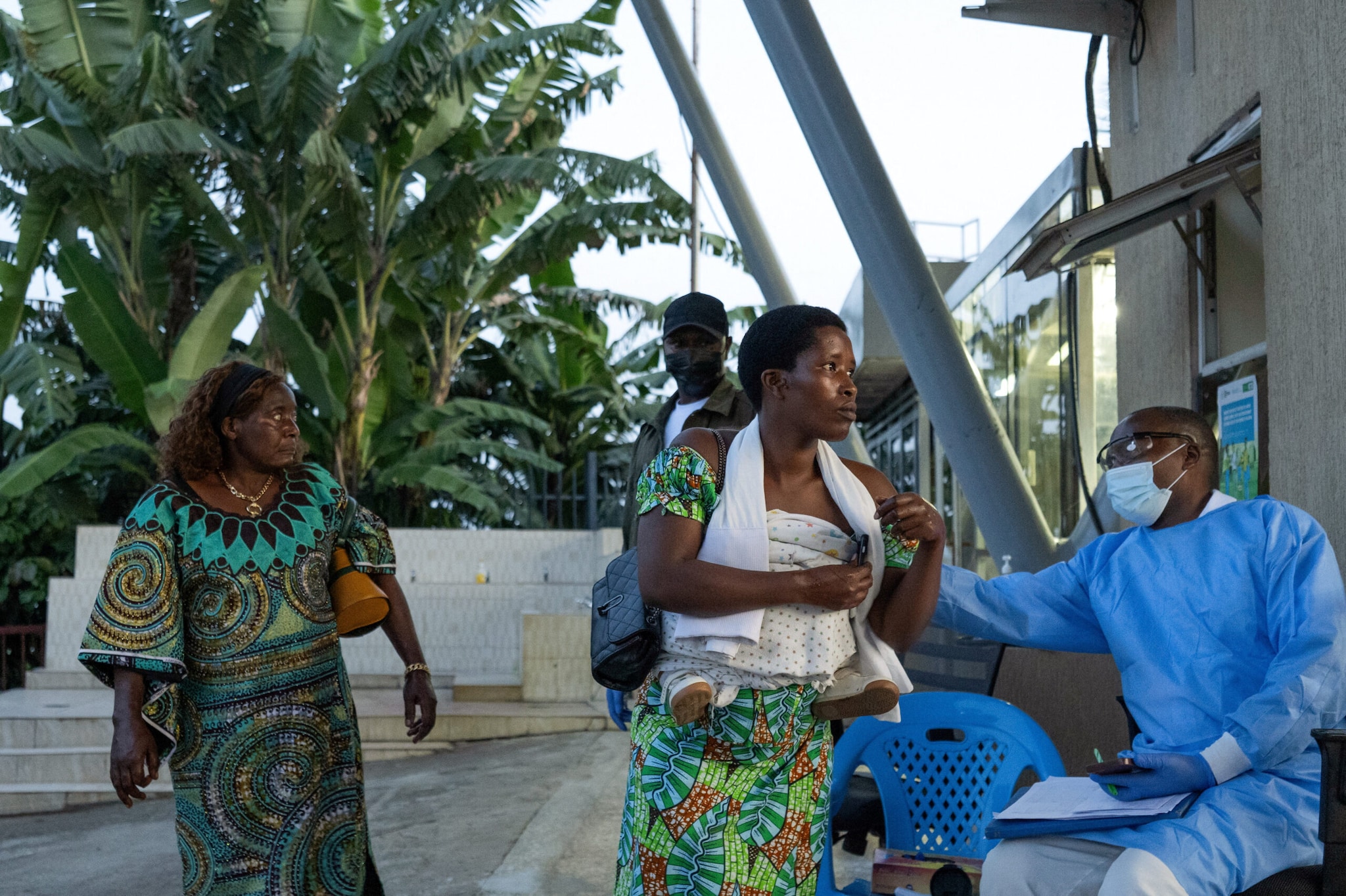
The plastic folds of a biohazard containment suit do not allow for a natural breeze. Inside that layers-thick cocoon of polyethylene and pressurized air, the human body exists in its own tropical ecosystem. Sweat pools in the boots. Breath fogs the visor. Every movement is deliberate, heavy, and loud, soundtracked by the rhythmic, mechanical hum of a portable respirator.
To the outside world, the person inside is a ghost. An anonymous silhouette of global health intervention. But on the red dirt roads of the Democratic Republic of the Congo, under a canopy of dense, suffocating green, that silhouette belongs to someone who left a comfortable life in America to fight a monster.
Then, a tear happens. Or a needle slips. Or a microscopic droplet finds a fraction of an inch of exposed skin during the grueling, exhausted process of de-gowning after a twelve-hour shift.
Suddenly, the doctor becomes the patient. The savior requires saving.
When news broke that an American physician had been infected with the Ebola virus while treating patients in the DRC, the headlines ran with predictable, sterile precision. They listed the dates, the organization involved, the protocols for medical evacuation, and the statistical survival rates of the current strain. It was information presented as a autopsy of an event, scrubbed clean of the terror, the sacrifice, and the profound vulnerability that defines the frontlines of viral warfare.
To understand what actually happened out there, you have to look past the data points. You have to step into the heat.
The Geography of an Outbreak
Contagion does not respect national sovereignty, nor does it care about the sophistication of a hospital’s infrastructure. In the remote regions of the Congo, the battle against Ebola is fought in makeshift isolation centers constructed of blue tarps and wooden pallets. This is not the sterile, stainless-steel environment of an American university hospital. This is a place where the humidity bakes the air and the roar of dirt bikes carrying supplies serves as the ambient noise.
Medical professionals who volunteer for these missions operate under a state of hyper-vigilance that the human brain was never designed to sustain for weeks on end. Imagine driving a car on a cliffside road in a blinding rainstorm. Now imagine doing that for fourteen hours a day, knowing that a single lapse in concentration—touching your face before sanitizing your gloves, neglecting a minor tear in your sleeve—carries a lethal consequence.
The virus itself is a master of biological devastation. It enters the host and immediately targets the immune system's first responders, turning the body's defenses against itself. As the infection takes hold, the vascular system begins to leak. The internal architecture of the human body dissolves. It is a painful, rapid, and deeply undignified way to die.
For the local population, the arrival of foreign doctors in spacesuits can be terrifying. Decades of conflict and systemic neglect have left deep scars of mistrust. When an American doctor enters this landscape, they are not just fighting a pathogen; they are navigating a complex web of cultural trauma, grief, and fear. They must build trust through layers of plastic, communicating empathy using only the expression in their eyes behind a fogged plastic shield.
When the Protocol Breaks
The transition from caregiver to the infected is instantaneous, marked by a sudden, spiking fever and a crushing fatigue that signals the virus has breached the perimeter.
Consider what happens next: the immediate psychological shift. One moment you are checking the vitals of a dying child, adjusting their IV fluids, offering a whispered word of comfort through a translator. The next, you are staring at your own thermometer. The numbers on the digital display solidify into a terrifying reality. The machinery of international public health instantly pivots around you.
The logistical choreography required to move an infected human being across continents is staggering. You cannot simply put an Ebola patient on a commercial airliner. The process involves specialized private containment aircraft—essentially flying isolation wards—and a team of medical transport experts who must treat the patient while maintaining total isolation from the outside environment.
The evacuation is a race against time and biology. The virus replicates exponentially. Every hour spent on a tarmac, every delay in fueling the aircraft, allows the pathogen to claim more territory within the patient’s organs. The journey is a high-stakes game of biological containment played out at thirty thousand feet, crossing oceans with a cargo that could, theoretically, ignite a global catastrophe if it escaped the plastic pod.
The Myth of the Sterile Distance
There is a comfortable illusion in the West that tropical diseases are a distant problem, confined to specific latitudes and economic brackets. We view them through the safe lens of television screens or fundraising galas. We assume that our wealth, our concrete cities, and our advanced medical technology form an impenetrable wall.
But the infection of an American doctor shatters that distance. It reminds us that the distance between a remote Congolese village and a high-containment isolation unit in Atlanta or Omaha is merely the duration of a flight.
The human element of this story is not found in the successful deployment of a multi-million-dollar evacuation plane. It is found in the quiet moments before the flight. It is the doctor, lying on a cot in the African heat, listening to the generator sputter outside, wondering if they will ever see their family again. It is the realization that their desire to help, their specialized training, and their citizenship offer absolutely no protection against a strand of RNA that has existed for millennia.
This vulnerability is something that anyone who has worked in global health understands intimately. The fear never truly goes away; it just becomes a companion you learn to ignore so you can get to work. You accept the risk because the alternative—leaving a vulnerable population to face a horrific epidemic alone—is unacceptable to your core identity as a healer.
The Cost of the Frontline
The American doctor survived the journey and was admitted to a specialized biocontainment unit, where cutting-edge experimental therapeutics and intensive supportive care could begin to tilt the scales back toward survival. The headlines shifted to updates on their condition, stable, improving, resting. The public interest began to wane, moving on to the next news cycle.
But the true impact of these events lingers long after the patient clears the virus from their bloodstream.
Every time a foreign healthcare worker is infected, the fragile ecosystem of international aid trembles. Organizations must re-evaluate their safety protocols. Insurance costs skyrocket. Governments face domestic political pressure to restrict travel or pull back funding. The immediate reaction is often to retreat, to pull up the drawbridge, to insulate ourselves from the danger.
Yet, retreat is the most dangerous option available.
If the international medical community pulls back from the places where these outbreaks begin, the viruses do not stop. They simply grow unchecked in the shadows, gaining momentum until they spill over borders in ways that no containment suit or flight restriction can block. The defense of global health relies entirely on the individuals willing to put their bodies between the pathogen and the rest of the world.
The image that remains is not the high-tech isolation pod or the press conferences held outside university hospitals. It is the sight of a discarded, sweat-soaked pair of boots sitting outside a tent in the Congolese mud, waiting for the next person brave enough to step into them.