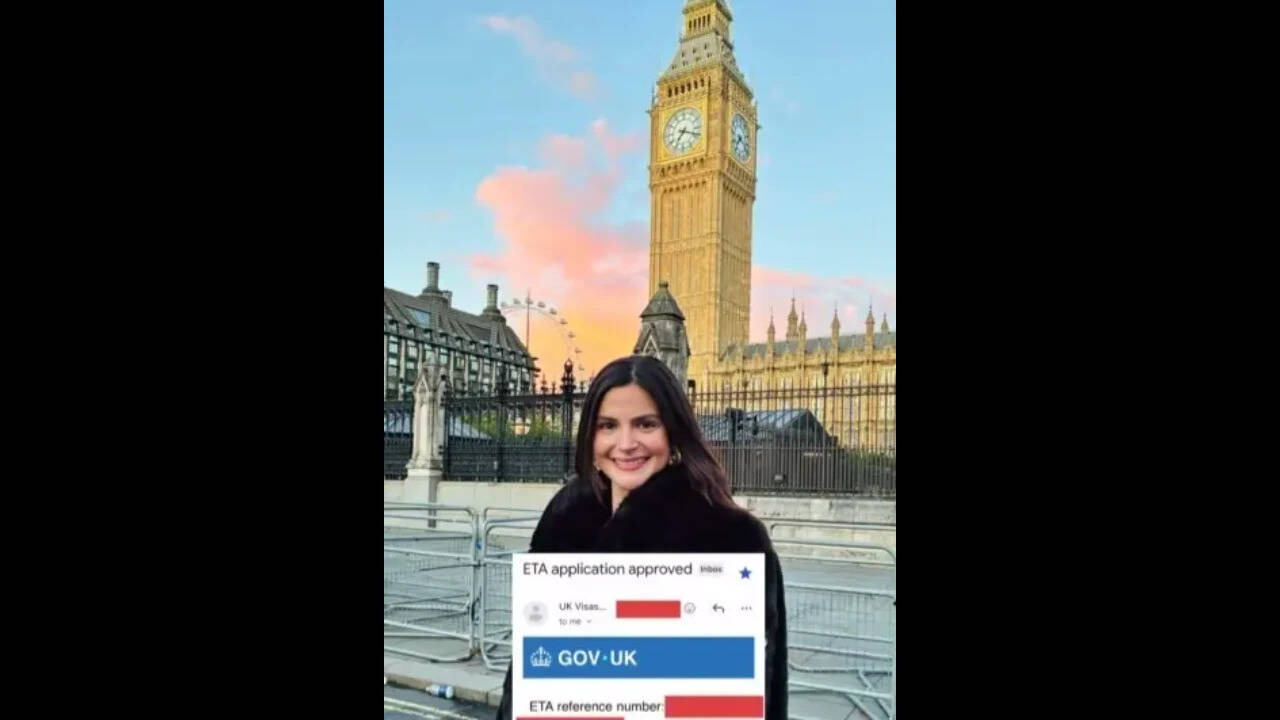
The United Kingdom has formally slammed the door on Valentina Gomez, the Missouri politician and social media provocateur who gained international notoriety for incinerating a Quran with a flamethrower. Home Office officials didn't just deny a visa; they issued a direct exclusion order based on the "public good" clause, a legal mechanism usually reserved for war criminals, hate preachers, and high-level national security threats. By barring Gomez, the British government has signaled that the export of American-style "rage-bait" politics has hit a hard geopolitical ceiling.
Gomez, who recently finished sixth in the Republican primary for Missouri Secretary of State, attempted to enter the UK to participate in a series of events alongside far-right figures. She was stopped at the threshold. The Home Office maintains a strict policy regarding non-citizens whose presence is deemed "not conducive to the public good." In this instance, the state determined that her specific brand of recorded desecration posed a tangible risk to community cohesion and public order within the British Isles.
The Flamethrower Diplomacy Failure
Valentina Gomez’s rise to prominence followed a very specific, modern playbook. It is a strategy built on the economy of outrage. In February, she posted a video of herself using a flamethrower to burn a Quran, accompanied by a caption telling viewers to "stay woke" or "burn." To the domestic American audience she was courting, this was a display of First Amendment absolutism pushed to its most visceral limit. To the British Home Office, it was a piece of digital evidence proving a propensity for inciting religious hatred.
The disconnect here is a matter of legal geography. While the United States provides a broad shield for expressive conduct—even the burning of sacred texts—the UK operates under different statutory frameworks. The Public Order Act 1986 and subsequent amendments regarding racial and religious hatred create a much narrower corridor for "free speech." In London, speech that is "threatening, abusive or insulting" and intended to stir up religious hatred isn't just a social media violation; it’s a potential criminal offense.
By attempting to bring her campaign to British soil, Gomez ignored the fact that the Atlantic Ocean serves as a filter for civil liberties. The UK government isn't interested in the nuances of American primary politics. They saw a person with a history of incendiary behavior and a flamethrower, and they chose the path of least resistance: exclusion.
Why the Public Good Clause is a Heavy Hammer
The "not conducive to the public good" standard is one of the most discretionary powers in the British executive arsenal. It doesn't require a criminal conviction. It doesn't even require a specific pending charge. It requires an assessment that the individual’s character, conduct, or associations make their presence undesirable.
Historically, this power has been used against figures across the political spectrum. It has kept out Westboro Baptist Church members, Louis Farrakhan, and even Snoop Dogg at various points in time. When the Home Office invokes this, they are making a preemptive strike. They are betting that the cost of processing a potential riot or a surge in local hate crimes outweighs the diplomatic friction of barring a minor foreign political figure.
The decision to bar Gomez was likely expedited by the memory of the recent riots across the UK. Following a stabbing in Southport, the country saw its worst civil unrest in over a decade, fueled largely by misinformation and anti-immigrant sentiment spread via social media. The British state is currently in a defensive crouch. The last thing the Metropolitan Police or the Home Secretary wants is a high-profile American agitator providing a live-streamed focal point for domestic extremist groups.
The Business of Being Banned
There is a cynical layer to this exclusion that cannot be ignored. For a certain breed of modern influencer, being banned from a Western democracy is a badge of honor. It is a verifiable credential in the "anti-establishment" marketplace. Gomez has already used the incident to bolster her narrative of being a victim of "globalist" censorship, despite the fact that a sovereign nation’s right to control its borders is a core tenet of the very nationalism she claims to represent.
This creates a paradox. The UK bars her to maintain order and signal their values, but in doing so, they provide her with the exact content she needs to remain relevant to her base in the United States. She isn't just a failed primary candidate anymore; she is a "forbidden" figure.
However, the tangible impact on her movement is real. Without the ability to film content in front of British landmarks or speak at London rallies, her reach into the European far-right ecosystem is severed. She is confined to the American digital silo. The UK has decided that the cost of her content is too high for their streets to pay.
Sovereignty vs. The Digital Wild West
The Gomez case highlights a growing friction between digital borderlessness and physical sovereignty. On X (formerly Twitter), Gomez can reach a citizen in Manchester as easily as a voter in St. Louis. But when the physical person tries to follow the data packet, the friction of the real world applies.
Governments are increasingly looking at social media feeds as a form of "pre-entry" vetting. Your digital footprint is no longer just a collection of opinions; it is a portfolio of risk. If you post a video of yourself burning a holy book in Missouri, you have effectively written your own "No Entry" sign for dozens of other jurisdictions. The Home Office didn't have to send an investigator to Missouri; they just had to check her profile.
This isn't about the Quran, specifically. It’s about the predictable result of the conduct. The British government’s primary concern is the prevention of violence. If a person’s public brand is built on the desecration of symbols held sacred by a significant portion of the domestic population, that person is a walking liability.
The Future of Outrage Exports
We are entering an era where political influencers will have to weigh the dopamine hit of a viral stunt against their future ability to travel the world. The world is shrinking, but the walls are getting higher for those who specialize in provocation. Gomez is a test case for how national governments will handle the "foreign agitator" in the age of the algorithm.
The UK’s message is clear: the First Amendment ends at the shoreline. If you want to burn books and use flamethrowers to make a point, you can do it in the Midwest, but you won't be doing it in the Midlands. The state has decided that "public good" is defined by the absence of the very chaos that Gomez uses as her primary political currency.
They didn't just stop a person at the border. They stopped a performance.
Gomez is currently stuck in the digital realm, shouting into a microphone from the safety of the United States, while the British government quietly moves on to the next threat. The flamethrower might have worked for the cameras, but it was useless against a standard bureaucratic form and a government that has lost its appetite for imported unrest. If you intend to play the game of international political influence, you have to understand the rules of the territory you're entering, or be prepared to stay home.