Silence.
In an international terminal built to move thirty million bodies a year, the absence of sound is heavier than any explosion, a thick, unnatural pressure that settles behind your ears while you stare at a departure board frozen in amber light.
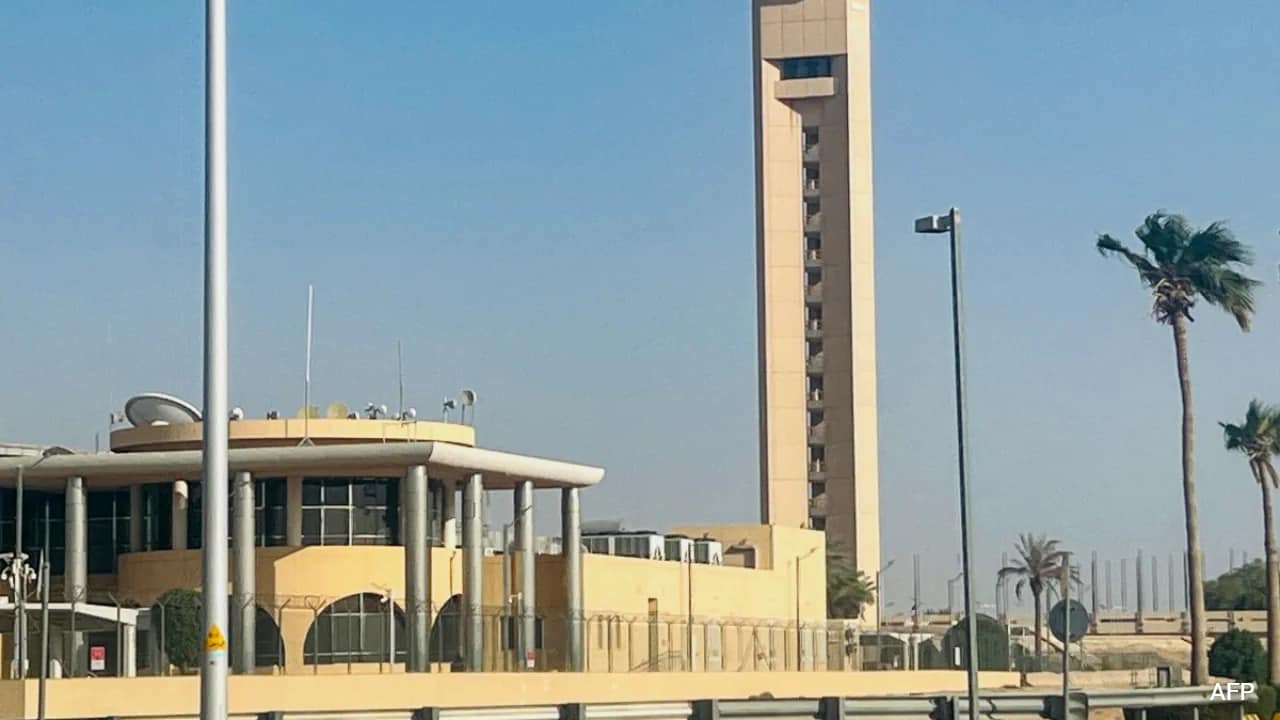
If you have ever sat in Terminal 5 at King Khalid International Airport during a sudden ground stop, you know the specific smell of recycled air when the jet bridges retract and the espresso machines hiss to a halt. You watch businessmen in crisp white thobes lower their phones in unison. You see a mother tighten her grip on the plastic handle of a duty-free bag while her toddler asks, too loudly, why the big silver bird outside stopped moving. Up above the reinforced glass roof, miles higher than commercial cruising altitude, radar arrays are sweeping an empty blue desert sky for incoming ballistic arcs and low-flying delta wings. Yet down at Gate 14, the barista still wipes down the counter, and the boarding agent eventually picks up the microphone to announce Group One.
The headlines read like sterile logistics reports. Saudi Reopens Riyadh Airport As Houthi Missile, Drone Attacks Continue. Five words about tarmac operations, five words about asymmetric warfare, glued together by a conjunction that pretends the two realities can coexist without tearing each other apart.
They cannot. Not easily. And the story of how Riyadh keeps its runways open while projectiles cross its southern horizon is not a dry footnote in Middle Eastern aviation—it is a high-stakes psychological standoff over whether modern globalization can function inside an active missile defense umbrella.
The Architecture of Normalcy
Consider what happens when an airport closes, even for ninety minutes.
An international hub is not a bus station; it is a pressurized circulatory system. When Riyadh halts departures because air defense batteries have locked onto an inbound threat from Yemen, the shockwave ripples outward across four continents within the hour. A wide-body Boeing 777 circling over the Rub' al Khali desert burns roughly seven tons of jet fuel per hour just to stay in a holding pattern. Multiply that by forty inbound flights from London, Cairo, Mumbai, and Manila, and you are watching millions of dollars evaporate into thin air before a single wheel touches asphalt.
To understand the human weight of that disruption, picture a hypothetical traveler—let’s call him Tariq, a structural engineer flying out of Riyadh to close a infrastructure bid in Dubai, sitting two rows behind a Filipina nurse heading home to Cebu after a two-year contract. Neither of them enlisted in a geopolitical conflict. Neither of them knows the radar cross-section of a Samad-3 drone or the interception altitude of a Patriot PAC-3 battery. Yet both of their livelihoods depend entirely on the assumption that a strip of grooved concrete in the central Arabian plateau remains a sanctuary from the war raging hundreds of miles to the southwest.
When Saudi aviation authorities decide to reopen King Khalid International Airport while Houthi missile and drone attacks continue, they are making a calculated bet on human psychology. In modern warfare, a ballistic missile does not need to hit a terminal to achieve its strategic objective. If it forces an airline executive in Frankfurt to cancel a route, or convinces a family in Jeddah to postpone a trip, the weapon has already scored a direct hit on the national balance sheet.
Reopening the gates is an act of deliberate defiance disguised as routine customer service.
Invisible Shields Over Open Skies
How do you convince pilots, insurers, and ordinary passengers to taxi onto a runway when the threat has not technically ended?
Think of Riyadh’s airspace like a high-stakes surgical theater operating inside a hurricane. Outside the perimeter, the storm is real and unpredictable; inside, every millimeter of air is monitored, filtered, and accounted for. Over the past several years, the coalition led by Saudi Arabia has faced hundreds of cross-border launches—ballistic missiles arcing high into the stratosphere alongside low-altitude unmanned aerial vehicles designed to hug the terrain and slip beneath conventional radar horizons.
For commercial aviation, altitude is everything, and timing is unforgiving. A passenger jet taking off from Riyadh climbs at roughly two thousand to three thousand feet per minute. During those first ten minutes after wheels-up, the aircraft is heavy with fuel, loud, and locked into predictable departure corridors.
Air traffic controllers in the Riyadh Flight Information Region work in dimly lit rooms beside military liaison officers who monitor real-time telemetry from early-warning satellites and ground-based phased-array radars. When an interception occurs—sometimes visible from the ground as a sudden white contrail twisting upward followed by a distant, muffled thud that rattles windowpanes across northern neighborhoods—the civilian tower has seconds to separate commercial traffic from the debris field.
I still remember the disorienting calm that follows those distant booms in the capital. You stand on a balcony watching traffic flow smoothly down King Fahd Road, red taillights forming unbroken ribbons through the warm night, while your phone buzzes with alerts confirming that fragments fell harmlessly in an unpopulated district. The contrast makes your brain stutter. War is supposed to look like ruins and sirens, not valet parking and flight attendants checking seatbelts.
Yet behind that calm lies an exhausting, round-the-clock choreography:
- Dynamic Airspace Corridors: Controllers dynamically reroute incoming flights away from southern approach vectors, funneling traffic through northern and eastern sectors where radar coverage and interceptor batteries overlap most densely.
- Insurance and Sovereign Guarantees: Aviation underwriters calculate risk down to the decimal point. Keeping international carriers flying into Riyadh requires relentless diplomatic reassurance, transparent telemetry sharing with global aviation bodies, and massive financial backstops when war-risk premiums spike.
- Rapid Tarmac Turnarounds: Ground crews compress baggage handling, refueling, and cabin cleaning into razor-thin windows so aircraft spend as little time exposed on the apron as possible.
Every smooth takeoff is a quiet triumph of coordination over chaos.
The Economics of Refusing to Blink
Why take the risk at all? Why not suspend civilian flights until a ceasefire holds or the skies are completely clear?
Because stillness is fatal to an economy trying to reinvent itself in real time.
Saudi Arabia is pouring hundreds of billions of dollars into transforming Riyadh from a conservative administrative capital into a global commercial nexus—a place where multinational corporations establish regional headquarters, where international conferences pack convention halls, and where tourism replaces a fraction of historical oil dependency. Vision 2030, the kingdom’s sweeping economic blueprint, lives or dies by connectivity. An international business hub that shuts down every time a drone launches from across the border is not a hub at all; it is a cul-de-sac.
The Houthi leadership in Sanaa understands this vulnerability with surgical clarity. Lacking a conventional air force or navy capable of matching Saudi hardware, they have turned low-cost drones and modified ballistic missiles into precision instruments of economic disruption. A drone assembled for a fraction of the cost of a luxury sedan can force the launch of interceptor missiles worth millions of dollars apiece—and, more importantly, generate headlines that rattle foreign investors sitting in boardrooms from New York to Singapore.
Look closely at the asymmetry of that exchange. One side spends pennies to create uncertainty; the other spends fortunes to purchase certainty.
When Riyadh reopens its airport immediately after an alert, it is refusing to let the attacker dictate the price of normalcy. It sends an unmistakable signal to global markets, cargo logistics firms, and skeptical travelers: the disruptions will be measured in minutes, not weeks.
What the Departure Board Doesn't Show
Still, it would be dishonest to pretend that reopening a runway erases the fear in the cabin.
As a passenger, you feel the weight of unspoken calculations the moment the cabin door seals with a heavy metallic clunk. You look out the small oval window at the ground crew unchocking the front tires. You wonder, briefly and involuntarily, whether the flight crew received an updated NOTAM—a Notice to Air Missions—ten minutes ago, and what that encrypted block of text actually said about southern sector clearances.
Pilots are famously allergic to heroics. Commercial captains do not fly into airspace they believe will get them or their passengers killed, regardless of political pressure or airline schedules. When international carriers resume flights into Riyadh, they do so because their own safety departments—backed by real-time intelligence feeds from Western and regional aviation authorities—have verified that the interception rate and corridor separation meet strict international thresholds.
Even so, uncertainty lingers in the margins. Air defense systems are extraordinarily capable, built on layers of detection and kinetic interception, yet no shield in human history has ever been one hundred percent impermeable. Debris still obeys gravity. Radar shadows still exist in rugged terrain. The stress borne by air traffic controllers, radar operators, and flight crews working under persistent alert conditions rarely makes it into press releases, yet it accumulates quietly shift after shift.
History offers few clean parallels for this kind of hybrid reality. During the Blitz in London or the Scud attacks of 1991, civilian life bent visibly around the threat—blackout curtains, underground shelters, shuttered terminals. What is unfolding across the Arabian Peninsula in the twenty-first century is stranger and more unsettling: a world where hyper-modern luxury lounges, algorithmic airline pricing, and live ballistic missile defense operate side by side without missing a beat.
The Jet Bridge Retracts
Back at Gate 14, the amber departure board finally flickers, switching from DELAYED to BOARDING in crisp green letters.
Around the terminal, the tension breaks not with cheers, but with the mundane rustle of rolling suitcases and zipper pulls. Our hypothetical engineer, Tariq, slides his laptop into his briefcase and steps into the priority lane. Two passengers behind him, the nurse from Cebu adjusts her backpack strap and checks her boarding pass one last time. Nobody talks about radar horizons or asymmetric deterrence. They talk about tight connections, overhead bin space, and whether the meal service will start before or after the seatbelt sign turns off.
Outside the tinted glass, a wide-body jet spools its twin engines, a low, rising whine that vibrates through the soles of your shoes and drowns out everything else. The tug pushes the nose back from the terminal, the wingtip strobes begin to flash against the desert twilight, and seventy-five thousand gallons of aviation fuel roll steadily toward the threshold of Runway 33 Left, climbing straight into a sky that nobody can ever fully promise is empty.