Dawn in Los Angeles smells of burnt diesel, salt blowing off the Pacific, and the faint, bitter trace of roasted coffee from a 24-hour drive-thru on Olympic Boulevard.
Elena stands on her porch in Silver Lake, wrapping a cardigan tighter against the morning chill. She isn't thinking about political parties, convention hall votes, or high-minded ideological manifestos. She is thinking about her water bill, which arrived yesterday like a small, polite eviction notice. She is thinking about the sidewalk crack outside her gate that the city promised to fix three administrations ago—a jagged fault line of concrete that nearly took her mother’s hip out last autumn.
Out here, the machinery of government doesn't feel like a high-stakes chess match between elites. It feels like a leaking pipe. It feels like a rent check that devours sixty percent of a monthly paycheck before the groceries are even bought.
Yet, miles away in sterile hotel ballrooms and behind the glowing screens of endless committee meetings, a different kind of arithmetic is being hammered out. This is the arithmetic of power. And recently, the equation shifted in a way that will ripple down every cracked sidewalk and sun-baked boulevard from the Valley to San Pedro.
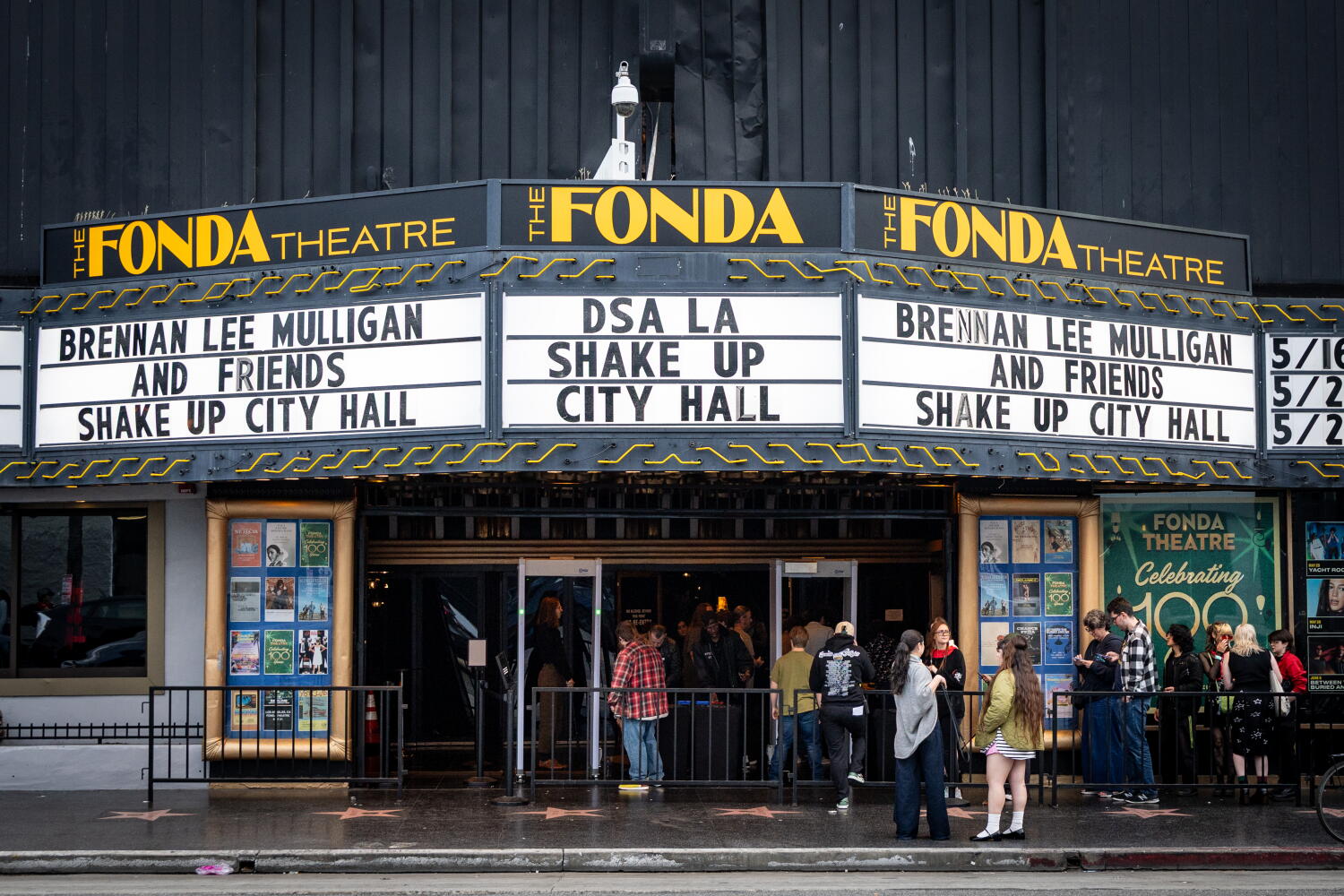
The Democratic Socialists of America recently cast their weight behind Nithya Raman in the Los Angeles mayoral race, an endorsement that signals far more than just a nod from a progressive wing. It marks a collision between grassroots insurgency and the heavy, rusted gears of the nation’s second-largest municipal apparatus.
To understand why this matters, you have to forget the talking points. You have to look at the city not as a postcard of palm trees, but as a pressure cooker.
Consider what happens when a city grows faster than its own conscience.
Los Angeles has long been a place of glittering surfaces masking structural fragility. For decades, the political establishment operated on a simple, unspoken agreement: keep the downtown towers rising, keep the tourist corridors clean, and manage the managed decline of everything else. It was a machine built on consensus, developer donations, and quiet handshakes behind closed doors.
Then came the housing crisis. Not as a statistical anomaly, but as a slow-motion human displacement.
People who had lived in neighborhoods for thirty years found themselves packing their lives into cardboard boxes because a landlord decided to flip a modest bungalow into luxury apartments. Tents multiplied under the overpasses of the 101, not because of a sudden collective moral failure, but because the mathematical floor had dropped out of the economy. The rent simply became too high.
Into this fracture stepped a new breed of politician. Organizers, activists, people who spoke fluent spreadsheet and fluent street protest. Raman’s entry into city politics wasn't born out of ancestral party machinery. It was born out of neighborhood councils, tenant unions, and the bruising, grinding work of block-by-block organizing.
When an organization rooted explicitly in democratic socialism throws its institutional weight behind an incumbent figure in a major mayoral race, it is not merely an endorsement. It is a doubling down on a specific theory of power.
The theory goes like this: You cannot reform a broken housing market by asking the people who profited from it to gently dial back their margins. You cannot solve homelessness by moving encampments three blocks over so tourists don't have to look at them while eating avocado toast. You have to change who owns the baseline. You have to rewrite the rules of real estate, zoning, and municipal budgets from the ground up.
Critics call it naive. They look at the sprawling geography of Los Angeles—its car-dependent sprawl, its fractured police districts, its billion-dollar county-city jurisdictional deadlocks—and they argue that ideological purity is a luxury a broke city cannot afford. They warn of capital flight, of paralyzed city councils, of a bureaucracy grinding to a complete halt while activists argue about municipal socialism versus pragmatism.
There is weight to that caution. Governance is the art of garbage collection, pothole filling, and emergency response. When the ideology gets too loud, the trash sometimes stays on the curb.
But the counter-argument—the one whispered in crowded living rooms where three generations share a two-bedroom apartment—is that pragmatism has brought us to the edge of a cliff. When the sensible, moderate approach yields rising rents, crumbling infrastructure, and thousands of human beings sleeping on asphalt under freeway lights, then "pragmatism" starts to look a lot like denial.
This is where the endorsement becomes fascinating. It forces a collision between two incompatible visions of what Los Angeles is supposed to be.
Is it a corporation designed to maximize real estate value for investors, or is it a home for the people who actually sweep its floors, teach its children, and build its towers?
The campaign trail is already turning into a laboratory for this question. Every candidate must now answer for the unhoused population not with abstract humanitarian platitudes, but with land-use policies. Every speech must navigate the treacherous waters of tenant protections versus property rights.
Elena doesn't read the policy papers. She doesn't need to. She feels the results every time she goes to the gas station or talks to her neighbors about whether their adult children will ever be able to buy a home within fifty miles of where they were born.
When organizations like the DSA step into the ring, they bring an army of volunteers—young people in sneakers, clipboard-wielding students, retirees who have spent decades fighting local zoning boards. They don't have the deep-pocketed super PAC money of downtown real estate syndicates. What they have is shoe leather. They have bodies on doors, phone banks running late into the night, and a narrative that connects personal economic pain to systemic political choices.
That mobilization changes the gravitational pull of the race. Even candidates who reject the socialist label are forced to talk about housing as a human right rather than a mere commodity. The vocabulary of the debate shifts. The Overton window moves.
Yet, winning an election is only the opening act. The real test of any insurgency comes when the applause fades and the hard work of governing begins.
Imagine sitting in the City Hall chambers at midnight, staring down a budget shortfall while department heads explain why police overtime is out of control and street repair funds have been raided to pay for emergency liability lawsuits. Imagine trying to build permanent supportive housing in a neighborhood where homeowners are screaming into microphones about property values and parking spots.
That is where ideology meets the concrete wall of reality.
The socialist project in Los Angeles is attempting something rare in American politics: building an independent political base that answers to renters and working-class neighborhoods rather than real estate developers and municipal employee unions. It is an uphill battle against a political machine that has decades of muscle memory and millions of dollars in defensive capital.
Back on her porch, Elena finishes her coffee. The morning sun finally clears the rooftop of the apartment building across the street, casting a sharp, clean light across the pavement. The crack in the sidewalk is still there. The water bill is still sitting on the counter.
Nothing has changed this morning. But underneath the surface, deep in the bureaucratic plumbing and the restless neighborhoods of a city that never quite stops inventing itself, the foundation is beginning to shift.


