The clock on the wall of the diner does not tick. It hums. A low, electric vibration that competes with the sizzle of grease on the flat-top and the low murmur of the evening news drifting from a television bolted to the corner ceiling.
On the screen, a graphic flashes. Red, white, and blue, framed by sharp, metallic borders. The anchor’s voice drops an octave, adopting the serious, practiced gravity reserved for moments of national pause.
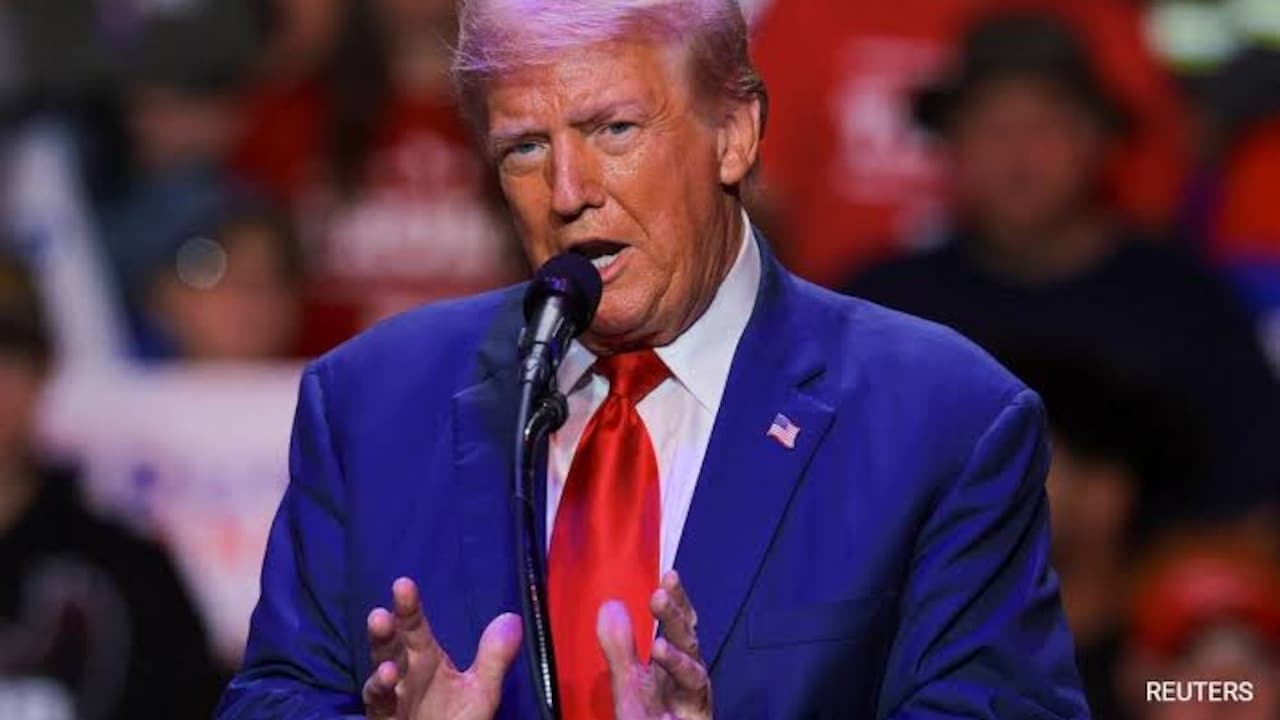
Donald Trump will address the nation on Thursday night.
In booth four, Marcus stops his fork halfway to his mouth. He is sixty-four, with hands mapped by decades of grease and cold steel from the local assembly plant. He looks up at the screen, his eyes narrowing slightly as he reads the scrolling text beneath the anchor's face.
Next to him, his daughter, Clara, doesn't look up from her phone. Her thumb flickers across the glass screen, a relentless, rapid-fire motion that has become the default gesture of her generation. But she hears it.
"Another one," she says softly, not looking up.
"It’s different this time," Marcus replies. His voice is quiet, carrying the weight of a man who remembers when a presidential address meant the entire neighborhood went quiet. "When they announce it days in advance like this, it’s because they want you waiting. They want you sitting there, watching the clock."
Thursday is coming. And with it, a collective holding of the breath.
The Geometry of the Screen
To understand the weight of a promised prime-time address in the modern era, one must first understand how much the room has changed.
Decades ago, when a president requested airtime from the major networks, it was an act of absolute disruption. The regular programming vanished. The soap operas, the sitcoms, the local sports matches—all of it was swept aside by a black screen, replaced by the seal of the President of the United States. You had no choice but to watch, or turn the dial to static.
Today, the disruption is psychological, not technological.
When the announcement drops that the former president, now back in the arena, will speak directly to the country from a podium on Thursday, the internet does not break. Instead, it fractures. Millions of individual algorithms begin to spin like centrifuge machines, separating the country into distinct, hyper-concentrated elements.
For some, the announcement brings a sense of impending vindication. They see a leader ready to cut through the noise of a hostile media environment to deliver truth directly to their living rooms. For others, the news brings a familiar, tight knot in the stomach—a feeling of dread, an anticipation of further division, a worry about what words will be used and who they will target.
The wait itself becomes a cultural event.
Consider a hypothetical home in suburban Michigan. Let us call the owners David and Ellen. They have been married for thirty-two years. They share a mortgage, three grandchildren, and a backyard garden that produces more tomatoes than they know what to do with.
They do not share a political ideology.
When the news of the Thursday address plays during the evening broadcast, David feels a surge of energy. He believes the country is sliding off its tracks, and that only a blunt, uncompromising force can right the ship. He wants to hear the fight.
Ellen looks at the floor. She thinks of her classroom—she teaches middle school English—and the way the children mimic the anger they see on television. She dreads the morning after the speech, when the headlines will scream and the social media feeds will overflow with bile.
They sit on the same sofa. They watch the same screen. But they are living in two entirely different countries, both waiting for the same Thursday night to arrive.
The Art of the Shared Breath
There is a unique theater to the political address. It is a performance where the silence between the words is often more telling than the script itself.
Historically, these moments were designed to soothe. Think of FDR’s fireside chats, where the radio functioned as a digital hearth, warming a freezing, desperate nation during the Great Depression. Or think of Reagan speaking to a grieving country after the Challenger disaster, his voice cracking slightly as he spoke of slipping the surly bonds of earth to touch the face of God.
Those speeches were balm. This is different.
Modern political communication is not designed to heal; it is designed to mobilize. The language of a Trump address is built on contrast. Light and dark. Us and them. The glorious past and the threatened future.
When he steps to the microphone on Thursday, the physical staging will be deliberate. The flags will be perfectly creased. The lighting will be harsh and dramatic, carving out the sharp angles of his silhouette. Every element of the frame is constructed to project authority, to signal to the viewer that whatever chaos is swirling outside their window, there is a force here trying to master it.
But the real tension lies in the unpredictable.
Even with a teleprompter humming in front of him, the magic—or the terror, depending on where you stand—of a Trump speech is the off-script excursion. The sudden aside. The casual observation that derails a prepared policy point and becomes the only thing anyone talks about for the next seventy-two hours.
This unpredictable nature is why Marcus stays glued to the screen, and why Clara keeps her phone charged. They are waiting for the moment the script is abandoned. That is when the raw, unfiltered reality of modern American power reveals itself.
The Empty Spaces Between Us
But what happens in the quiet hours before the red light on the camera turns on?
In the days leading up to Thursday, the country undergoes a subtle, invisible realignment. Dinner plans are adjusted. Group chats light up with speculation. The stock market wiggles, reflecting the nervous energy of people who make their living betting on predictability.
We live in an age of constant noise, yet we are starved for genuine connection. The tragedy of the modern national address is that it no longer serves as a campfire around which the tribe gathers to find common ground. Instead, it is a mirror that reflects our own reflections back at us, magnified and distorted.
If you walk down any street in any American town on Thursday night at 8:59 PM, you will see the same blue light leaking through the windows.
It spills onto the manicured lawns of wealthy suburbs. It illuminates the cracked asphalt of urban apartment complexes. It brightens the dashboards of long-haul truckers pulled over at rest stops along the interstate.
We are all looking at the same man. We are all listening to the same voice.
But when the screen finally goes black, and the normal programming returns, we will not turn to each other and speak. We will look down at our phones. We will seek out the people who saw exactly what we saw, who felt exactly what we felt, and we will retreat further into our corners.
The speech will end. The hum of the diner clock will remain. And the long, quiet wait for the next Thursday will begin.