The supermarket aisle is a cathedral of clinical white light. It smells of floor wax and air conditioning. Under the plastic wrap, the ribeye is a vibrant, healthy red. It looks clean. It looks like dinner. It looks like a bargain.
But that shrink-wrapped tray is a mask. If you could peel back the barcode and look through the fibers of the meat, past the refrigeration and the logistics, you would find yourself standing in the sweltering, airless dust of the Pará region in Brazil. You wouldn’t see a grocery store. You would see a man who hasn't seen his identification papers in three years. You would see a debt that never gets smaller, no matter how many hours are worked under a sun that feels like a physical weight on the spine. Building on this theme, you can find more in: The Cambridge Paper Leak Scandal and the Erosion of Academic Trust.
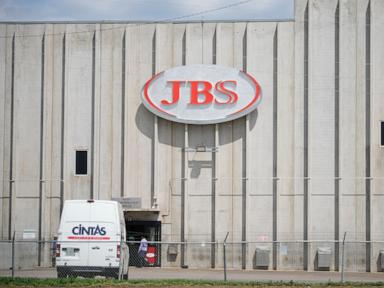
This is the reality at the heart of a massive lawsuit recently filed against JBS, the largest meatpacking company on the planet.
The legal action, spearheaded by activist groups and human rights advocates, isn't just about a breach of contract or a regulatory oversight. It is an indictment of a system that allegedly allows "slavery-like labor" to thrive at the very beginning of the global beef supply chain. JBS stands accused of sourcing cattle from ranches that utilize forced labor, debt bondage, and degrading conditions. Observers at TIME have shared their thoughts on this situation.
The Ghost in the Machine
To understand how a multi-billion dollar corporation ends up linked to medieval working conditions, you have to look at the "indirect supplier."
Imagine a river. At the mouth of the river is the JBS slaughterhouse, where thousands of cattle are processed every day. These are the direct suppliers. JBS monitors them. They check satellite imagery to ensure these ranches aren't deforesting the Amazon. They check government "dirty lists" for labor violations. On paper, everything looks green. Everything looks ethical.
But follow that river upstream.
Before the cattle reach the direct supplier, they are born and raised on smaller, remote ranches. These are the nurseries of the industry. This is where the monitoring goes dark. This is the "laundering" phase. Cattle are moved from a ranch flagged for slave labor to a "clean" ranch just weeks before sale. By the time the animal reaches the slaughterhouse, its history has been scrubbed. The blood on the hands of the first rancher is washed away by the time the steak reaches the Styrofoam tray in Chicago or London.
The lawsuit argues that JBS isn't just a victim of a complex system. It argues they are the architects of a willful ignorance.
The Human Cost of a Cent
Let’s talk about what "slavery-like labor" actually means in the year 2026. It isn't always chains and cages. It is more insidious.
Consider a worker we will call Mateo. Mateo is real in every sense that matters, a composite of the testimonies coming out of the Brazilian interior. He was promised a good wage to clear brush for a new pasture. When he arrived at the ranch, the foreman took his work papers—for "safekeeping."
Then the charges started.
Mateo was charged for his bus fare to the ranch. He was charged for the boots he wore. He was charged for the beans and rice he ate. He was charged for the plastic tarp he slept under because there were no barracks. By the end of the first month, Mateo didn't just have no money; he owed the rancher more than he had earned.
This is debt bondage. It is a mathematical prison. If Mateo tries to leave, he is told he is a thief fleeing a debt. In some cases, armed guards ensure the "debt" is respected. The work is grueling. It is dangerous. There is no clean water. There is no medical care. There is only the brush, the heat, and the cattle that will eventually become someone’s Sunday roast.
The lawsuit alleges that JBS has known about these "upstream" horrors for years. Critics point out that a company with the resources of JBS—a company that can track a single package across the globe—could easily track a cow across three fences if they truly wanted to.
They don't want to.
Efficiency is the enemy of empathy. To maintain the low prices that consumers demand and the profit margins that shareholders expect, the cost has to be squeezed out somewhere. It gets squeezed out of the person who has the least power to fight back. It gets squeezed out of Mateo.
The Paper Shield
JBS often responds to these allegations with a wall of corporate social responsibility (CSR) reports. They talk about their "Green Platform." They talk about blockchain technology and sustainability goals for 2030. They use words like "commitment" and "transparency."
But transparency is useless if you refuse to look in the right direction.
The legal challenge suggests that the company’s monitoring system is a sieve, designed to catch just enough to look responsible while letting the cheap, tainted cattle flow through. It’s a game of shadows. When a ranch is caught using forced labor, it doesn't always stop operating. It just changes its name. Or it sells its calves to a neighbor who hasn't been caught yet.
The lawsuit claims that JBS has failed to implement a "full traceability" system that would track an animal from birth to slaughter. Without that, every environmental or human rights claim they make is essentially a guess. Or a lie.
This isn't just a Brazilian problem. It’s a global appetite problem. JBS is a titan that sprawls across borders. They own brands you likely have in your freezer right now. When the giant stumbles, or when it turns a blind eye to the suffering in its shadow, the vibrations are felt everywhere.
The Weight of the Choice
We live in an age where we are told that our purchases are our politics. We are told to buy organic, to buy local, to check the labels.
But how do you check for this?
There is no "Produced Without Slavery" sticker on the beef at the local mega-mart. The system is designed to be opaque. It is designed so that you don't have to think about Mateo while you’re seasoning your grill. The distance between the Pará dust and the supermarket aisle is thousands of miles, but the connection is as direct as a heartbeat.
The lawyers filing this suit aren't just looking for a settlement. They are trying to pierce the corporate veil. They are trying to force a precedent that says a company is responsible for every link in its chain, not just the ones that are convenient to watch.
If they win, it could change how every major commodity—from coffee to cobalt—is sourced. It would mean the end of the "I didn't know" defense.
The Silence in the Dirt
The legal battle will likely drag on for years. There will be motions, counter-suits, and endless dry testimony about supply chain logistics and international trade law. The executives will sit in air-conditioned boardrooms in São Paulo and New York, surrounded by lawyers who charge by the minute.
Meanwhile, in the Brazilian backcountry, the sun will come up.
A man will wake up under a plastic tarp. He will put on his worn-out boots. He will feel the ache in his shoulders and the hollow in his stomach. He will look at the cattle, and he will look at the horizon, and he will wonder if anyone knows he is there.
He is the ghost in our grocery cart. He is the invisible cost of a three-dollar burger.
The lawsuit against JBS is more than a legal filing; it is a demand for the world to finally look at the man in the dirt and acknowledge that his life is worth more than the margin on a pound of ground chuck. The steak on the plate is never just a steak. It is a story. And right now, that story is a tragedy written in sweat and silence.
We can keep eating in the dark, or we can demand to see the light, no matter how much it reveals about what we've been willing to swallow.