Military reporting has become a stenography of press releases. The latest headlines regarding U.S. naval boardings and the discovery of cross-border tunnels in Southern Lebanon are treated as seismic tactical shifts. They aren't. They are performative maintenance for a strategy that died three decades ago. If you think seizing a single merchant vessel or mapping a concrete tube changes the trajectory of a modern insurgency, you are reading the wrong map.
The mainstream narrative suggests that naval blockades and tunnel detection are proof of "containment." This is a fundamental misunderstanding of 21st-century logistics. We are witnessing the slow, expensive collapse of traditional territorial dominance in the face of decentralized, "liquid" warfare.
The Naval Blockade is a PR Campaign Not a Strategy
The U.S. Navy boarding a merchant vessel suspected of violating a blockade is a cinematic moment designed for a 24-hour news cycle. It creates the illusion of a closed system. It suggests that if you plug the holes in the water, the oxygen runs out on land.
Reality check: You cannot blockade a globalized economy.
When a superpower board's a ship, it isn't stopping the flow of material; it is merely increasing the "risk tax" on a specific route. For every ship intercepted, ten more are rerouted through gray-market hubs, transshipped in ports with less oversight, or moved via land corridors that no carrier strike group can touch.
- The Porous Frontier: Blockades assume a binary state of war and peace. In the Middle East, the "front line" is a commercial ledger.
- The Cost Asymmetry: It costs the U.S. millions of dollars in fuel, manpower, and satellite time to intercept a ship carrying cargo worth a fraction of that.
- The Signal Noise: These boardings are "security theater." They reassure domestic audiences that "something is being done" while the actual logistics of regional actors continue to evolve toward drone-based delivery and localized manufacturing.
I have seen intelligence analysts spend months tracking a single hull while ignoring the thousands of shipping containers moving through legitimate civilian infrastructure. We are hunting whales while the piranhas eat us alive.
The Tunnel Obsession is Tactical Distraction
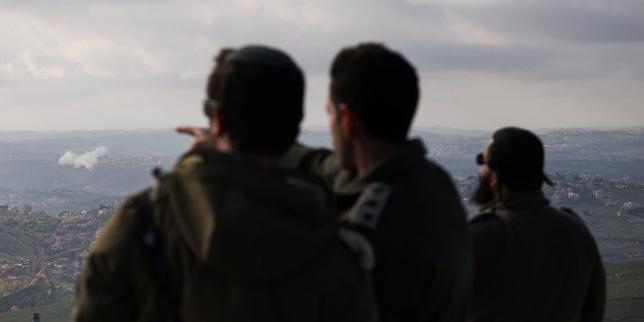
The Israeli military’s announcement regarding Hezbollah tunnels in Southern Lebanon is framed as a "gotcha" moment. It's treated as if finding the tunnel is the same as neutralizing the threat. This is a category error.
A tunnel is not a weapon. It is a symptom of a strategic depth that the West refuses to acknowledge. If you find two tunnels, there are twenty you haven't found. If you destroy twenty, they are already digging forty more.
The obsession with "uncovering" infrastructure ignores the fact that modern insurgencies do not rely on fixed points. They rely on mobility. A tunnel found is a tunnel that has likely already served its primary purpose.
"In modern urban and subterranean warfare, the physical hole in the ground is the least important part of the network. The human intelligence and the social architecture that allowed it to be built under your nose are what should keep you awake at night."
We focus on the concrete because concrete is easy to photograph and easier to blow up. It provides a measurable metric for a public that demands "progress." But measuring progress by the number of tunnels collapsed is like measuring a diet by the number of spoons you threw away. It doesn't address the hunger.
The Technology Trap
The media loves to talk about "cutting-edge" detection technology—seismic sensors, ground-penetrating radar, and AI-driven satellite imagery.
Here is the inconvenient truth: The most sophisticated sensors in the world are still routinely defeated by a guy with a shovel and a basic understanding of soil density. High-tech solutions create a false sense of security. They lead commanders to believe they have "total situational awareness" right up until the moment an insurgent pops up in a "cleared" zone.
The "logic" of the competitor article relies on the idea that superior tech plus superior hardware equals victory. It’s a nineteenth-century mindset applied to a twenty-first-century problem.
What No One Wants to Admit About Maritime Interdiction
If the U.S. Navy wanted to actually stop the flow of illicit goods, it wouldn't be boarding ships in the middle of the ocean. It would be sanctioning the financial clearinghouses in Dubai, Singapore, and London that facilitate the paperwork.
But we don't do that.
Why? Because that would disrupt the global "legitimate" economy. We prefer the high-seas drama because it targets the symptom without threatening the system. The blockade is a sieve, and the Navy knows it. The military isn't trying to win; it's trying to manage the optics of a stalemate.
The Infrastructure of the Future is Invisible
The next decade of conflict won't be won by the side with the most ships or the deepest tunnels. It will be won by the side that can disappear into the noise of everyday life.
- Additive Manufacturing: Why smuggle a missile when you can smuggle a 3D printer and the raw chemical precursors?
- Distributed Networks: Tunnels are being replaced by decentralized "pop-up" sites that exist for 48 hours and then vanish back into civilian neighborhoods.
- Cognitive Warfare: The "news" about these interceptions is itself a weapon. It is designed to demoralize the opponent, but it often backfires by highlighting the desperate, reactionary nature of the occupying force.
Stop looking at the ship. Stop looking at the tunnel. Look at the supply chain of ideas and the resilience of a population that has nowhere else to go.
If you are still cheering for a naval boarding as a sign of impending victory, you are watching a rerun of a show that was canceled years ago. The map is not the territory, and the headline is not the war.
The real war is happening in the spaces between the sensors, in the transactions that don't use banks, and in the tunnels that will never be found because they aren't made of concrete. They are made of a refusal to be seen.
Burn the old playbook. It’s not working.