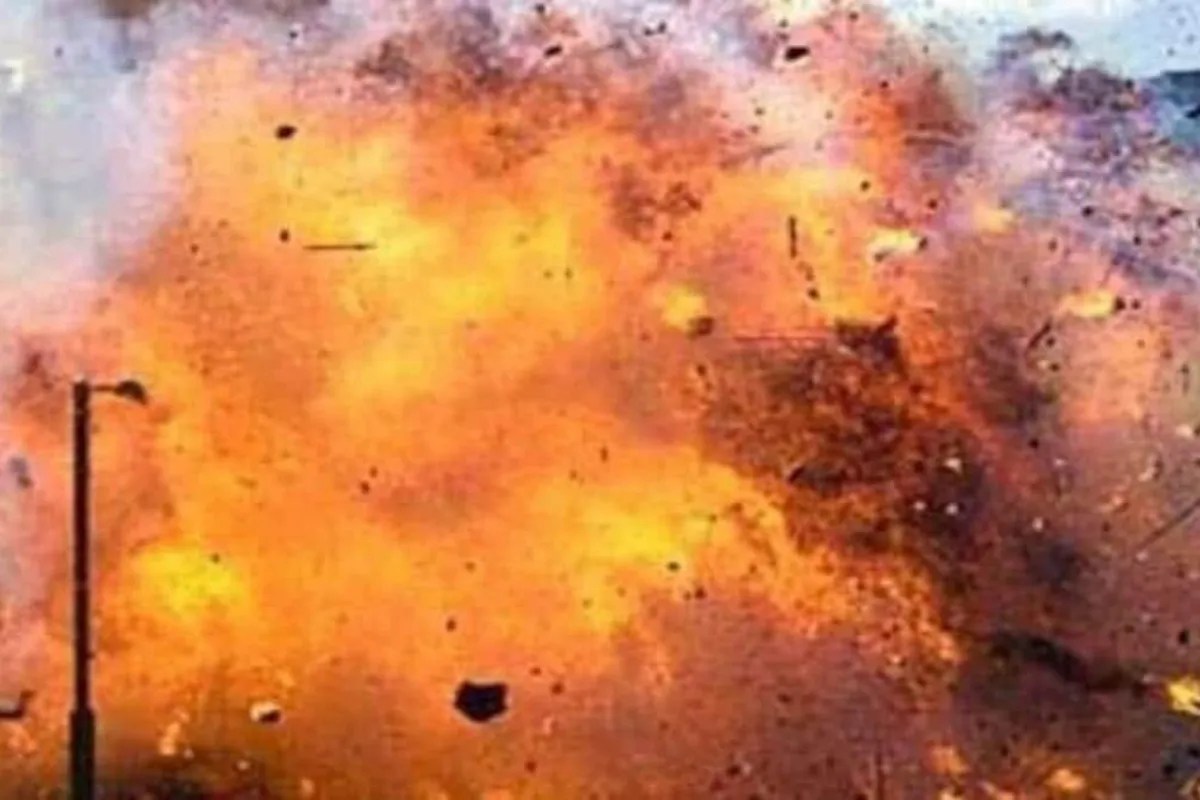
Every time an improvised explosive device tears through a checkpoint or a police convoy in Pakistan, the immediate reflex of the commentariat is predictable, lazy, and fundamentally useless. We get the standard chorus of hand-wringing about operational failures, intelligence lapses, and the perpetual call for more boots on the ground or better tactical gear.
Stop.
The standard narrative treats these tragedies as isolated security failures that can be patched with better checkpoints or higher hazard pay. That diagnosis is wrong. It misses the structural engine driving the violence entirely. When an explosion kills eleven officers and injures thirty, the prevailing analysis treats the symptom while cheering for a continuation of the disease.
For decades, I have watched security analysts analyze South Asian state stability through the lens of tactical metrics. They look at response times, ballistic protection, and perimeter security. They talk about these incidents as if law enforcement agencies are corporate entities suffering from poor management or inadequate budget allocation. This is a profound category error.
Let us look at the actual architecture of the problem.
Law enforcement in high-conflict regions of Pakistan is not just a public safety mechanism; it is the blunt instrument of a centralized state attempting to project authority into ungoverned or semi-governed peripheries. When you send underpaid, locally recruited police officers to act as the primary face of a distant, deeply unpopular government in volatile borderlands, you are not establishing rule of law. You are creating static, highly predictable targets.
People ask why the police bear the brunt of these attacks instead of specialized military units. The answer is political convenience. Deploying regular police into contested zones creates a buffer that shields the central political establishment from the immediate political cost of full-scale military deployments, while maintaining a fragile illusion of normal civilian administration. Every time a station house is targeted or a patrol is ambushed, the cost is absorbed by the lowest rung of the state hierarchy.
The lazy consensus claims that the solution is better intelligence sharing. More wiretaps, more informants, more predictive policing. But intelligence is useless when the underlying socio-political contract is broken. When local populations view the state apparatus as an extractive or alien force rather than a provider of justice and economic mobility, informants dry up, cooperation vanishes, and every checkpoint becomes a hostile island in a sea of indifference or active hostility.
Consider the economic reality of the average constable standing watch in these high-risk districts. We are talking about individuals earning meager wages, expected to hold the line against ideologically driven, heavily armed insurgent networks using twentieth-century equipment and bureaucratic oversight. Expecting tactical brilliance under those conditions is a fantasy.
If we want to stop treating these events as recurring tragedies and start treating them as systemic warnings, we have to flip the script.
First, stop romanticizing militarized policing as a substitute for political settlement. You cannot shoot your way out of a crisis born of institutional neglect, lack of infrastructure, and systemic economic exclusion. Every billion dollars poured into kinetic countermeasures without a corresponding investment in local governance, legal reform, and economic integration is money thrown into a bonfire.
Second, dismantle the illusion that these borderland regions can be managed through remote control from Islamabad or provincial capitals. Centralized command structures are structurally incapable of responding to localized tribal and insurgent dynamics with the necessary agility.
The brutal truth is that the current security paradigm protects the political class at the expense of the rank-and-file officer. Until policymakers stop treating police casualties as acceptable collateral damage in a permanent counter-terrorism holding pattern, the body counts will keep rising, and the explosions will keep echoing.
The next time an attack makes headlines, ignore the calls for more armored vehicles. Ask why the state insists on using a hammer when the house is already burning down.


