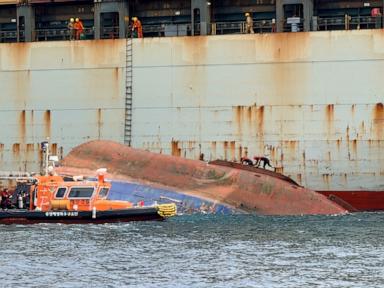
Every time a commercial vessel goes belly up in coastal waters, the maritime media runs the exact same script.
Bad weather. Rough seas. Unforeseen rogue swells. An unfortunate act of God that claims lives and leaves families shattered off the southern coast of South Korea. It is a comforting narrative for port authorities, fleet operators, and classification societies. It shifts the blame onto an adversary you cannot subpoena or cross-examine in a courtroom.
It is also an absolute cop-out.
I have spent two decades crawling through engine rooms, analyzing hull stress signatures, and watching corporate compliance officers check boxes on vessels that should have been retired during the previous decade. When a tugboat sinks in manageable coastal currents, the ocean did not murder the crew. Systemic human failure, deferred maintenance, and archaic operational economics pulled that vessel under long before the first wave breached the deck.
Let us dismantle the comfortable fiction the industry wants you to swallow.
The Myth of the Unpredictable Sea
The lazy consensus says maritime environments are inherently chaotic and unpredictable.
That is false. Modern meteorology, radar tracking, and bathymetric mapping provide real-time data accuracy that would have felt like science fiction fifty years ago. When a harbor tug or coastal towing vessel capsizes, investigators immediately point to sudden squalls or high winds. They treat the weather report like an exoneration.
It is an indictment.
If your vessel cannot handle standard coastal chop without losing stability, your stability booklet is a fairy tale. I have seen operators push fifty-year-old steel past its fatigue limit, running single-screw configurations with worn-out steering gear in narrow fairways, all to save a few thousand dollars in fuel burn or crew overtime.
When things go wrong, nobody blames the bean counter who deferred dry-dock inspections. They blame the wind.
The Economics of Overwork
Look closely at the operational profile of tugboat crews across East Asia. The pressure to turn around container ships, manage tight berths, and cut transit times has turned towage into a high-stakes logistics meat grinder.
Fatigue is not an abstract concept. It is a chemical reality that degrades situational awareness faster than alcohol. When a crew is pulling double shifts because local labor pools are squeezed to the bone, reaction times plummet.
Imagine a scenario where a heavy hawser snaps under improper tow load during a routine berthing maneuver. A well-rested, fully staffed crew identifies the catenary shift, blows the tow line, and resets. A chronically exhausted crew, operating with a skeleton complement because the parent company wanted to optimize operating margins, misses the critical three-second window. The vessel gets dragged sideways, trips over its own towline, and capsizes in less than a minute.
The official report will call it a sudden capsizing incident due to hydrodynamic forces.
The reality is that corporate efficiency metrics killed those sailors.
Why Compliance Is a Paper Tiger
Maritime regulations are thousands of pages thick. ISM codes, SOLAS standards, class surveys—the paperwork stack weighs more than the anchors.
Yet, disasters keep happening. Why? Because the system measures compliance by the presence of a signature on a clipboard rather than the operational integrity of machinery.
I have watched port state control inspectors walk past corroded quick-release mechanisms because the logbook was neatly laminated. Fleet managers treat safety management systems as a liability shield rather than a operational floor. If you design a system where passing an audit matters more than replacing a rusted-through towing pin, you are manufacturing a disaster and waiting for the calendar to catch up.
The South Korean coast guard will spend weeks analyzing the wreckage, checking GPS tracks, and interviewing survivors. They will look for engine failures, steering lockouts, and rogue currents. They will write a dense, technical report that satisfies the legal departments and lets the insurance underwriters settle their claims.
They will miss the point entirely.
The Real Fix Nobody Wants to Pay For
If we actually wanted to stop tugboats from sinking, we would stop treating safety as an overhead cost to be minimized and start treating it as the primary product.
That means mandatory fatigue management enforced by independent telemetry, not self-reported paper logs. It means criminal liability for executives who knowingly dispatch vessels with deferred hull maintenance. It means tearing up the old-school maritime culture of silence where pointing out an operational hazard gets you blacklisted from the docks.
Until the industry stops hiding behind weather reports and starts holding boardrooms accountable for operational drift, these tragedies will keep happening.
The sea remains what it has always been: completely indifferent to our excuses.


