Blaming a train driver for a high-speed collision is like blaming a light switch for burning down a house with faulty wiring.
Whenever sixty-eight people die in twisted steel at 300 kilometers per hour, the press release script is written before the bodies are even cold. Authorities step up to the microphones, somber and grave, and whisper the two most convenient words in industrial public relations: human error. The media eats it up. Headlines scream about a distracted operator, a missed signal, or a fatal lapse in judgment. The public gets a villain to hate, the executives keep their bonuses, and the underlying rot in the system goes completely untouched.
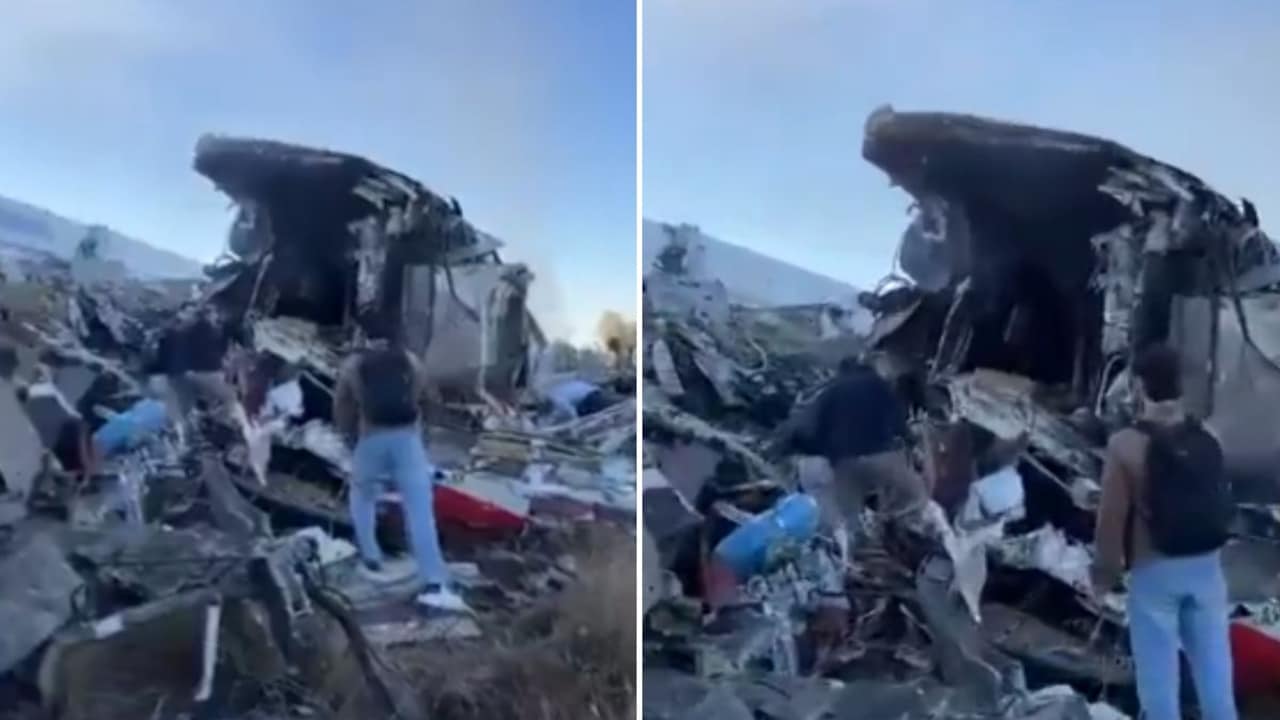
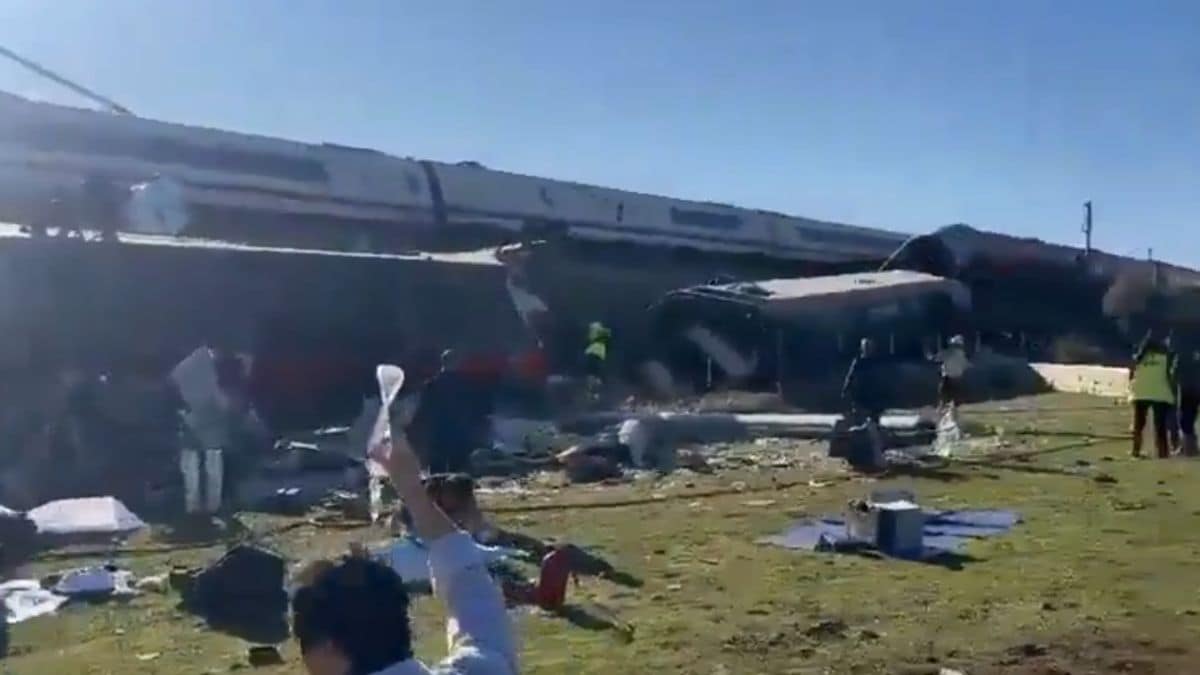
We saw this exact playbook run after the catastrophic high-speed crash in Spain. Two modern trains occupy the same space at the same time, dozens of families are shattered, and the immediate consensus points a trembling finger at the cab.
Stop falling for it. In modern high-speed rail engineering, "human error" does not exist as a root cause. If a single human being can make one mistake and kill sixty-eight people, the system itself was broken long before that driver ever clocked in for their shift.
The Myth of the Rogue Operator
Let us get our definitions straight, because sloppy language kills people. In safety engineering, an active failure is the immediate unsafe act committed by the frontline operator—missing a red aspect, overspeeding into a curve, failing to acknowledge an alarm. A latent condition is the resident pathogen baked into the organization—poor interface design, underfunded signaling upgrades, impossible schedules, and management cultures that prioritize punctuality over margin.
When a mainstream outlet reports that human error caused a high-speed collision, they are staring at the active failure and pretending the latent conditions do not exist.
I have spent two decades auditing transportation infrastructure and dissecting black box telemetry. I have sat in cold windowless rooms listening to cockpit and cab voice recorders of people in the final seconds of their lives. Here is what the press never tells you: those operators were almost never reckless cowboys. They were ordinary, conscientious professionals trapped inside poorly designed architecture that actively set them up to fail.
Consider the physics of high-speed rail. At 300 kilometers per hour, a train covers more than eighty-three meters every single second. At that velocity, the human eye cannot reliably read lineside signals in fog, heavy rain, or blinding sun glare. Even if the driver spots a danger, a heavy steel train moving at that speed requires several kilometers to come to a complete stop.
Because human biology is completely inadequate for high-speed rail operation, the entire industry was built on a foundational promise: Positive Train Control (PTC) and Automatic Train Protection (ATP). In Europe, this means the European Train Control System (ETCS). These systems are specifically engineered to act as an unblinking digital guardian. If a driver misses a signal, gets distracted, or suffers a heart attack, the computer overrides the human and slams on the emergency brakes automatically.
So ask yourself a very simple question. If high-speed rail is legally and technically required to have automated overrides that prevent collisions regardless of what the driver does, how do two high-speed trains still collide?
Because someone in a boardroom decided that full automation was too expensive, too slow to roll out, or too inconvenient for on-time performance metrics.
How Systems Engineer Their Own Disasters
To understand how these tragedies actually happen, you have to look at the work of James Reason, the cognitive psychologist who developed the Swiss Cheese Model of accident causation, and Sidney Dekker, the human factors pioneer who dismantled the "bad apple" theory of safety.
Dekker proved decades ago that human error is a symptom, not a cause. When you punish the operator or blame their psychology, you are treating the smoke while ignoring the fire.
Let us run a thought experiment based on real-world rail corridors across Europe and North America. Imagine a scenario where a national rail operator upgrades a mainline track to handle 300 km/h speeds. They buy sleek, aerodynamic rolling stock. They sell tickets at premium prices. They brag to politicians about cutting travel times between major cities by forty minutes.
Yet, on a critical twenty-kilometer bottleneck approach to a major terminal, the legacy signaling system has not been upgraded to ETCS Level 2. Why? Because upgrading an active urban junction requires shutting down commuter traffic for six months, costing hundreds of millions in lost revenue and political headaches. Instead, management issues a circular. They tell drivers to manually transition from automated computer supervision to legacy lineside signaling at a specific kilometer post, while maintaining tight timetable adherence.
Now add real-world friction. It is raining. The cab is noisy. Dispatch has just radioed the driver about a minor delay ahead, creating subtle psychological pressure to make up time. The driver glances down to acknowledge a routine system prompt, misses the single lineside warning board by two seconds, and enters a crossover switch at twice the safe speed—or onto an occupied block.
Bang. Sixty-eight dead.
When the investigators arrive, they look at the event recorder. They see the driver failed to hit the acknowledgment button. They declare "human error." Meanwhile, the executives who approved running 300 km/h trains through an unshielded legacy junction walk away completely clean.
Why The Press Loves The "Human Error" Narrative
Mainstream journalism is structurally allergic to systemic complexity. Explaining how degraded signaling modes, transition boundaries, and corporate capital allocation formulas interact to create a fatal trap takes three thousand words and an engineering degree. Writing "Driver Missed Signal, 68 Dead" takes six words and generates immediate outrage.
There is also a deep psychological comfort in blaming the individual. Passengers want to believe that flying or taking a high-speed train is completely safe, and that disasters only happen when a rare, defective human being sneaks into the control room. If the public admits that the disaster was caused by systemic compromises made by respected institutions and government ministries, then every train becomes terrifying.
Rail monopolies and state-backed operators exploit this psychological bias ruthlessly. By framing a collision as an isolated behavioral failure, they protect their brand, shield themselves from massive class-action liability, and avoid costly system-wide retrofits. If the problem is just one bad driver, you fire the driver (or mourn them), issue a memo reminding staff to "stay vigilant," and keep the trains running on Monday morning.
It is the cheapest lie in corporate history. And it guarantees the next crash.
Answering The Questions Nobody Dares To Ask
When news of a catastrophic rail crash breaks, the public immediately floods search engines with the same predictable questions. Let us dismantle the flawed premises behind them right now.
Are high-speed trains actually safe if one mistake can kill dozens?
High-speed trains are extraordinarily safe only when operated inside a closed, fully supervised digital envelope. When running under continuous, uninterrupted ETCS Level 2 or Japanese Shinkansen ATC (Automatic Train Control), high-speed rail boasts the best safety record in human transportation history. The Japanese Shinkansen network has moved over ten billion passengers since 1964 with zero passenger fatalities from collisions or derailments.
Why? Because Japan refused to rely on human vigilance. Every inch of Shinkansen track is physically isolated from freight and conventional rail, and the braking curves are enforced continuously by hardware. The danger arises in hybrid systems—common across Europe and the Americas—where high-speed trains share tracks with slower regional traffic or transition between automated and manual control zones. You are not riding a safe system; you are riding a patchwork of world-class engineering stitched together with duct tape and human willpower.
Why didn't the emergency brakes activate automatically?
They probably couldn't, because the system was designed to let the human turn them off—or the track section lacked the balises (electronic transponders) required to trigger them.
In many rail networks, operators are permitted to isolate or override automated protection systems when equipment malfunctions so that a faulty sensor does not strand a train and ruin the network's daily punctuality statistics. When management penalizes dispatchers and drivers for delays more harshly than they reward them for halting traffic over an ambiguous signal, people will routinely bypass safety interlocks to keep the schedule moving. This is called normalization of deviance, a term coined by sociologist Diane Vaughan after studying the Space Shuttle Challenger disaster. Every time a crew bypasses a glitch and nothing bad happens, the organization learns that the safety rule is optional. Until the day it isn't.
Will firing the driver or tightening training prevent this from happening again?
No. Retraining people to "pay better attention" is the ultimate admission of engineering failure.
Human attention is a finite, biological resource that degrades predictably under fatigue, monotony, and stress. You cannot train a human brain to stop being a human brain. You cannot lecture a driver into never experiencing micro-sleep, tunnel vision, or cognitive overload. If your safety strategy depends on human beings maintaining 100% perfection across ten-hour shifts, three hundred and sixty-five days a year, you do not have a safety strategy. You have a lottery.
The Uncomfortable Downside of Total Automation
Before you think I am advocating for simply replacing every human driver with an algorithm tomorrow, let me be brutally honest about the flaw in my own argument.
Stripping humans out of the loop creates an entirely new breed of catastrophic risk: automation complacency and skill decay.
When you build a system that works flawlessly 99.99% of the time, the human sitting in the cab becomes a passive monitor rather than an active operator. Psychologists have proven for decades that human beings are terrible at monitoring automated systems. Our brains tune out. Then, when a rare edge-case failure occurs—a landslide on the tracks, a freak electrical surge, a corrupted data packet that confuses the signaling computer—the automation suddenly hands control back to the human with three seconds to react.
The driver, who has been staring at a green screen doing nothing for four hours, suffers from startle effect. They have zero situational awareness, their manual handling skills have atrophied from disuse, and they freeze or make the exact wrong input.
Furthermore, full grade-of-automation Level 4 (unattended train operation) on open, long-distance high-speed corridors is astronomically expensive. Fencing off thousands of kilometers of rural track, installing continuous radar obstacle detection, and maintaining redundant fiber-optic comms networks would double or triple ticket prices, pricing out the very public rail is meant to serve.
So we are stuck in an ugly trade-off. We cannot afford total, driverless perfection everywhere, and we cannot rely on unassisted human biology anywhere.
How To Actually Fix High-Speed Rail Safety
If we want to stop counting bodies every few years, we have to burn the current regulatory playbook and rebuild how we assign accountability.
Ban "Human Error" From Preliminary Accident Reports.
Regulatory bodies must be legally prohibited from citing operator error as a primary cause until they have audited every single organizational, financial, and engineering constraint surrounding the crash. If a driver missed a signal, the investigation must automatically audit the last five years of maintenance budgets, signaling upgrade delays, shift scheduling algorithms, and management bonus structures tied to on-time performance. Follow the money, not just the wreckage.Enforce Hard Speed Caps in Unsupervised Zones.
If a section of track does not have active, continuous automated braking enforcement (such as ETCS Level 2 or equivalent), trains must be physically governed to speeds where human visual reaction and braking distances actually work—no faster than 160 km/h (100 mph). You do not get to sell 300 km/h tickets on 1980s signaling infrastructure. If rail operators want high-speed revenue, they have to pay for high-speed protection first.Prosecute Executives For Latent Conditions.
Right now, a train driver who makes a split-second cognitive mistake faces prison time for negligent homicide. Meanwhile, the vice president who delayed a signaling software patch for eighteen months to hit a quarterly EBITDA target faces a polite inquiry and a golden parachute. Until corporate officers face personal criminal liability for knowingly operating high-speed vehicles inside degraded safety envelopes, the compromises will continue.Design Interfaces For Humans, Not Engineers.
Cab displays are too often designed by software engineers who dump raw telemetry onto five different screens, creating visual clutter that induces cognitive blindness during emergencies. Rail interfaces must adopt strict aviation-grade human-centered design principles: dark-cockpit philosophies where screens remain blank until an anomaly occurs, tactile physical controls for critical functions, and unambiguous audio alerts that direct attention rather than trigger panic.
Stop Buying The Lie
The next time a high-speed train derails or collides and an official steps up to a podium to mourn a "tragic human error," look past the podium. Look at the corporate balance sheet. Look at the deferred maintenance logs. Look at the transition zones where cutting-edge trains are forced to run blind on aging tracks.
The driver in that cab did not wake up wanting to die or kill sixty-eight strangers. They were the last line of defense in a system that had already failed a dozen times in boardrooms and budget meetings long before the train ever left the station.
Stop blaming the person holding the controls when the people who built the machine rigged it to fail.