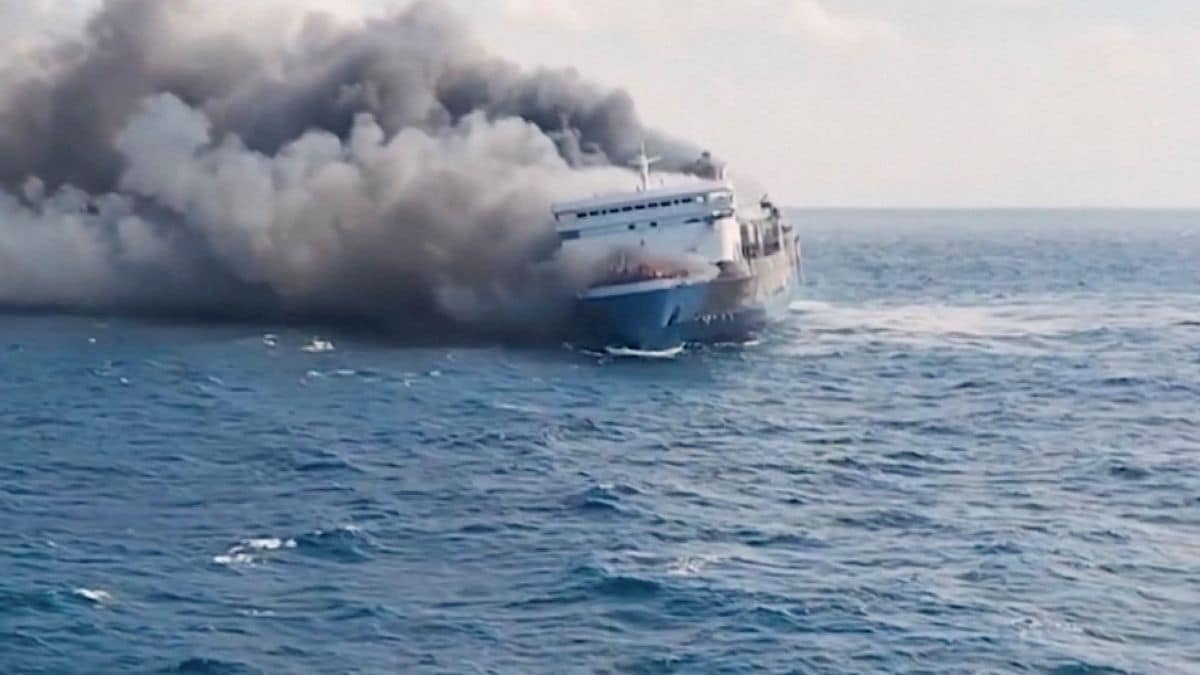
Every single time a vessel burns in the Indonesian archipelago, the media playbook is written before the smoke even clears. The headlines hit with predictable outrage. Passengers forced into the dark water. Panic on the decks. Lifejackets clutched like prayer beads. Then comes the mandatory scapegoat: the crew.
The lazy consensus writes itself. Inept personnel, lax safety drills, corrupt inspections, and a culture of maritime neglect. Arrest the captain, suspend the operator, wag fingers at the regulators, and wait for the next disaster to reset the outrage cycle.
It is a comforting narrative. It allows everyone sitting comfortably on dry land to compartmentalize a complex systemic failure into a neat story of individual villainy. It is also entirely, dangerously wrong.
I have spent two decades analyzing archipelagic logistics and safety compliance across Southeast Asia. I have walked the rusted steel decks of wooden-hulled roll-on/roll-off ferries in the dead of night, and I have audited the ledger sheets of operators trying to keep rust buckets afloat on razor-thin margins.
Blaming the frontline workers for an Indonesia ferry fire is a lazy smokescreen. It masks the structural architecture of a transit system designed to fail long before a single spark hits a combustible bulkhead.
The Economics of Catastrophe
Let us talk about the math that no official inquiry wants to touch.
Maritime transit in a nation spread across seventeen thousand islands is not a luxury; it is the national circulatory system. Millions of citizens move between Java, Sumatra, Sulawesi, and thousands of smaller islands because low-cost domestic air travel remains out of reach for a massive portion of the population.
State-backed operators like Pelni manage the trunk lines with heavy government oversight, but the local routes—the inter-island connectors that carry the highest volume of everyday commuters—rely on private operators working within an intensely punishing economic reality. Fuel price fluctuations, subsidized ticket caps imposed by the government, and chronic under-investment create an environment where safety is treated as a variable expense rather than a fixed necessity.
When an operator is squeezed between a government-mandated fare ceiling and the skyrocketing cost of marine diesel, the first thing to go is not profit margin. There is no margin. The first thing to go is preventive maintenance.
Electrical wiring ages out. Insulation degrades in the brutal tropical humidity and salt spray. Bilge pumps fail and are bypassed with jerry-rigged wiring because a replacement part requires a three-week customs clearance and capital the company does not possess.
When a ferry catches fire, pointing the finger at a deckhand who failed to coordinate an orderly evacuation ignores the fact that the vessel was a floating tinderbox before it ever left the slipway. The fire did not start because the crew lacked courage. It started because the system mandated operational neglect.
The Flawed Panic Paradigm
Whenever passengers leap into the sea to escape a burning vessel, armchair safety experts rush to criticize human behavior. They talk about crowd psychology, stampedes, and the primal urge overriding protocol.
This is an inversion of reality. Panic is not a failure of character; it is a rational response to an irrational environment.
Imagine a scenario where you are trapped inside an enclosed steel deck hundreds of miles from the nearest port. The lights go out, replaced by the choking, blinding pitch of diesel smoke. The alarm bells are either blaring at a deafening pitch or, worse, completely silent because the main generator has short-circuited. You look for instructions, but the safety signage is painted over, faded, or written in a language you barely speak.
In that moment, jumping into the sea is not a panic reaction. It is a calculated risk against a guaranteed death sentence inside the hull.
The structural failure here is spatial and psychological. Most domestic ferries operating in regional Indonesian waters are retrofitted cargo carriers or high-density passenger conversions optimized for maximum human packing density, not rapid egress. Corridors are narrow. Stairwells are steep and choked with luggage. Life-raft deployment mechanisms are frequently locked away behind padlocks to prevent theft by passengers or crew, requiring specialized keys that vanish the second an emergency begins.
When safety equipment requires a scavenger hunt to access, passengers do not panic. They adapt. They look over the railing, see the water, and choose the only variable they can control.
Dismantling the Regulatory Myth
The standard bureaucratic response to any maritime disaster is a fresh wave of edicts. More certificates. More inspections. More stamps on paper.
This is security theater at its most cynical.
The ports of Nusantara are vast, porous, and chronically understaffed. Hundreds of small ports handle thousands of departures daily. To believe that a handful of harbor masters can physically verify the electrical integrity, fire suppression readiness, and structural stability of every vessel departing for an outlying island is pure bureaucratic delusion.
Corruption is often cited as the root cause, and certainly, palm-greasing happens. A bribe slips a sub-standard vessel past a load-line inspection. But focusing entirely on corruption misses the structural trap. If a port authority strictly enforced every international SOLAS safety standard on the existing regional fleet overnight, half of the nation's domestic maritime trade would halt by sunrise. Islands would be cut off. Supply chains would fracture. Food prices would spike.
The state is caught in an impossible bind: enforce absolute safety and trigger a localized economic collapse, or maintain the flow of people and goods while accepting an unacceptable baseline risk of catastrophic fire.
Because the state chooses continuity, the risk is outsourced downward. It lands squarely on the shoulders of the crew and the passengers.
What Actually Needs to Change
If we want to stop writing stories about passengers jumping into burning seas, we have to stop treating maritime safety as a personnel problem and start treating it as an infrastructure design problem.
First, stop criminalizing the crew as a substitute for institutional reform. When a captain is dragged off in handcuffs while the corporate executives who deferred maintenance for five years sit in air-conditioned boardrooms untouched, justice is a theater. Real accountability means piercing corporate veils and holding directors and fleet managers criminally liable for structural safety failures.
Second, redesign the revenue model for regional transit. Safety cannot be contingent on commercial profitability. If an inter-island route is essential for national cohesion, the state must subsidize the capital expenditure required for modern, fire-retardant materials, state-of-the-art thermal imaging smoke detectors, and automated suppression systems that do not rely on a terrified deckhand finding a valve in the dark.
Third, rethink evacuation architecture. Stop relying on complex internal stairwells that turn into human bottlenecks. Every regional ferry should incorporate external, gravity-fed evacuation chutes and decentralized life-raft deployment stations accessible directly from primary passenger decks, eliminating the need to navigate twisting corridors filled with smoke.
The sea does not forgive shortcuts. As long as we treat domestic maritime transport as a low-cost utility where human lives are the ultimate buffer for financial loss, the smoke will rise again.
Stop blaming the people fleeing the flames, and start looking at the pyromaniacs who built the ship.