Point the finger outward. It is the oldest playbook in infrastructure development. Whenever a massive, multi-billion-dollar buildout crashes into a wall of regulatory incompetence, grid physics, and local neighborhood rage, you need a convenient villain. Enter the standard geopolitical scapegoat.
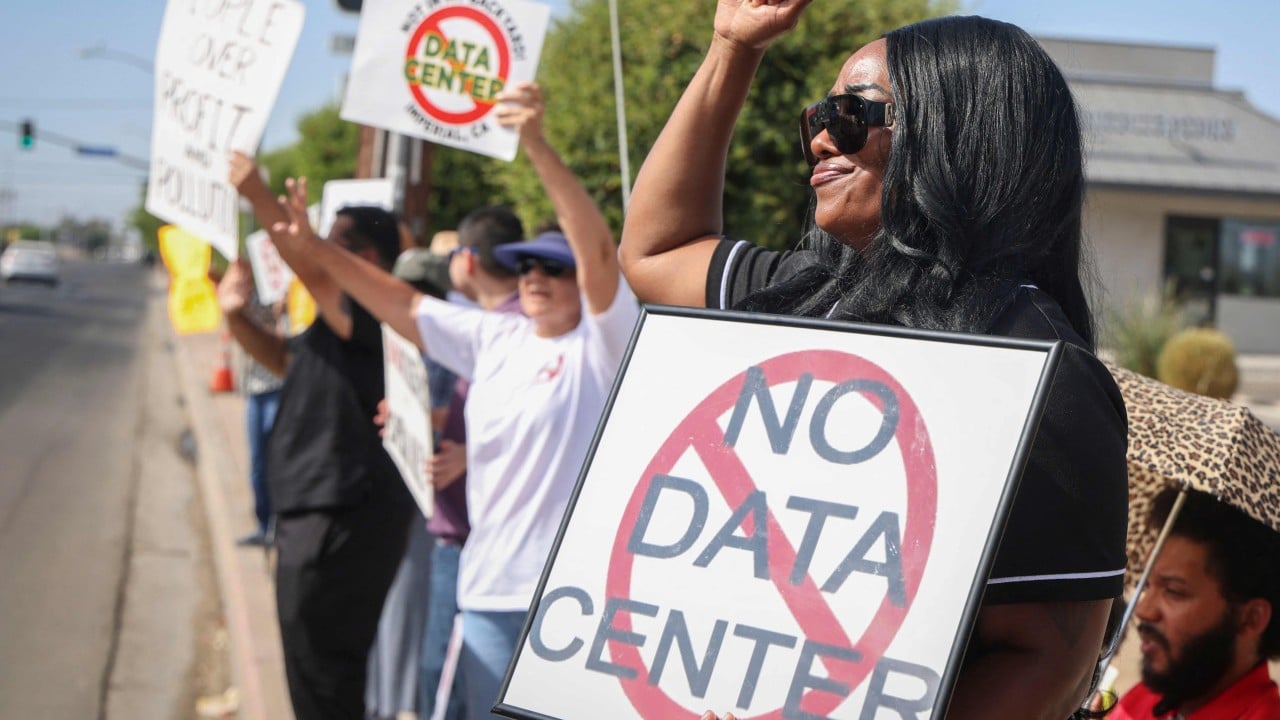
The lazy consensus making the rounds claims that foreign adversaries are orchestrating the fierce local resistance plaguing American artificial intelligence data center expansion. According to this narrative, foreign agitators are secretly funding zoning board revolts, stoking environmental anxieties, and hijacking town hall meetings to keep American tech supremacy chained to the ground.
It is a comforting fantasy for executives who cannot close a power purchase agreement. It lets boardrooms pretend that local grid constraints and furious citizen uprisings are foreign psyops rather than the completely predictable result of a hyper-growth industry colliding with finite real-world physics.
I have watched companies blow millions trying to spin public relations campaigns against angry rural utility customers, as if handing out brochures will somehow convince a farming community that a humming bank of ten thousand liquid-cooled servers should drain their local aquifer and spike their electricity bills.
Let us dismantle the fiction. China is not fueling the resistance to your data center. Your own lack of infrastructure foresight, coupled with a fundamental disregard for local electrical ratepayers, is doing that just fine.
The Real Bottleneck Is Not Beijing It Is Physics and Bad Math
To understand why hyperscale computing hubs are hitting a brick wall across Virginia, Texas, and Ohio, you do not need an intelligence briefing. You need a calculator.
An average artificial intelligence training cluster does not draw power like a traditional corporate office building or even a standard cloud storage server farm. We are talking about facilities designed to scale from 100 megawatts straight past one gigawatt. That is equivalent to the electrical draw of a medium-sized American city, packed into a windowless concrete box that employs roughly forty people.
When tech giants roll into a rural county promising massive economic revitalization, locals pull up the utility filings and see a different picture. They see transmission lines maxing out. They see local generation capacity diverted away from residential growth to feed chips that optimize ad clicks and synthetic chatbots. They see water rights signed away for pennies while their own municipal wells drop.
Are foreign actors whispering in the ears of county commissioners? No. The county commissioners can read their own utility bills.
The resistance is organic, entirely homegrown, and rooted in a simple economic realization: the local community takes on all the environmental and financial risk, while the financial upside ships straight to Silicon Valley venture funds. Calling that resistance a foreign intelligence operation is not just wrong; it is an insult to the intelligence of every rural homeowner who knows how to read an electric meter.
The Myth of the Permitting Conspiracy
Another favorite talking point in executive suites is that red tape and environmental reviews are weaponized by foreign interests to stall American hardware dominance. This is pure corporate fiction designed to lobby for rubber-stamp environmental exemptions.
The environmental review process in the United States is notoriously cumbersome, yes. It is bureaucratic, slow, and often weaponized by domestic groups using local zoning laws to protect property values. But notice who those domestic groups are. They are neighborhood associations, local conservation clubs, and municipal councils tired of hearing diesel backup generators rumble through the night during grid testing.
Labeling domestic zoning disputes as foreign subversion is an emergency hatch for executives who failed to do baseline community outreach before buying land. If you buy property next to a residential suburb, plug into a strained regional transmission organization without securing dedicated new generation assets, and then act shocked when the neighborhood brings pitchforks to the zoning hearing, you do not have a geopolitical problem. You have a management problem.
What Real Infrastructure Strategy Looks Like
If the industry actually wants to break through the gridlock, it has to stop waiting for a federal rescue or a diplomatic crackdown on imaginary foreign agitators. The solutions are unglamorous, expensive, and demand engineering honesty.
First, stop building facilities where the power does not exist. The dash for cheap land in saturated utility territories has turned into a race to the bottom. If a regional transmission organization tells you there is no capacity until 2031, packing up and moving to a market with actual generation capacity is the only sane move.
Second, co-locate with actual power plants or build dedicated zero-carbon generation. Relying on the public grid to supply gigawatt-scale computing without bringing new generation online is parasitic. When tech firms start buying up distressed nuclear plants or funding next-generation geothermal drilling to power their own campuses entirely off-grid, local resistance evaporates because the local ratepayers are no longer subsidizing the compute load.
Third, stop treating community engagement as a PR afterthought. Throwing a token donation at a local high school robotics club does not buy off a community that has to listen to industrial cooling fans roar twenty-four hours a day. Transparent profit-sharing, direct investments in local grid hardening, and ironclad environmental guarantees are the baseline entry fee.
The Accountability Vacuum
The temptation to blame external forces for internal failures is an occupational hazard for executives managing hyper-growth sectors. When exponential projections crash into linear realities like copper wiring, substation lead times, and transformer shortages, finding a scapegoat feels easier than admitting the growth model was mathematically unsustainable from day one.
The truth is much simpler and far less convenient for quarterly earnings calls. The resistance to data center expansion is a direct reflection of a broken social contract between the technology sector and the physical communities that host it.
Until leadership stops hiding behind geopolitical conspiracy theories and starts building power plants instead of just power demands, every zoning board meeting in America is going to look like a war zone.
Stop looking for spies under the floorboards. Look at your own balance sheet, check your substation queue, and realize that nobody owes you a gigawatt of cheap power.