The steel underfoot hums with a terrifying vulnerability when you are carrying two million barrels of crude oil through a corridor only twenty-one miles wide.
To the left, the jagged, sun-bleached mountains of Oman rise like broken teeth. To the right, the hostile, heavily fortified coastline of Iran watches in silence. Between them lies the Strait of Hormuz. It is the world’s jugular vein. If you slice it, the global economy bleeds out in days.
For Captain Marcus Vance, a veteran mariner who has spent three decades navigating these waters, the tension used to be background noise. It was a tax paid in nerves for a lucrative career. But tonight, the air inside the bridge of the Amorgos feels heavy, thick with the smell of salt water and unspoken dread. Two hours ago, the distress calls from a neighboring vessel, a crude carrier flying the Marshall Islands flag, cracked through the VHF radio. First came the static. Then came the panic. A sudden explosion starboard side, a flash of orange fire against the twilight, and the frantic commands of a crew trying to keep a multi-ton behemoth from sinking into the shipping lanes.
It was the third tanker struck this week.
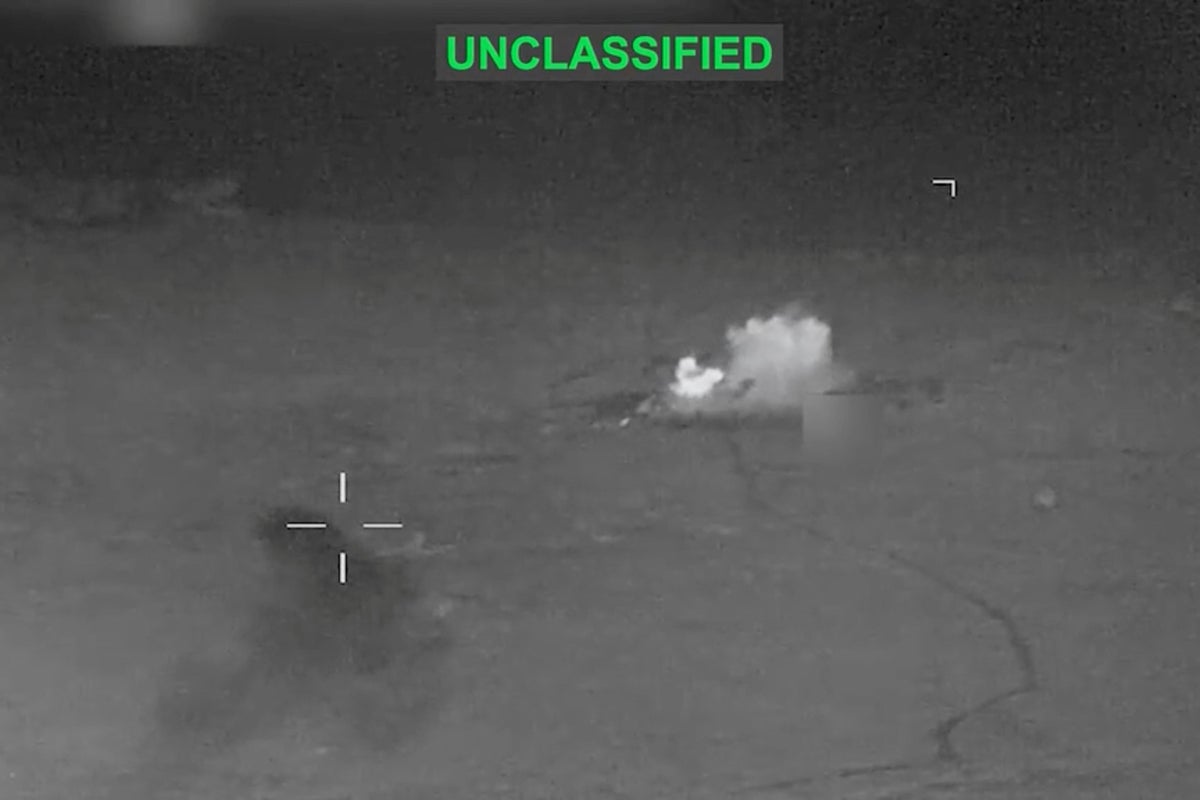
Hours later, the sky above the Persian Gulf tore open. The low, guttural roar of American F/A-18 Super Hornets shattered the desert night, launching from an aircraft carrier stationed out in the Arabian Sea. In Washington, the official announcement followed with the cold predictability of a metronome. Fresh, targeted strikes ordered against Iranian coastal radar installations and drone launch sites. The retaliation was swift, calculated, and terrifyingly familiar.
We tend to look at geopolitics through the lens of maps, arrows, and press briefings. We talk about strategic chokepoints and military deterrence as if they are pieces on a cardboard map. But the true cost of this brewing conflict isn't measured in the sterile language of international relations. It is measured in the heartbeat of a merchant sailor watching a dark horizon, wondering if the next ripple in the water is a rogue wave or a remote-controlled explosive drone.
The Chokepoint in the Living Room
Consider what happens next when a line is crossed in a body of water thousands of miles away.
The shockwave doesn't stop at the coastlines of the Middle East. It travels at the speed of light through fiber-optic cables, landing instantly on the trading floors of London, New York, and Tokyo. Within minutes of the third attack, the price of Brent crude spikes. It is a mathematical certainty, an automated reflex of a global system that runs on anxiety.
To understand the scale, look at a map of global energy distribution. Every single day, roughly one-fifth of the world’s petroleum passes through this tiny strip of water. It is the lifeblood of industrial civilization. It fuels the container ships bringing electronics from Asia to Europe. It powers the factories in Ohio and the heating systems in Frankfurt. When a tanker burns in Hormuz, the price of a gallon of gasoline climbs at a local station in a quiet suburb half a world away before the smoke has even cleared from the vessel's deck.
The consumer feels the pinch and complains about inflation, perhaps cursing a politician or blaming corporate greed. But the real problem lies elsewhere. The real problem is that our modern world is built on an illusion of absolute stability. We have constructed a sprawling, interconnected civilization that relies on the flawless, unhindered movement of commodities through some of the most politically volatile geography on earth.
When that illusion cracks, the vulnerability is total.
The Anatomy of an Ambush
To appreciate why this specific stretch of water is so uniquely dangerous, one must understand its geography. The shipping lanes themselves are incredibly narrow. To prevent collisions, international maritime law dictates a two-mile-wide inbound lane, a two-mile-wide outbound lane, and a two-mile separation zone between them.
This means that giant tankers, some as long as the Empire State Building is tall, are forced to navigate a predictable, rigid path. They cannot swerve. They cannot take evasive action. They are, for all practical purposes, sitting ducks for any adversary utilizing asymmetric warfare tactics.
For years, military analysts have warned about the strategy of the swarm. A conventional navy relies on massive, expensive destroyers and carriers. An asymmetric force relies on speed, concealment, and low-cost attrition. Fast attack craft, sea mines dropped from unassuming fishing boats, and loitering munitions manufactured for a fraction of the cost of a missile defense system.
Imagine the calculation. A drone that costs twenty thousand dollars to manufacture can cripple a vessel worth one hundred million dollars, carrying a cargo worth twice that amount. The math is devastatingly lopsided. When the third tanker was hit, it wasn't a display of superior naval might; it was a demonstration of leverage. By proving that no vessel is entirely safe, the attacker achieves a psychological victory that far outweighs the physical damage inflicted on the hull.
The American response—ordering immediate, retaliatory strikes on coastal infrastructure—seemed designed to project absolute resolve. But on the water, that resolve looks different. Every strike increases the stakes. Every explosion escalates the cycle of action and reaction. For the mariners caught in the middle, the presence of warships provides cold comfort. A destroyer can intercept a missile, but it cannot guarantee safety against a stealthy mine bobbing silently just beneath the surface of the black water.
The Human Ledger
We rarely think about the people who operate these ships. They are an invisible workforce, largely hailing from countries like the Philippines, India, and Ukraine. They spend months at a time isolated from the world, moving the fuel that keeps the rest of humanity warm and mobile.
When a crisis like this erupts, these crews become the frontline infantry in a war they never signed up to fight.
On board the Amorgos, the atmosphere shifts from routine professionalism to hyper-vigilance. The lookouts on the bridge wings no longer just scan for other ships; they search for small wakes, for the telltale glint of fiberglass in the sun, for anything that seems out of place. The anxiety is palpable. It affects how men eat, how they sleep, how they speak to their families during their brief windows of satellite connectivity.
"You call home, and you try to sound normal," Vance says, his voice carrying the fatigue of a man who hasn't slept properly in forty-eight hours. "You tell your wife that everything is fine, that the navy is here, that we are safe. But you look out the window and you see the smoke on the horizon from the last ship that got hit, and you know you’re lying."
This is the hidden emotional currency of global trade. The cost of our energy isn't just paid in dollars per barrel; it is paid in the raw terror of men who are tasked with steering a floating bomb through a shooting gallery.
The Dangerous Logic of Escalation
The strategic dilemma facing Washington is profound, and it is one that historical precedents suggest rarely ends cleanly. When a nation-state relies on deterrence, it must continually raise the cost of aggression for its adversary. If an attack occurs, the response must be heavier, louder, and more destructive than the provocation.
But deterrence is a game played between two entities who may not share the same calculus of risk.
For the United States, keeping the Strait of Hormuz open is an existential economic necessity. A prolonged closure would trigger a global economic depression, spiking energy costs to unprecedented levels and destabilizing allied nations. Therefore, the deployment of force is seen as a defensive, stabilizing measure—a clear signal that lawlessness will not be tolerated.
For Iran, however, the calculation is viewed through a lens of survival and regional dominance. Faced with crushing economic sanctions and diplomatic isolation, the ability to threaten the world’s energy supply is its ultimate geopolitical shield. It is the one lever they possess that can force the international community to pay attention. In their view, compliance is a slow death; defiance, even risky defiance, offers a position of strength.
When these two conflicting logics collide, the margin for error shrinks to nothing. A single miscalculation, a stray missile that hits a crowded crew quarters instead of an empty deck, or a defensive system that mistakenly shoots down a civilian aircraft, can transform a series of tit-for-tat skirmishes into an open, uncontrollable conflagration.
The international community watches this cycle with a mixture of helplessness and alarm. Diplomatic channels are clogged with rhetoric. Statements issued from capitals call for restraint, while simultaneously justifying the latest use of force. It is a dance where everyone knows the steps, but no one knows how to stop the music.
Beyond the Horizon
The sun begins to dip below the western horizon, painting the Gulf in brilliant, deceptive shades of crimson and gold. On the bridge of the Amorgos, the radar screen sweeps with a monotonous, green rhythm. Each blip is a ship, a life, a portion of the world's wealth moving through the dark.
The fighter jets have returned to their carriers, their engines silent for now, leaving behind the smoldering ruins of their targets on the coast. The immediate threat has receded, replaced by the tense, fragile quiet that always follows a storm. But everyone on the water knows that this quiet is an illusion. The fundamental structural pressures that caused the conflict remain entirely untouched. The oil must keep flowing, the tankers must keep sailing, and the hostile shores will continue to watch.
Captain Vance adjusts his binoculars, focusing on the dark expanse of water ahead. His ship is approaching the narrowest point of the passage. There are no speeches here. There are no policy papers or geopolitical theories. There is only the long, slow turn of the propeller, the deep groan of the hull, and the hope that tonight, the black water will remain still.


