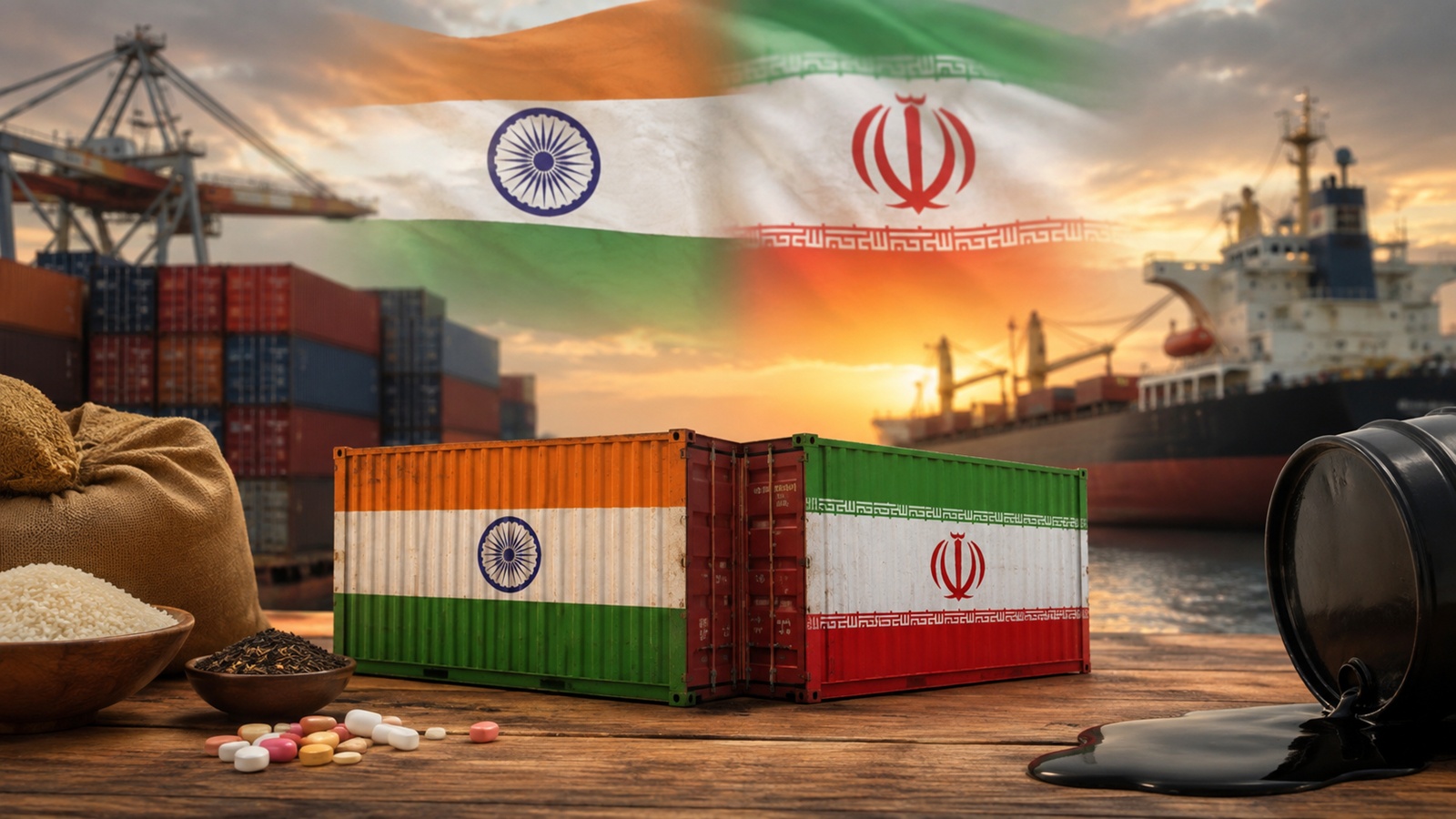
The air inside the warehouse smelled of aged basmati, a sweet and nutty perfume that clung to the walls of a room built for abundance. Ramesh ran a handful of the long, slender grains through his calloused fingers. They fell like white sand through an hourglass, each one representing a promise made to buyers thousands of miles away. For thirty years, this routine had sustained his family through drought, fluctuating currency, and the quiet anxieties of agricultural life.
Today, the rice did not smell like a livelihood. It smelled like a trap.
Half a world away, diplomats in Washington signed documents with heavy fountain pens, and political speeches echoed through marble halls. The terms were dense, spoken in the clipped, clean language of geopolitics: maximum pressure, secondary sanctions, compliance thresholds. To the men in suits, these were instruments of statecraft. To Ramesh, and to thousands of traders, pharmacists, and manufacturers across the Indian subcontinent, they were falling iron shutters.
You cannot eat a policy. But you can certainly choke on its consequences.
Consider what happens when Washington tightens the screws on Tehran. The stated goal is singular, precise, and distant from the soil of Punjab or the sterile cleanrooms of Gujarat. Yet, global commerce does not operate in neat, soundproofed boxes. It is an intricate web of invisible threads. Pull one cord in the Middle East, and a farmer in Karnal feels the snap in his bones.
Take the basmati trade. Iran has historically been one of the largest buyers of India’s premium rice. It is a cultural staple there, a centerpiece of feasts and family gatherings. When sanctions descend like a heavy fog, the machinery of international banking seizes up. Dollars cannot flow. Euros trigger compliance alarms. Traders are left staring at ships idling in ports, wondering how to move cargo when the financial plumbing has been deliberately shattered.
It is a strange and frustrating economic reality. The product is legal. The hunger is real. The supply is sitting in bags, ready to load. But the payment mechanism—the very lifeblood of trade—has been declared a forbidden zone.
Ramesh is not a politician. He does not care about geopolitical leverage. He cares about the truck drivers waiting outside his gates, the laborers who need their weekly wages, and the mounting loans accumulating against next season's harvest. When the Iranian market freezes, the domestic price of rice does not gently adjust; it plummets under the sudden weight of surplus. Bins overflow. Storage costs mount. The harvest turns from a blessing into an unbearable burden.
And the story repeats itself in antiseptically clean corridors hundreds of miles away from the rice fields.
In Ahmedabad, Dr. Mehra walked past rows of humming bioreactors, his white lab coat rustling in the quiet hum of the facility. His company manufactured critical generic pharmaceuticals, life-saving molecules exported to developing and developed nations alike. Medicine is supposed to be immune to the petty squabbles of empires. Humanitarian exemptions are written into laws with noble phrasing.
Reality is rarely so charitable.
Even when pharmaceuticals are technically carved out of restrictive measures, the terror of compliance paralyzes the financial sector. International banks, terrified of triggering multi-million-dollar fines from regulators, adopt a posture of hyper-caution. They simply refuse to process any transaction touching the sanctioned nation, legal exemptions notwithstanding. Over-compliance becomes the safest form of self-defense for institutions holding billions in global capital.
Dr. Mehra found his shipments halted not because the medicine was banned, but because no bank was willing to clear the invoice.
Imagine watching a container of life-saving antibiotics sit baking in the sun at a customs depot because a compliance officer in Frankfurt or New York hit pause on a wire transfer. The human cost of these trade restrictions is rarely televised. It does not arrive with explosions or sirens. It arrives in delayed treatments, in cancelled purchase orders, in factories forced to scale back shifts, and in the quiet desperation of business owners watching decades of hard work erode over overnight decree.
This is the hidden cost of economic statecraft.
Economists talk about trade diversion, supply chain elasticity, and market corrections as if they are abstract mathematical proofs. They speak of variables shifting on a spreadsheet. But variables do names like Ramesh. Variables have children in private schools they can no longer afford. Variables have payrolls to meet every single Friday, regardless of whether a distant superpower just redrew the map of permissible commerce.
The vulnerability stems from a deeper structural reality. India's export economy has long relied on clever workarounds during past diplomatic friction. Mechanisms like rupee-denominated trade agreements were designed precisely for this kind of weather. When conventional Western banking channels close, nations find alternative paths, trading in local currencies to bypass the dollar-dominated hegemony.
Yet, even these safety valves have limits.
When sanctions become absolute, secondary penalties threaten anyone daring to step outside the prescribed lines. A local bank facilitating rupee settlements with a blacklisted nation suddenly finds itself locked out of the global SWIFT system. The risk becomes existential. No regional financial institution is large enough or brave enough to absorb the wrath of primary global enforcers.
And so, the alternative paths close one by one. The doors lock from the outside.
We tend to view international relations as a spectator sport. We watch the headlines, track the announcements of new executive orders, and measure political wins and losses like points on a scoreboard. We forget that the board is made of real lives. We forget that every stroke of a pen in a distant capital sends shockwaves through local markets that have no voice in the matter.
Back in the warehouse, the afternoon sun cast long, amber shadows across the stacked sacks of rice. Ramesh swept a stray grain off his desk, listening to the distant roar of a truck engine turning away empty. The market had not vanished; the desire had not faded. The bridge had simply been blown up while everyone was still standing on it.