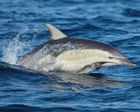
The H5 bird flu crisis has crossed a terrifying threshold. When a common dolphin in South Australia recently tested positive and died from the H5 strain, it wasn't just another sad wildlife statistic. It marked a brutal expansion of a virus that is rewriting ecological rules in real time. We are watching a pathogen leap from avian populations into marine mammals with devastating speed.
At the exact same time, authorities made an extraordinary call. Scientists and researchers are being pulled off Macquarie Island, a remote sub-Antarctic World Heritage site, out of fear for their mental health. Why? Because watching thousands of seals and penguins potentially die from an incoming viral wave creates a severe psychosocial risk that isolation only amplifies.
Let's look at what is actually happening on the ground. South Australia has turned into a hotspot for new detections, reporting dozens of sudden cases in a single update. The virus isn't staying neatly contained in backyard flocks or wild waterfowl anymore. It has claimed a brown falcon, a fox, an Australian raven, and now, marine life. Elephant seal populations in other sub-Antarctic territories like Heard Island have already suffered pup mortality rates exceeding ninety percent. When a virus hits those numbers in dense breeding colonies, the environment transforms into a graveyard.
This brings us to the psychological toll on the people who study these ecosystems. Expeditioners stationed on isolated rocks like Macquarie Island live in close proximity to massive colonies containing over 80,000 southern elephant seals and millions of seabirds. Officials know that if the H5 strain hits these shores during the upcoming breeding season, the carnage will be impossible to ignore or escape. Expecting a small team of researchers to sit tight and watch mass mortality events unfold without immediate support or escape routes is a recipe for deep psychological trauma. Pulling them out isn't an overreaction. It is a grim recognition of the emotional weight carried by modern field scientists.
We need to talk about what this means for biosecurity and wildlife management moving forward. Traditional containment strategies fall apart when wild birds fly across oceans and marine mammals carry infections along coastal currents. Active control measures on remote islands are practically non-existent because of sheer geography. You cannot vaccinate millions of wild penguins or quarantine the open ocean.
Keep an eye on how local health departments modify their reporting protocols. South Australia recently shifted to confirming cases through localized laboratory testing in Adelaide rather than shipping every single sample off to interstate federal facilities. That shift lets them move faster, but it also highlights how frequent these detections are becoming.
If you track environmental health or wildlife trends, stop treating this as an isolated bird disease. It is a sweeping ecological disruption. Watch official updates from agricultural and environmental departments closely for changes in mammal infection rates, because every mammalian spillover brings new variables to an already volatile crisis.