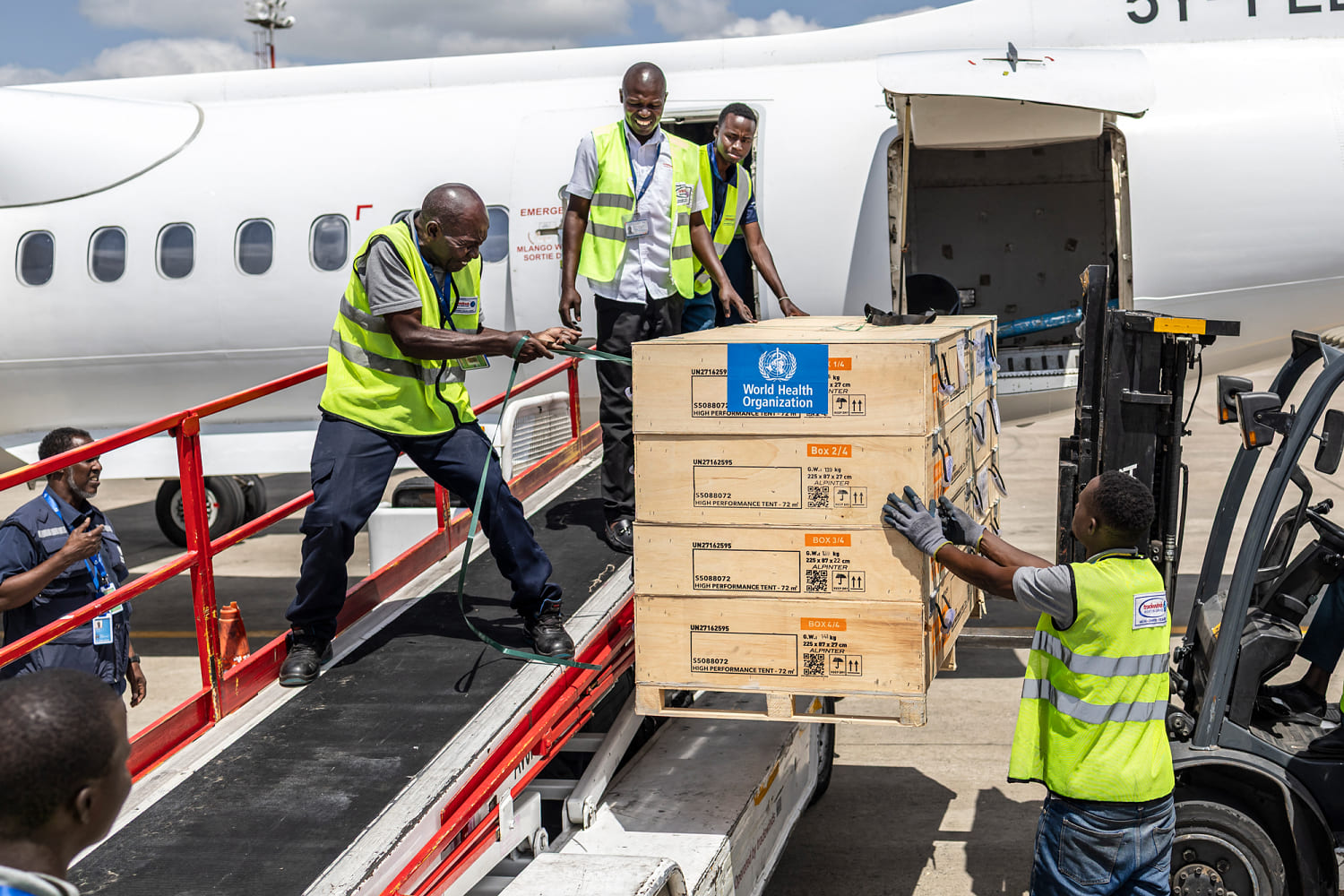
The containment of high-consequence pathogens like Ebola virus requires an absolute minimization of transmission vectors, a constraint that often conflicts with domestic political, medical, and infrastructural realities. When a government evaluates the relocation of citizens exposed to filoviruses from domestic soil to an international facility—specifically utilizing specialized biocontainment infrastructure in nations like Kenya—it is not executing a simple medical evacuation. It is solving a complex optimization problem balancing biosafety level (BSL) capacity, geopolitical risk, and epidemiological containment costs.
To analyze the strategic logic behind exporting biosecurity risks, one must dismantle the operational components of high-level isolation, the economic trade-offs of localized versus centralized containment, and the strict immunological variables that govern filovirus management. You might also find this similar article insightful: Why Border Screening Alone Wont Keep Ebola Out of the United States.
The Tri-Border Isolation Framework
The decision to isolate individuals exposed to Ebola virus outside their home country rests on three mutually reinforcing operational pillars. If any single pillar fails, the entire biosecurity apparatus collapses, transforming a controlled containment effort into an uncontrolled outbreak vector.
1. The Capacity Elasticity Problem
Domestic biocontainment facilities, particularly Biosafety Level 4 (BSL-4) suites capable of handling pathogens with high case-fatality rates and no widespread vaccine or treatment, are inherently inelastic. These units require specialized negative pressure systems, dedicated waste-sterilization infrastructure, and highly trained personnel who operate under strict air-supply protocols. As discussed in latest coverage by Psychology Today, the effects are significant.
Because these resources are finite, a sudden influx of exposed individuals can rapidly saturate domestic capacity. Offloading exposed or asymptomatic-but-monitored individuals to international partner facilities preserves core domestic BSL-4 infrastructure for active, critical cases that require intensive tertiary care.
2. The Vector Elimination Principle
Every kilometer a potentially infected person travels within a highly populated domestic zone introduces a non-zero probability of containment breach. By rerouting individuals directly from an international point of exposure to a regional containment hub—such as a specialized research or medical facility in East Africa—the total cumulative transit distance within domestic borders is reduced to zero. This structurally eliminates secondary and tertiary transmission rings within the home country's population centers.
3. Regulatory and Jurisdictional Flexibility
Domestic public health mandates are frequently bound by stringent legal challenges, quarantine litigation, and civilian pushback. International facilities operating under distinct bilateral agreements can bypass domestic bureaucratic bottlenecks, allowing for immediate, militarized isolation protocols that prioritize absolute containment over administrative friction.
The Cost Function of Global Biosecurity Relocation
Evaluating the viability of international containment requires a formal assessment of the total risk-adjusted cost function. This framework weighs the explicit capital expenditure of long-range medical transport against the implicit, catastrophic costs of a domestic outbreak.
The economic and operational variables govern the system according to the following relationship:
$$C_{total} = C_{transport} + C_{isolation} + P_{breach} \times L_{catastrophic}$$
Where:
- $C_{transport}$ represents the direct financial cost of utilizing specialized Airborne Biological Isolation Teams (ABIT) and retrofitted containment aircraft.
- $C_{isolation}$ is the per-capita operational cost of maintaining an individual in a high-consequence isolation unit.
- $P_{breach}$ is the calculated probability of a pathogen escaping containment during transport or isolation.
- $L_{catastrophic}$ is the total economic and human loss associated with a localized domestic outbreak.
The critical variable is $P_{breach}$. While long-range international transit superficially appears to increase $P_{breach}$ due to the duration of travel, the utilization of closed-loop transit pods isolates the patient from both the external environment and the flight crew.
If the destination facility in Kenya possesses equal or superior localized containment protocols and lower surrounding population density than a domestic urban medical center, the net value of $P_{breach} \times L_{catastrophic}$ decreases significantly.
Epidemiological Dynamics of Filovirus Monitoring
A common point of confusion is the distinction between active infection and high-risk exposure. Ebola virus disease possesses an incubation period ranging from 2 to 21 days. During this window, an individual is non-infectious because the viral load has not achieved the critical threshold necessary for shedding through bodily fluids.
This creates a distinct clinical window for strategic relocation:
- Days 1–5 (Early Incubation): Viral replication is localized. Polymerase Chain Reaction (PCR) assays may return false negatives due to low viral density. This is the optimal strategic window for long-range transport, as the patient lacks symptoms and does not shed virus.
- Days 6–14 (Middle Incubation): The prodromal phase approaches. The risk of sudden symptom onset increases, making transport highly volatile. Containment protocols must transition from passive observation to active bio-isolation.
- Days 15–21 (Late Incubation): If the patient remains asymptomatic, the probability of infection decays toward zero, signaling the end of the isolation mandate.
By utilizing international facilities situated in regions with historical, boots-on-the-ground expertise in filovirus management—such as East and Central African research hubs—the monitoring phase leverages clinicians who possess unmatched diagnostic familiarity with the early, subtle onset markers of the disease.
Infrastructure Asymmetry and Geopolitical Interdependence
The selection of Kenya as a destination for biosecurity containment highlights an overlooked asymmetry in global healthcare infrastructure. While Western nations excel in high-cost, low-volume tertiary medical intervention, East African medical research centers—often funded via international biodefense coalitions—frequently maintain superior throughput capacity for tropical pathogen management.
These specialized centers feature distinct structural advantages:
Specialized Waste Streams
The volume of biohazardous waste generated by a single Ebola patient can exceed hundreds of liters per day. Standard municipal sewage systems cannot accept treated effluent without significant risk of public panic or regulatory violation. Dedicated international research facilities utilize independent, self-contained autoclave and incineration loops designed explicitly for filovirus eradication.
Experienced Personnel Enclaves
Medical staff in domestic hospitals face severe psychological and operational friction when shifting to BSL-4 gear, increasing the probability of self-contamination during the doffing of personal protective equipment (PPE). Conversely, dedicated personnel in endemic-adjacent research hubs operate within a continuous culture of high-consequence pathogen management, structurally lowering the human-error rate.
Strategic Limitations and System Vulnerabilities
No biosecurity framework is devoid of systemic vulnerabilities. Relying on international containment assets introduces specific operational risks that must be continuously mitigated.
The first limitation is the dependency on sovereign airspace permissions. Transporting exposed individuals across multiple international boundaries requires rapid, high-level diplomatic clearances that can be rescinded instantly in the event of an escalation in global health alerts. A containment aircraft stranded on a foreign tarmac represents a severe, unmitigated biosecurity bottleneck.
The second limitation involves the ethical and legal friction of exporting health risks. Moving citizens away from domestic judicial protections can spark severe political backlash, damaging the trust required between the public and state health apparatuses. If the public perceives that exposure to a pathogen results in immediate expatriation, individuals will actively conceal exposure history, driving the virus underground and accelerating domestic transmission chains.
Operational Execution Protocol
To successfully execute an international biosecurity isolation strategy, the following sequencing protocol must be deployed without deviation:
- Immediate Stratification: Upon confirmed exposure, individuals are categorized based on exposure severity (direct percutaneous, mucosal, or close-contact) and time elapsed since the event.
- Closed-Loop Extraction: Exposed assets are moved directly to an airfield via dedicated negative-pressure transport vehicles, bypassing all commercial transit infrastructure.
- In-Flight Containment: Transport occurs via long-range aircraft configured with portable isolation units, maintaining a continuous negative pressure gradient relative to the cockpit.
- Sovereign Handover: Patient transfer at the destination airfield in Kenya occurs within a secured military or research perimeter, transitioning directly to the designated isolation enclave.
This systematic approach minimizes variables, reduces human touchpoints, and leverages global infrastructural specialization to manage a high-consequence epidemiological threat. The paradigm shifts from domestic preservation via insular isolation to global risk distribution through strategic logistics.