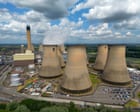
When a massive computational facility is proposed adjacent to a controversial biomass power station, the carbon math rarely survives contact with reality. The announcement that a datacentre could be built near the Drax power plant in North Yorkshire has triggered fierce debate over energy accounting, corporate greenwashing, and the true cost of digital infrastructure expansion. Analysts point out that the projected emissions from powering such a facility with wood pellet combustion could dwarf the annual output of major commercial airports.
Yet, looking only at the smoke stack misses the broader mechanics of how industrial energy markets operate. The intersection of artificial intelligence compute demand and heavily subsidized bioenergy reveals a quiet structural conflict in modern climate policy.
To understand why a server farm tethered to a biomass plant generates such intense friction, one must examine the fundamental premise of biomass energy in the United Kingdom. For decades, Drax has operated under a regulatory framework that classifies wood pellet burning as carbon neutral. The logic assumes that trees regrow and sequester the carbon released during combustion over a generational timeline.
Independent scientists, ecologists, and energy economists have dismantled this assumption repeatedly. Transporting millions of tonnes of wood pellets from North American forests across the Atlantic Ocean, processing them into dense cylinders, and burning them in a converted coal boiler creates an immediate, massive carbon pulse. The atmosphere does not wait fifty years for a sapling to mature before absorbing the exhaust.
Now, introduce the hyper-scale datacentre. Modern artificial intelligence training clusters and cloud infrastructure demand uninterrupted, baseload power on a scale that strains existing transmission grids. If a technology developer plugs a multi-hundred-megawatt computational load directly into a facility that burns imported biomass, the operational footprint expands dramatically.
The comparison to aviation emissions highlights the sheer scale of the energy draw. Gatwick Airport handles hundreds of thousands of flights annually, moving tens of millions of passengers across the globe. For a single industrial complex running racks of servers to eclipse that volume of carbon release demonstrates the staggering energy intensity of contemporary digital infrastructure.
Industry advocates argue that datacentres must be built where power generation already exists to avoid destabilizing the wider electrical grid. They envision a future where localized microgrids and dedicated generation assets absorb the shock of computational spikes.
That argument ignores the fuel source.
If the underlying generation relies on burning wood fiber sourced from carbon-dense primary forests, relocating the demand does nothing to solve the atmospheric ledger. It merely shifts the point of consumption. The carbon is still vented into the northern skies, regardless of whether the electricity powers a domestic washing machine, an industrial manufacturing plant, or a cluster of graphics processing units crunching large language models.
Furthermore, Drax sits at the center of a complex web of government subsidies. The facility receives hundreds of millions of pounds annually in renewable energy obligation certificates, despite burning millions of tonnes of biomass. Adding a high-capacity datacentre to this ecosystem creates a commercial synergy that incentivizes the continuation—and likely expansion—of wood pellet harvesting.
Technology giants are under immense pressure to secure round-the-clock clean energy to power their artificial intelligence ambitions. Corporate sustainability reports often rely on contractual accounting tricks, such as Power Purchase Agreements, that allow companies to claim green credentials while drawing power from mixed-fuel regional grids. Direct physical collocation with a biomass plant bypasses the ambiguity of standard grid accounting. It establishes a direct physical link between the computational output and the combustion stack.
This transparency cuts both ways. While it eliminates the accounting shell game of regional transmission attribution, it exposes the digital enterprise to the direct ecological liabilities of its energy supplier.
The regulatory environment in the United Kingdom faces an acute stress test as these proposals move through planning committees. Local authorities are unequipped to balance the macroeconomic promises of high-tech job creation against the carbon accounting realities of industrial-scale bioenergy. Planners hear pitches about innovation hubs, high-skilled employment, and regional economic regeneration. They rarely have the investigative bandwidth to audit the lifecycle emissions of imported forest biomass.
At the same time, the national grid operator faces a triage situation. Demand from electric vehicles, heat pumps, and data-intensive computing is surging simultaneously. Grid connections are heavily constrained, creating a bottleneck that threatens to stall economic development. In this desperate climate, energy projects that can promise dedicated megawatt capacity find a receptive audience among policymakers eager to check boxes on infrastructure targets.
This creates a perverse incentive structure.
Communities near the Drax facility bear the local particulate pollution and the regional ecological impacts of supply chain forestry, while global technology corporations secure the power necessary to train proprietary models. The economic benefits concentrate at the top of the corporate ladder, while the carbon debt accumulates on the public balance sheet.
Evaluating the viability of the project requires stripping away the corporate marketing language that cloaks industrial combustion in the vocabulary of ecological stewardship. Biomass is not wind. It is not solar. It is a thermal generation method that relies on chemical energy stored in organic matter, and the industrial supply chain required to feed it rivals the complexity and carbon intensity of fossil fuel extraction.
When data infrastructure demands are grafted onto this system, the result is an acceleration of resource extraction disguised as digital progress. The debate over the North Yorkshire datacentre is not a local zoning dispute. It is a preview of the compromises society will be asked to make as the digital economy collides with physical planetary limits.
The computational hunger of the modern era cannot be satisfied by creative accounting. Every watt consumed leaves a trace in the atmosphere, and no amount of corporate branding can alter the chemistry of combustion.