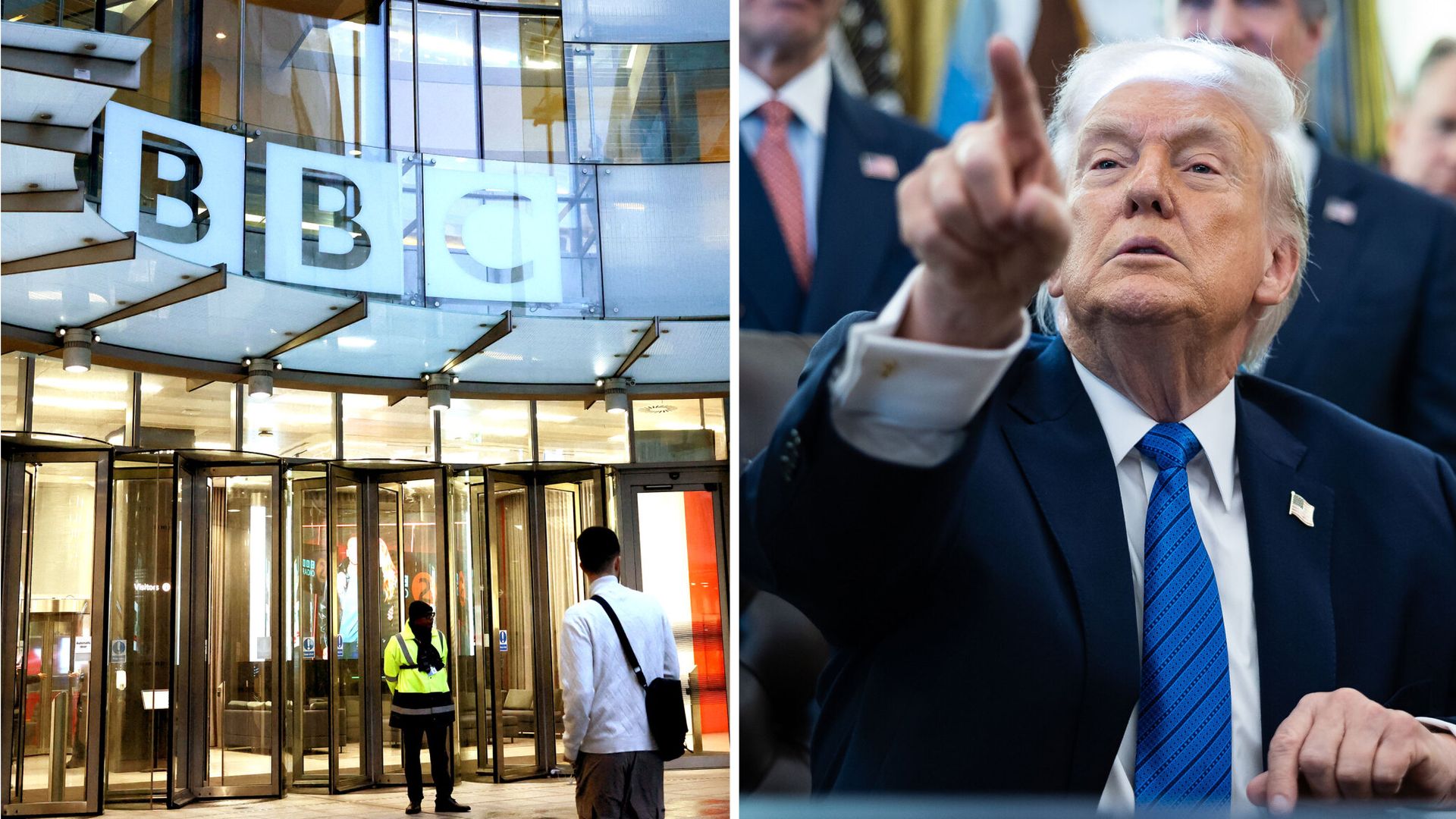
Donald Trump just walked into a legal trap of his own making. By suing the British Broadcasting Corporation for $10 billion over a botched documentary edit, the president inadvertently handed a federal judge the keys to his financial empire. This week, US Magistrate Judge Enjoliqué Lett ordered Trump to surrender detailed financial records of his family trust and businesses to the BBC's defense team. The ruling exposes the fatal flaw in the strategy of bludgeoning media outlets with catastrophic defamation claims. When you claim astronomical economic damages, you have to prove them. And proving them requires opening the books.
The Broadcast That Started It All
In October 2024, the BBC broadcast a Panorama documentary titled "Trump, A Second Chance". The film featured footage of the speech Trump delivered to his supporters on January 6, 2021, shortly before the assault on the US Capitol. During the editing process, producers spliced together separate quotes delivered almost an hour apart. Read more on a related subject: this related article.
The resulting clip made it appear as though Trump continuously stated: "We're going to walk down to the Capitol… and I'll be there with you. And we fight. We fight like hell".
The edit removed crucial context. It excised the moment where Trump explicitly asked his supporters to protest peacefully. More journalism by NBC News delves into similar views on this issue.
The backlash was immediate and severe. The BBC, bound by a royal charter demanding strict impartiality, admitted the error. The broadcaster issued an apology and retracted the segment. The internal upheaval was massive. BBC Director-General Tim Davie and Head of News Deborah Turness both resigned over the scandal. Chairman Samir Shah sent a formal apology letter to Trump, calling the edit a severe error of judgment.
For most politicians, forcing the resignation of the leadership of a 103-year-old global news institution would be categorized as a decisive victory. The opponent surrendered. The offending material was purged.
Trump, however, chose to escalate. He filed a lawsuit in federal court in Miami, demanding $10 billion in damages. His legal team claimed the broadcast violated the Florida Deceptive and Unfair Trade Practices Act and constituted malicious defamation that caused direct harm to his "brand, properties and business".
That specific phrasing is where the trap was set.
The Discovery Crowbar
Civil litigation in the United States operates on the principle of discovery. If a plaintiff claims a specific injury, the defendant possesses the legal right to scrutinize the evidence of that injury.
Trump demanded $10 billion, asserting that the BBC's edited clip severely damaged the financial viability of his sprawling real estate and branding empire. A $10 billion judgment would fundamentally destroy the BBC, an entity funded entirely by an annual £174.50 license fee paid by ordinary British households. Facing an existential threat, the BBC's lawyers responded exactly how seasoned litigators respond. They asked for the receipts.
The broadcaster requested financial papers on the Donald J. Trump Revocable Trust, the entity that holds the president's business interests and assets. They requested ledgers, asset valuations, tax documents, and property income records to ascertain exactly how much money the BBC allegedly cost him.
Consider the sheer scale of the Donald J. Trump Revocable Trust. It is a sprawling, labyrinthine apparatus that encompasses golf courses in Scotland, commercial towers in Manhattan, licensing deals in Dubai, and the Mar-a-Lago club itself. Valuing these assets is notoriously complex. During his civil fraud trial in New York, the valuation of these exact properties was the central, bitterly contested issue. Now, in a completely separate defamation case in Florida, the BBC has won the right to demand those same internal ledgers. A routine apology over a broadcasting error has metastasized into a forensic audit of the president's wealth.
If Trump claims his properties lost value because of a British documentary, the defense has the absolute right to examine occupancy rates at his hotels, membership fees at his private clubs, and commercial lease revenues across his portfolio.
Trump's legal team vehemently resisted. They accused the BBC of embarking on a "textbook fishing expedition". They complained that fulfilling the request would require producing tens of thousands of documents within an unreasonable 30-day timeframe. Filings indicate Trump's team had already made 503 requests for documents from the BBC, and the broadcaster handed over 45,000 pages in return. But when the BBC demanded the same transparency regarding Trump's finances, the cooperation ended.
Judge Lett rejected Trump's resistance. During a discovery hearing in Miami, she ruled that the financial records are completely relevant. "All of President Trump's brand, properties and businesses are impugned or said to have been impugned," Lett stated from the bench. If the president claims economic damage, the defense is entitled to review the financial baseline of his businesses before and after the broadcast.
The BBC's underlying strategy is mathematically brutal. Their lawyers aim to prove that Trump's net worth actually skyrocketed since the documentary aired. If the value of the Trump Revocable Trust increased following the broadcast, the claim that the BBC undermined his businesses evaporates entirely.
Widening the Net
The financial disclosures are only one front in this expanding legal war.
In a separate ruling, Judge Lett authorized the BBC to issue subpoenas to several prominent members of Trump's inner circle. The target list reads like a roster of the administration's most influential figures. Donald Trump Jr., Ivanka Trump, Jared Kushner, Steve Bannon, Stephen Miller, and Michael Flynn are all subject to the subpoenas.
The BBC is hunting for internal communications, emails, and text messages regarding the "Stop the Steal" rally and the broader efforts to challenge the 2020 election results. They also requested records that these individuals previously provided to federal investigators.
Why does the BBC need Steve Bannon's text messages to defend an editing error in a television documentary?
Since the landmark 1964 Supreme Court ruling in New York Times Co. v. Sullivan, the legal threshold for defamation in the United States has been deliberately constructed to protect a free press. To win, a public official must prove that the publisher acted with "actual malice"—meaning they either knew the statement was false or acted with reckless disregard for its truth or falsity. It is the highest burden of proof in civil law.
The BBC is not just defending a clumsy edit; they are defending their editorial process. If they can demonstrate that the edit reflected what they genuinely believed to be the truth of Trump's actions that day, the defamation claim collapses. This is exactly why the text messages and emails from Bannon, Miller, and Kushner are so vital to the defense. They provide the raw, unfiltered reality of what was happening inside the campaign. The defense is building a case that their broadcast, however poorly cut, captured the essence of the administration's intent.
By subpoenaing his closest advisers, the defense aims to establish Trump's actual state of mind and actions on January 6. If the internal communications show that Trump and his allies were actively seeking to disrupt the certification of the election, the BBC can argue that their botched edit did not materially alter the truth of his underlying intentions.
It is a high-risk, high-reward defense strategy. It forces the events of January 6 back into a Miami courtroom under the guise of a media libel dispute.
A Panicked Legal Retreat
The realization of what they have unleashed appears to have finally dawned on Trump's legal counsel.
Faced with the imminent forced release of the organization's financial records and the communications of his family members, the legal team is attempting a desperate pivot. Alejandro Brito, a lawyer representing Trump, informed the judge that he intends to amend the current complaint.
The proposed amendment would surgically alter the nature of the lawsuit. Instead of claiming financial damage to his businesses and brand, the amended complaint will argue that the documentary solely caused "reputational damage". By removing the claim of economic harm, Brito hopes to render the financial disclosures legally unnecessary.
Trump has also quietly withdrawn claims against BBC Studios Distribution and BBC Studios Productions, the commercial arms of the broadcaster, leaving the main British Broadcasting Corporation as the sole remaining defendant.
He is trying to close the door after the judge has already walked through it. For now, the BBC is permitted to move forward with its requests for the financial documents. The trial is scheduled for February 2027, giving the defense ample time to pore over whatever ledgers they can successfully extract.
The Weight of the State
Adding an entirely unprecedented layer to this litigation is the quiet maneuvering of the federal government.
According to filings reviewed by the Financial Times, the US government informed the Florida court that it is "considering participating in this litigation". The executive branch is looking to join the lawsuit as an interested party, effectively throwing the weight of the Justice Department behind a private citizen's defamation claim against a foreign news organization. The US government sought to justify its involvement by pointing to the BBC's subpoenas for documents from executive branch agencies.
This has alarmed legal scholars and terrified the BBC. The broadcaster filed a response stating that the "conflict of interest is clear and stark".
The BBC's lawyers pointed out a massive contradiction. Trump claims he is bringing the $10 billion lawsuit in his personal capacity. Yet, he is the sitting president, directing the very US agencies that are now attempting to intervene on his behalf. The Trump administration previously tried to substitute the government as the defendant in long-running civil lawsuits regarding the January 6 attack, claiming his actions fell within the scope of his employment as president. They attempted the same maneuver in E. Jean Carroll's defamation lawsuit, a move that would have shielded him from liability since the federal government cannot be sued for defamation.
Now, they are attempting the inverse, using government power to bolster a personal offensive against a media outlet.
The BBC also continues to argue a fundamental jurisdictional flaw. They maintain the lawsuit should be thrown out of the Florida court entirely because the documentary was never broadcast or made available in the United States. Trump's team counters this by alleging that Americans could access the BBC's "Panorama" series using the streaming platform BritBox or via virtual private networks.
The entire ordeal illustrates the danger of using the courts for public relations retribution. A lawsuit is not a press release. It is a binding legal mechanism that grants your adversaries the power to demand your most guarded secrets under penalty of perjury. By chasing a multi-billion dollar payout over an edit the BBC had already apologized for, the plaintiff handed his opponents a flashlight and a warrant. The defense is now walking through his ledgers and reading his advisors' texts.
U.S. Government Weighs Joining Trump's Defamation Suit
This video report details the unprecedented move by the federal government to potentially intervene in the defamation lawsuit against the British broadcaster.


