The ink on a federal budget request usually dries in the quiet of a basement office, far from the neon glare of a campaign stage or the gilded molding of a private ballroom. But when a number as heavy as one billion dollars hits the table, it doesn't just sit there. It breathes. It creates a gravitational pull that draws in every partisan anxiety and fiscal doubt currently haunting the halls of Congress.
For weeks, a specific, massive figure has been floating through the legislative ether: a $1 billion request intended to fortify the security apparatus surrounding the White House and, controversially, the private spaces frequented by Donald Trump. Now, that request is trembling. House Republicans are reportedly weighing the possibility of dropping the ask entirely, a move that signals a sudden, sharp pivot in the high-stakes game of political optics and protection.
Imagine a locksmith standing before a door that protects the most valuable secrets in the world. He knows the hinges are aging. He knows the locks are being picked by unseen hands every hour of every day. He asks for the funds to build a vault that can withstand the next century. But then, he hears the whispers from the people paying for the metal. They aren't talking about the strength of the steel; they are talking about who gets to hold the key and whether the vault looks too much like a monument to one man.
The Weight of the Ask
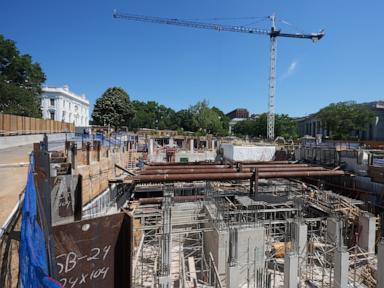
The money in question wasn't just a rounding error. A billion dollars is a staggering sum, even by Washington standards, specifically when earmarked for the "protection of persons and facilities." The bulk of this was intended to modernize the security infrastructure of the White House complex—a 200-year-old fortress that is effectively a living museum struggling to keep pace with 21st-century threats.
However, the narrative became tangled when the request was linked to the security needs of Mar-a-Lago and the specific logistical nightmares of protecting a former president who operates out of high-traffic, private commercial properties. Security is a cold, hard necessity, but in an election year, it looks like a line item for luxury.
The tension broke during recent closed-door deliberations. Lawmakers who are usually the first to champion "law and order" or "unquestioned security" found themselves staring at the political cost of the bill. It wasn't just about the dollar amount. It was about the optics of a massive cash infusion for a private ballroom while the rest of the country watches a bruising battle over the national debt.
The Invisible Guard
To understand why this matters, you have to look past the suit-and-tie bravado of the evening news. Consider the Secret Service agent standing on a perimeter in 95-degree heat. To that agent, the billion dollars isn't a political statement. It’s a better radio. It’s a drone detection system that actually works. It’s the difference between a twelve-hour shift and a sixteen-hour shift because the department is finally adequately staffed.
When the funding is threatened, the man on the perimeter doesn't care about the party platform. He cares about the gap in the fence.
Yet, the reality of the Capitol is that the agent’s needs are often secondary to the "vibe" of the legislation. Republicans are currently navigating a treacherous middle ground. They must appear fiscally responsible to a base that is weary of "runaway spending," while simultaneously avoiding any move that looks like they are abandoning the security of the man who still leads their party’s polls.
The decision to potentially drop the request is a calculated retreat. It is an admission that the political friction generated by the $1 billion price tag has become more dangerous than the security gaps the money was meant to fill.
The Ballroom and the Bunker
The most radioactive part of the proposal was undoubtedly the "Trump ballroom" element. In the eyes of critics, federal money flowing into the security of a private club feels like a subsidy for a brand. To supporters, it is the unavoidable cost of protecting a figure who is a constant target of international and domestic threats.
The conflict highlights a fundamental shift in how we view the presidency. It used to be that the office was the destination. You lived in the White House, you worked in the Oval, and the security was baked into the architecture of the city. Now, the "office" follows the individual into gold-leafed resorts and private estates.
This creates a logistical paradox. How do you secure a public-facing business without it becoming a government outpost? And how do you ask the American taxpayer to foot the bill for the renovations required to make that possible?
By pulling back on the $1 billion request, House Republicans are attempting to de-escalate a fight they realized they might not win. It is a tactical move to strip the "luxury" narrative away from the broader spending bill. They are betting that they can find smaller, less conspicuous ways to fund the essentials without handing their opponents a billion-dollar hammer to swing in the next round of televised debates.
The High Cost of Hesitation
Budgeting is often described as a dry exercise in accounting, but it is actually a map of a nation's fears. When we spend on defense, we are mapping our fear of invasion. When we spend on healthcare, we map our fear of mortality. When we debate a billion dollars for a White House and a ballroom, we are mapping our fear of the intersection between private wealth and public power.
The danger of dropping the request isn't just political. There is a tangible, physical risk involved. Security experts warn that the longer infrastructure upgrades are delayed, the more vulnerable the "persons and facilities" become. Technology doesn't wait for a fiscal year to end. Threats evolve. Cyber-attacks grow more sophisticated. Surveillance becomes cheaper and more accessible to those who mean harm.
While the politicians argue over the "look" of the money, the physical world continues to decay.
Imagine a bridge that everyone knows is swaying in the wind. The engineers submit a massive bill to fix it. The city council looks at the bill and decides the price is too high, mostly because the bridge leads to a part of town they don't like. So, they wait. They hope the wind doesn't blow any harder this year. They tell themselves they will find a cheaper way to tighten the bolts next spring.
But the wind doesn't care about the city council's re-election chances.
The Shifting Ground
The movement to drop the request suggests a growing fatigue within the GOP leadership. There is only so much political capital to go around, and spending it on a controversial security bill—one that invites "cronyism" headlines—is becoming an unattractive option.
This isn't just about one man or one building. It’s a symptom of a deeper paralysis. We have reached a point where even the most basic functions of the state—like ensuring the safety of its leaders and its primary executive seat—are viewed through a lens of extreme suspicion.
The "core facts" tell us that the request is being mulled over, that the numbers might change, and that the ballroom is the sticking point. But the human story tells us something far more unsettling. It tells us that we are losing the ability to distinguish between the safety of the institution and the popularity of the occupant.
The billion dollars was a shield. Whether that shield was made of necessary steel or unnecessary gold is the question that has stalled the gears of the House.
As the sun sets over the Potomac, the White House stands in a soft, historical glow. It looks permanent. It looks invincible. But inside the office buildings a few blocks away, the people who manage the reality of that building are realizing that invincibility has a price tag—and right now, nobody wants to be the one to sign the check.
The request might disappear from the headlines tomorrow, replaced by a fresh scandal or a new economic report. The $1 billion might be carved into smaller, unrecognizable pieces and tucked into the dark corners of other bills. But the gaps in the fence remain. The agents on the perimeter still have the same aging gear. The "security" of the nation's most famous address remains a hostage to the optics of a ballroom.
In the end, we are left with a chilling realization: in the modern political arena, the appearance of a cost is often treated as more dangerous than the reality of a threat.