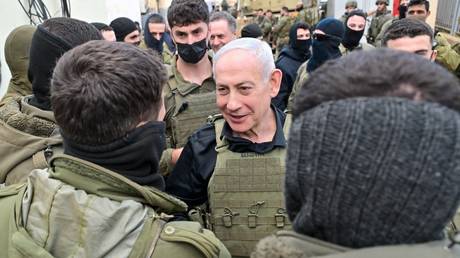
Benjamin Netanyahu is not a politician who walks away quietly. For decades, the Israeli Prime Minister has built a reputation as the ultimate political survivor, navigating internal revolts, corruption trials, and catastrophic security failures.
Yet, when U.S. President Donald Trump publicly mused about whether Netanyahu even wants to continue his career, it sent shockwaves through the diplomatic corridor. Trump questioned if Netanyahu intends to stay in politics after the war, casually noting that the Israeli leader has had "an amazing career" but framing him strictly as a "wartime prime minister."
The response from Jerusalem was instant and defiant. Within hours, Netanyahu's ruling Likud Party issued a blunt statement on X stating that Netanyahu will run in the upcoming election and, with God's help, will win.
This public friction reveals a deeper reality about the shifting alliance between the two leaders. Netanyahu is completely locked into a survival strategy that requires him to stay in power, no matter what his closest international ally thinks.
The Real Friction Behind the Trump Comments
The narrative of an unbreakable bond between Trump and Netanyahu has always been more complicated behind closed doors. While they teamed up earlier this year to launch military campaigns against Iran, the relationship has hit a rough patch.
The immediate catalyst for the tension involves recent American efforts to broker a peace deal with Tehran and stabilize Lebanon. Trump has pushed hard for regional stabilization, wanting to wrap up the conflicts quickly.
But Netanyahu's domestic political survival depends on maintaining a hardline stance. The friction boiled over recently during a heated phone call where Trump reportedly used explicit language, calling the Israeli leader "f**** crazy" while demanding that Israel refrain from bombing Beirut.
When Trump publicly questioned Netanyahu's desire to run again, it wasn't an innocent observation. It was a calculated verbal nudge. Trump likes fast resolutions and clear victories. Netanyahu, conversely, operates on an entirely different timeline, where extending his political lifespan is the ultimate goal. By casting doubt on Netanyahu's future, Trump signaled his impatience with an ally who refuses to follow the Washington script.
Why Netanyahu Cannot Afford to Quit
To understand why Netanyahu rejected Trump's implicit suggestion to retire, you have to look at what happens to him the moment he steps down.
First, there is the ongoing legal jeopardy. Netanyahu has spent years fighting serious corruption charges in court. He denies all of them. Being the sitting prime minister gives him immense leverage, legal protections, and the ability to challenge the judicial system from a position of absolute power. If he returns to private life, those shields vanish.
Second, the upcoming general election, which must happen by October 27, is the first major vote since the October 7, 2023 Hamas attacks. That day remains the worst security failure in Israel’s history.
Critics, protesters, and political opponents hold Netanyahu directly responsible for the strategic blindness that allowed the attack to happen. If he walks away now, his legacy is permanently cemented as the leader who let October 7 happen. By running again, he intends to rewrite that narrative, attempting to position himself as the only leader capable of navigating the aftermath and securing a total victory.
The Disconnect Between Leadership and the Public
Netanyahu's determination to stay contrasts sharply with public sentiment in Israel. The domestic landscape is deeply fractured, and the broader population is exhausted.
A fresh survey published by the Israel Democracy Institute highlights the massive uphill battle Netanyahu faces.
- Overall Skepticism: 61% of Israelis believe Netanyahu should not run in the upcoming general election.
- The Right-Wing Divide: While 69% of hard-right voters still back another run, roughly two-thirds of center-right voters say he needs to step aside.
- Loss of Faith in Washington: Only 48% of right-wing Israeli Jews now believe that Israel's security is a central consideration for Trump, down significantly from earlier months.
These numbers would convince most politicians to plan an exit strategy. But Netanyahu isn't a conventional politician. He knows that general public disapproval doesn't automatically translate to an election loss in Israel's parliamentary system.
The Cold Math of Israeli Coalitions
Netanyahu is banking on parliamentary arithmetic. In Israel, you don't need a majority of the population to like you; you just need your political bloc to secure 61 seats in the 120-member Knesset.
Right now, opinion polls consistently show that Netanyahu's current hard-right and religious coalition would fail to reach that majority. However, the opposition parties are heavily divided.
For the opposition to form a governing coalition without Netanyahu, they would likely have to join forces with Arab political parties. Several key opposition leaders have already ruled this out. Netanyahu is counting on this exact deadlock. He believes that even if Likud loses seats, the opposition will remain too fractured to build a stable alternative, leaving him as the only viable option to piece together a government.
How to Track This Evolving Crisis
The tension between Washington and Jerusalem will directly shape the geopolitical landscape over the summer. If you want to understand how this clash plays out, watch these specific pressure points:
Monitor the Campaign Timing
The official election date has not been locked in, but the legal deadline is late October. Watch for how Netanyahu positions his campaign announcements relative to U.S.-led diplomatic talks. If he pushes for an earlier vote, it means he wants to capitalize on a specific military milestone before international pressure forces a ceasefire.
Track the U.S. Leverage Points
Trump has repeatedly suggested that Israel's president should pardon Netanyahu to resolve his legal troubles. Watch to see if Washington ties future military aid or diplomatic cover to specific Israeli concessions regarding Iran or Lebanon.
Keep an Eye on Center-Right Defections
Netanyahu's path to 61 seats depends on holding his base. Since the Israel Democracy Institute poll shows deep dissatisfaction among center-right voters, watch for alternative right-wing figures trying to peel those voters away from Likud. If a viable center-right challenger gains traction, Netanyahu's mathematical path to survival breaks down completely.
Netanyahu has made his move. He shrugged off the skepticism of the most powerful man in the world to signal that he answers only to his own political survival instincts. Trump wants a swift conclusion to the regional conflict, but Netanyahu is dug in for a long, brutal domestic campaign.