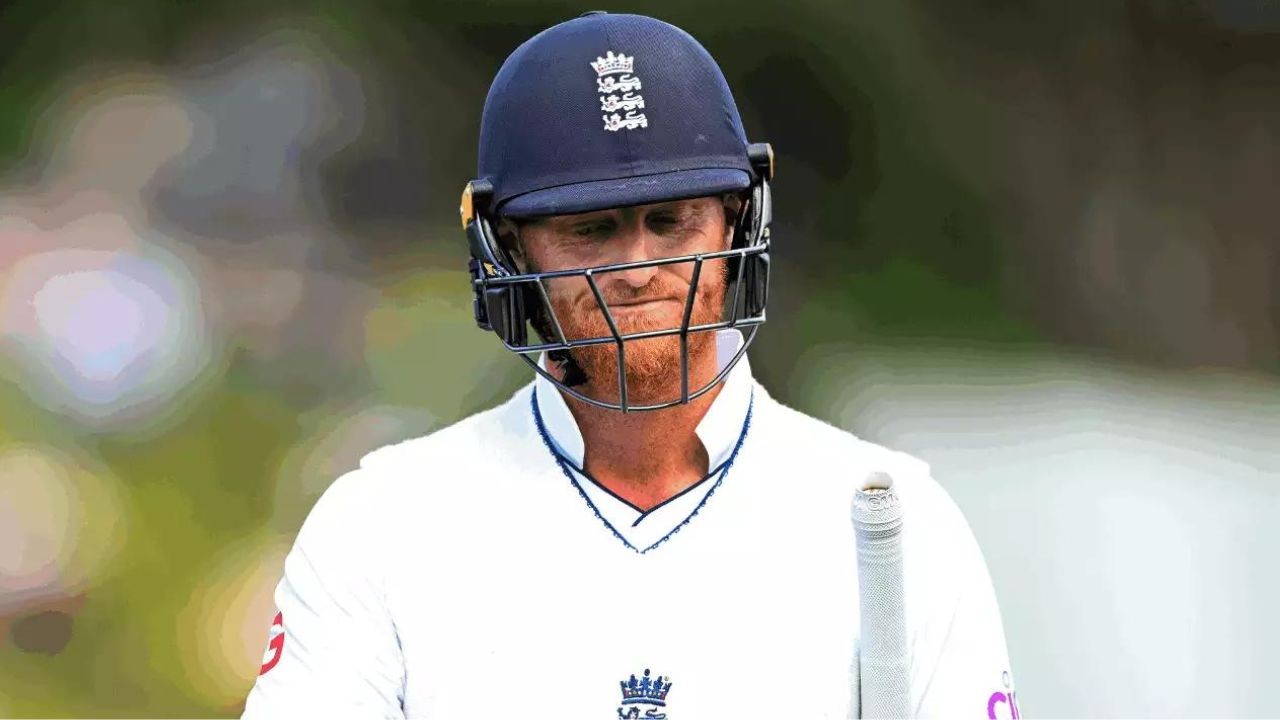
Ben Stokes is no stranger to the precipice, but his recent facial injury while training in Durham is a jarring reminder of how thin the ice has become for the England Test captain. During a routine practice session, a ball deflected through his helmet grille, leaving him with significant bruising and what he described as a lucky escape from permanent damage. While the immediate headlines focused on the "miracle" of his survival, the real story lies in the physical and psychological toll the modern game extracts from its most valuable assets. Stokes is the heartbeat of the current England setup, yet he is increasingly a player defined by what he survives rather than what he conquers.
The incident occurred during a period of supposed rest, proving that for a player of his intensity, there is no such thing as "off." A stray delivery caught him in a vulnerable gap between the peak and the faceguard. It was a freak occurrence, yes, but it highlights a growing concern within the sport regarding player safety and the limitations of current protective gear. When the man tasked with leading England’s red-ball revolution is nearly blinded in a net session, the celebratory mood of the "Bazball" era hits a cold, hard wall of reality.
The Physical Erosion of an Icon
Stokes has spent the last decade treating his body like a rental car driven at top speed through a desert. We see the heroic innings and the match-winning spells, but we rarely account for the mounting medical bill. His knee is a well-documented disaster zone, requiring constant management and surgical intervention just to allow him to hobble through his bowling stride. This latest facial trauma adds another layer of vulnerability to a frame that is already screaming for a reprieve.
The problem with being a "talisman" is that you aren't allowed to be human. Every time Stokes goes down, the England camp holds its breath because there is no viable Plan B for his specific brand of leadership. This isn't just about runs or wickets. It is about the atmospheric pressure he exerts on the opposition. When he is absent, or even slightly diminished, the team loses its psychological edge. The facial injury may heal in weeks, but the cumulative effect of these scares begins to weigh on a player’s subconscious. Even a warrior develops a flinch when the hits keep coming.
The Safety Grille Paradox
Cricket equipment has evolved significantly since the tragic death of Phillip Hughes in 2014, but the gap between the helmet’s peak and the titanium grille remains a contentious technical frontier. Manufacturers face a constant struggle between visibility and protection. If you close the gap too much, a batsman cannot see the ball coming out of the hand or track it from a short length. If you leave it open, you risk a 90mph projectile finding its way through.
Stokes was wearing top-tier protection, yet the ball found the mark. This suggests that the "lucky" element he referred to is actually a design flaw we have simply learned to live with. Current standards require helmets to withstand direct impacts, but the deflection—the ball changing direction off the shoulder or the bat handle—remains the most dangerous variable. It creates an unpredictable trajectory that the grille isn't always positioned to stop. We are asking players to trust their lives to a piece of equipment that is still, by its very nature, a compromise.
Leadership Under Duress
Managing the England Test team is the most exhausting job in the sport. When Joe Root stepped down, he looked like a man who had aged twenty years in five. Stokes took the mantle and injected it with a frantic, infectious energy, but that energy requires a physical vessel that can withstand the strain. This facial injury occurred while Stokes was trying to sharpen his game for the upcoming international schedule, a sign of his relentless commitment, but also perhaps a sign of a player who doesn't know how to throttle back.
The England and Wales Cricket Board (ECB) finds itself in a precarious position. They need Stokes to sell tickets and maintain the team's aggressive identity, but they are also overseeing the slow disintegration of their captain. The schedule is unrelenting. Between the domestic summer, away tours, and the constant lure of franchise T20 leagues, there is no window for genuine recovery. A facial injury in the nets is a loud, bloody warning that the margins for error have vanished.
The Mental Cost of Near Misses
High-performance athletes often dismiss physical pain, but the psychological impact of a "near-miss" is harder to scrub away. To bat at the highest level, you must possess a degree of delusional confidence—a belief that you are untouchable. When a ball smashes into your face, that delusion is shattered. You are reminded of your mortality in the most visceral way possible.
For a player like Stokes, who plays with his heart on his sleeve, the road back from this isn't just about the swelling going down. It’s about standing in the nets again and not seeing that specific delivery in his mind's eye. The sport is littered with players who were never the same after a serious blow to the head or face. They lose that split-second of clarity, replaced by a defensive instinct that wasn't there before. The "luck" Stokes cited is a double-edged sword; he survived, but he now knows exactly how close he came to the end of his career.
The Flaw in the Bazball Philosophy
The current England regime prizes bravery above all else. They want players to take the aggressive option, to stare down the danger, and to never blink. While this has produced some of the most entertaining cricket in a generation, it creates an environment where physical preservation is seen as secondary to the "vibe" of the team.
If the captain is willing to play through a shattered knee and a bruised face, the younger players feel pressured to do the same. This creates a culture of "playing hurt" that is unsustainable in the long term. The ECB needs to consider if they are protecting Stokes from himself. He is a man who will always say he is fit to play, regardless of the reality. True leadership in this instance might mean the coaching staff stepping in and demanding he take the time he actually needs, rather than the time he thinks he needs.
Redefining Player Protection Standards
If a ball can pass through a standard-issue grille of a modern helmet, then the standards are no longer fit for purpose. The speed of the game has increased, and the power with which the ball is struck or deflected has reached a point where traditional designs are failing. We need to move toward a more comprehensive facial shield, possibly utilizing high-impact transparent materials that offer 100% coverage without sacrificing the sightlines required for elite play.
The resistance to this is largely aesthetic and traditional. Cricketers don't want to look like they are wearing riot gear. But as Stokes nearly found out, the alternative is a life-altering injury. The "warrior" narrative is fine for the back pages, but it doesn't help a player who can no longer see out of one eye. The governing bodies must stop relying on "luck" as a safety feature.
The Looming Transition
This incident forces a conversation that no one in English cricket wants to have: the post-Stokes era. By surviving this injury, Stokes has bought the team more time, but he has also highlighted how dependent they are on his presence. The gap between his talent and the next generation of leaders is a chasm.
The focus shouldn't just be on his recovery, but on the structural failure of a system that requires one man to carry so much of the burden. Whether it is the bowling workload, the captaincy pressure, or the sheer physical danger of the nets, Stokes is being asked to do too much. If England doesn't start diversifying their leadership and managing their star assets with more than just "vibes" and "luck," the next injury won't be a close call. It will be the end of an era that was as fragile as it was brilliant.
The scars on Stokes' face will fade, but the systemic issues his injury revealed remain wide open. Stop looking at the "lucky" escape and start looking at the reckless trajectory of the game's demands.