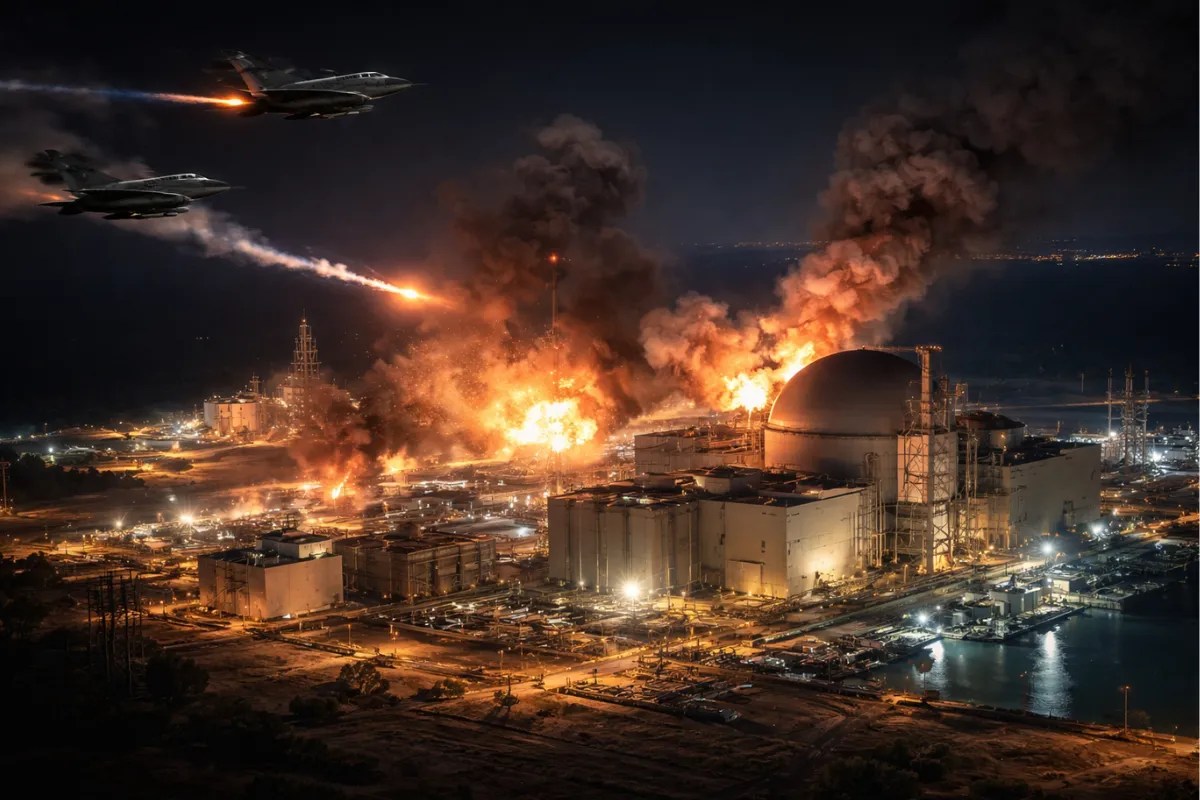
The escalation of Israeli airstrikes across Beirut marks a shift from tactical degradation of militant infrastructure to a broader, more systematic dismantling of Lebanese civic stability. While the immediate focus remains on the southern suburbs and the elimination of command-and-control nodes, a darker shadow now hangs over the country’s academic and intellectual future. U.S. intelligence warnings suggesting that Iran might retaliate by targeting Lebanese universities—under the pretext of purging Western influence or responding to perceived security leaks—points to a conflict that is no longer confined to border fences or underground bunkers. It is a war of attrition against the very institutions that hold the Lebanese state together.
The Geography of the Beirut Strikes
Israeli operations in Beirut have moved beyond the targeted assassinations that defined the early summer. The current campaign involves heavy ordnance dropped on densely populated urban centers, ostensibly to destroy hidden weapons caches and financial hubs. However, the proximity of these strikes to civilian infrastructure creates a vacuum of authority. When a neighborhood is flattened, it isn't just the local militia presence that vanishes. The social fabric, the commerce, and the psychological sense of safety for millions of residents disappear with it.
Military analysts often talk about "kinetic depth," but in Beirut, the depth is measured in the rubble of apartment blocks. The strategy appears to be a forced decoupling of the Lebanese population from the political and military entities that have dominated the landscape for decades. By making the cost of association unbearable, the objective is to trigger an internal collapse of support. This gamble assumes that a desperate population will turn against the entrenched powers rather than radicalize further under the pressure of foreign bombardment. History suggests this is a dangerous assumption.
The University Threat and the Intellectual Drain
The specific warning from Washington regarding Iranian intentions toward Lebanese universities introduces a chilling new variable. For over a century, Lebanon has served as the academic heartbeat of the Middle East. Institutions like the American University of Beirut (AUB) and the Université Saint-Joseph have produced the region’s doctors, engineers, and diplomats. Targeting these sites—whether by direct strike or through the infiltration and destabilization by regional actors—would effectively lobotomize the nation.
Iran's interest in these institutions is multifaceted. There is a long-standing suspicion within hardline circles in Tehran that Western-aligned universities serve as recruitment grounds for intelligence assets. If Iran perceives that its primary proxy in Lebanon is being dismantled by Israeli intelligence, it may seek to "level the playing field" by purging these academic hubs. This isn't just about security; it’s about cultural and political hegemony. By threatening the university system, the conflict moves from a battle for territory to a battle for the soul and future leadership of the country.
The Mechanics of Urban Displacement
Displacement in Lebanon is not a linear process. It is a chaotic, multi-directional flight that strains the resources of a state already on the brink of bankruptcy. As the strikes in the south and the Beirut suburbs intensify, schools and public buildings are being converted into makeshift shelters. This creates a secondary crisis: the total suspension of the education system. When the classrooms are full of refugees, there is no room for students.
The logistical nightmare of managing a million displaced people in a country with a fractured electrical grid and a collapsed currency cannot be overstated. We are seeing a "slow-motion" collapse of urban functionality. The water supply is intermittent, and the healthcare system, once the envy of the Mediterranean, is now operating on generators and donated trauma kits. The strikes do not just kill; they paralyze.
The Intelligence Failure Paradox
The precision of the Israeli strikes suggests a deep, decades-long penetration of Lebanese communications and social networks. This level of oversight creates a paradox for the Lebanese state. If the Israelis know where every commander is hiding, then the sovereignty of the Lebanese government is a fiction. Conversely, the inability of local security forces to prevent these incursions highlights the total erosion of the national military's relevance in the face of high-tech warfare.
This intelligence dominance has led to an atmosphere of extreme paranoia within Beirut. Every smartphone is a potential tracking beacon. Every neighbor is a potential informant. This internal rot is exactly what the U.S. warnings about Iranian intervention are meant to highlight. If the local social order dissolves into a "war of all against all," the vacuum will be filled by whoever has the most functional militia or the most ruthless internal security apparatus.
The Economic Aftershocks of the Air Campaign
Lebanon’s economy was already a ghost of its former self before the first bombs fell this year. The current air campaign has ensured that any hope of a tourism-led or investment-led recovery is dead for the foreseeable future. Beirut’s airport, though still operational at a fraction of its capacity, sits dangerously close to the strike zones in the southern suburbs. The risk of a total blockade is no longer a theoretical exercise discussed in think tanks; it is a daily reality for the shipping companies and airlines that still service the city.
The "why" behind the continued intensity of the strikes, even after significant high-level targets have been neutralized, points to a policy of total resource exhaustion. By forcing the state to spend what little it has on emergency management and by scaring off the last remnants of the merchant class, the external pressures are designed to make the status quo untenable.
The Escalation Ladder and the Iranian Response
Tehran finds itself in a strategic corner. If it does nothing while its most valuable regional partner is dismantled, it loses credibility among its other proxies in Iraq, Syria, and Yemen. If it intervenes directly—or through the "asymmetric" targeting of Lebanese universities and civil society as warned by the U.S.—it risks a direct confrontation with American forces currently positioned in the Eastern Mediterranean.
The threat to universities is a classic "gray zone" tactic. It allows an aggressor to cause maximum societal damage with a degree of deniability. If a laboratory or a faculty building is hit, the claim can always be made that it was a center for espionage or a secret meeting point. The result, however, is always the same: the flight of the educated class. Lebanon is currently experiencing a "brain drain" that will take fifty years to reverse. The professors, surgeons, and tech entrepreneurs are the first to leave when the bombs start falling near the campus gates.
The Reality of the "Safe Zone"
There is no such thing as a safe zone in a modern urban conflict defined by signals intelligence and long-range munitions. The residents of central and northern Beirut who previously felt insulated from the conflict in the south are now coming to terms with the fact that their proximity to any perceived political office or administrative building makes them a target.
The Israeli military has been clear in its messaging: they will strike anywhere they identify a threat. The definition of a "threat" has broadened significantly. It now encompasses the financial institutions that fund the opposition and the logistics chains that move their supplies. When the definition of a military target expands to include the civil-service infrastructure of a city, the distinction between "combatant" and "civilian" becomes a legal technicality rather than a physical reality.
The Broken Window of Diplomacy
Diplomatic efforts led by the U.S. and France are currently stalled by a fundamental disagreement over the "day after" scenario. Israel demands a buffer zone that would effectively annex a portion of southern Lebanon, while the Lebanese government—what remains of it—cannot agree to any terms that look like a total surrender of territory.
In the middle of this deadlock, the strikes continue. The U.S. warnings about Iranian threats to universities serve as a pressure valve, intended to warn Tehran that their covert plans are known, while simultaneously signaling to the Lebanese public that their most prized institutions are at risk. It is a strategy of management rather than resolution.
The Role of Domestic Resilience
Despite the devastation, there is a gritty, almost fatalistic resilience in Beirut. Local NGOs and neighborhood committees have taken over the roles that the central government has abandoned. They coordinate food deliveries, manage waste, and provide basic security. This "hyper-localism" is the only thing preventing a total descent into anarchy, but it is a fragile solution. These groups lack the funding and the heavy equipment needed to deal with the aftermath of large-scale strikes or a potential ground invasion.
The warning regarding universities hits home because these institutions are the only places where the diverse sectarian groups of Lebanon still interact in a meaningful, productive way. To destroy them is to destroy the last "neutral ground" in a country that is being carved into silos of influence and destruction.
Strategic Abandonment
The international community's response has been characterized by a strange mix of performative concern and strategic abandonment. Statements from the UN and various European capitals call for "restraint" while the fundamental drivers of the conflict remain unaddressed. The reality is that Lebanon has become a laboratory for a new kind of urban warfare, one where the goal is the total psychological and structural dismantling of an opponent's home base.
If the universities are hit, or if the strikes in Beirut continue to expand into the commercial heart of the city, the Lebanon we know will cease to exist. It will not be a sudden death, but a slow, grinding transition into a collection of fortified enclaves, separated by ruins and governed by whoever can provide the next meal or the next gallon of fuel. The warnings from Washington are not just about specific buildings; they are a forecast of the total erasure of Lebanese civil society.
Every strike on a residential block in Beirut is a message. Every threat to a university campus is a warning that the future is being held hostage. The conflict has moved beyond the simple exchange of fire; it is now a systematic effort to ensure that even if the fighting stops tomorrow, the country will not have the intellectual or physical infrastructure to rebuild for a generation.