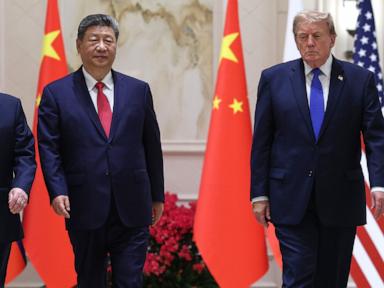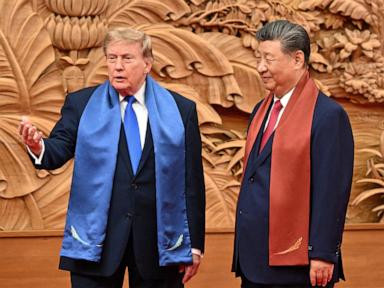
Every time Xi Jinping picks up the phone to speak with Donald Trump, the mainstream foreign policy press reacts like a Victorian fainting couch just hit the floor.
The headlines write themselves. Beijing warns Washington to do "the right thing" over Taiwan to avoid "great turbulence." Cable news panels immediately spiral into breathless speculation about amphibious invasions, imminent blockades, and World War III. Analysts dutifully transcribe Beijing's talking points, treat every diplomatic boilerplate phrase as a ticking time bomb, and frame the entire interaction as a binary choice between American capitulation and global catastrophe.
This is the lazy consensus of modern geopolitical reporting. It mistakes routine diplomatic signaling for an actual operational timeline, and it completely misreads the structural incentives governing both Beijing and Washington.
When Xi tells Trump to avoid "great turbulence," he is not issuing a secret countdown to D-Day in the Taiwan Strait. He is executing a calculated, predictable, and entirely defensive script designed to lock the incoming or sitting American administration into rhetorical guardrails before trade and tariff negotiations even begin.
If you want to understand what is actually happening between Washington, Beijing, and Taipei, stop listening to the volume of the warnings and start looking at the leverage on the table.
The Anatomy of a Diplomatic Script
To understand why these headlines are misleading, you have to understand how the Chinese Communist Party communicates at the head-of-state level.
In Western journalism, dramatic language signals a dramatic shift in policy. If an American president suddenly warns of "great turbulence," markets tank because the statement is spontaneous and unscripted. In Beijing, the exact opposite is true. Chinese diplomatic language is codified, repetitive, and strictly hierarchical. Phrases like "the core of core interests," "red line," and "great turbulence" are standard lexicon items pulled directly from Ministry of Foreign Affairs stylebooks. They appear in nearly every bilateral readout involving Taiwan since the normalization of relations in 1979.
Treating a standard readout phrase as breaking news is like reporting that a referee blew a whistle at the start of a football match. Of course he did. That is the protocol.
The real error made by surface-level commentary is failing to separate declaratory policy from operational capability. Beijing must state that Taiwan is an inalienable part of China and that foreign interference will trigger severe consequences. Failing to say this would be domestic political suicide for Xi. It would signal weakness to nationalist factions within the People's Liberation Army and the Party apparatus.
Saying it, however, costs nothing. Actually crossing the Taiwan Strait with an invasion force of half a million troops across 100 miles of treacherous water—while absorbing devastating economic sanctions and risking direct kinetic conflict with the United States—costs everything.
Why "Doing the Right Thing" Means Doing Nothing New
When Beijing tells Washington to do "the right thing," the phrase carries a very specific translation in diplomatic shorthand: reaffirm the One China policy, stop high-level official visits to Taipei, and slow down arms sales.
Notice what is missing from that demand. Beijing is not demanding that Trump force Taipei to sign an immediate unification treaty. Beijing knows that is impossible. Instead, Xi is trying to manage the status quo while China deals with severe internal headwinds.
Look at the actual numbers on the ground in mainland China right now. You do not need classified intelligence briefings to see that Beijing's room for maneuver is shrinking, not expanding:
- The Property Crisis: Real estate, which historically accounted for roughly 25% to 30% of China's GDP and the vast majority of household wealth, remains locked in a multi-year structural contraction. Local governments are drowning in hidden debt through Local Government Financing Vehicles (LGFVs), forcing Beijing to prioritize domestic bailouts over foreign adventures.
- Youth Unemployment and Deflation: Consumer confidence is fragile. Persistent producer price deflation and sluggish domestic consumption mean the Chinese economy still relies heavily on manufacturing exports to Western markets to keep factories running.
- Military Purges: Over the past two years, Xi has conducted sweeping anti-corruption purges across the PLA Rocket Force and the Central Military Commission—the exact branches responsible for nuclear deterrence, precision missiles, and any theoretical blockade or invasion of Taiwan. You do not purge your top missile commanders and defense ministers on the eve of a major war unless you know your command structure has serious readiness problems.
I have sat across the table from multinational supply chain executives who burned tens of millions of dollars on panic-driven "China Plus One" relocations after reading hysterical weekend op-eds about an imminent invasion. They moved assembly lines to Vietnam and Mexico in six months flat, only to realize they were still importing 80% of their sub-components from Shenzhen because they fundamentally misunderstood the timeline of cross-strait friction. They reacted to headlines instead of balance sheets.
Xi is acutely aware that a war over Taiwan would instantly sever China from the global financial system, freeze hundreds of billions in foreign exchange reserves, and collapse the export engine keeping the domestic economy afloat. Warnings of "great turbulence" are designed to deter Washington from changing the political status quo precisely because Beijing cannot afford a military confrontation right now.
The Trump Factor: Transactional Leverage vs. Strategic Ambiguity
The mainstream press also gets the dynamic with Donald Trump backwards. Pundits love to portray Trump as uniquely erratic on Taiwan, pointing to his past comments questioning why the U.S. defends an island that "took our chip business" or suggesting Taipei should pay for its own defense.
That framing misses the entire point of how Trump operates.
For forty years, Washington maintained a doctrine known as Strategic Ambiguity—refusing to state explicitly whether the U.S. military would intervene to defend Taiwan. The logic, crafted by architects like Henry Kissinger and refined through the Taiwan Relations Act of 1979, was dual deterrence: keep Beijing guessing so it wouldn't invade, and keep Taipei guessing so it wouldn't formally declare independence.
Trump does not practice strategic ambiguity. He practices transactional ambiguity.
To Trump, every security commitment, tariff schedule, and diplomatic protocol is a piece of inventory on a balance sheet. When Xi warns Trump about Taiwan, Xi is attempting to isolate the Taiwan issue from trade, tariffs, fentanyl precursors, and technology controls. Beijing's longstanding diplomatic strategy is to compartmentalize: put Taiwan in a locked box labeled "non-negotiable sovereignty," and negotiate trade separately.
Trump's instinct is to smash the boxes together.
By refusing to offer predictable, scripted reassurances, Trump forces Beijing to spend diplomatic capital just to keep the baseline intact. If Xi wants Washington to exercise restraint on diplomatic upgrades with Taipei or tone down official rhetoric, Beijing has to pay for it—whether through agricultural purchases, currency restraint, or concessions on industrial overcapacity.
The media calls this instability. In reality, it is asymmetric leverage. Beijing hates unpredictability because authoritarian systems rely on scripted, controllable outcomes. Trump thrives in ambiguity because it forces the counterparty to bid against themselves.
The Real Battleground Isn't Amphibious—It's Silicon and Quarantines
If you are watching the Taiwan Strait for landing craft and paratroopers, you are looking at the wrong threat matrix. The binary debate between "peaceful status quo" and "full-scale D-Day invasion" is a false choice that obscures how coercion actually works in the modern era.
Military strategists at institutions like the Center for Strategic and International Studies (CSIS) and the RAND Corporation have run dozens of war games on a Taiwan invasion. The consensus across almost every unclassified simulation is brutal: an amphibious invasion of Taiwan would be the most complex military operation in human history, carrying an extraordinarily high risk of catastrophic failure for the PLA, massive losses of modern naval and air assets, and potential regime-threatening blowback in Beijing.
Beijing does not need to invade Taiwan to break its will. It has far cheaper, slower, and harder-to-counter tools at its disposal:
- The "Quarantine" Model: Rather than declaring a formal military blockade—which is an act of war under international law—China can use its massive Coast Guard and maritime militia to enforce customs inspections on commercial shipping entering Taiwanese ports. By framing the move as domestic law enforcement rather than naval warfare, Beijing dares Washington to fire the first shot over a cargo inspection.
- Subsea Cable Severance: Taiwan relies on roughly a dozen undersea fiber-optic cables for its internet and financial connectivity to the outside world. "Accidental" anchor drags by commercial vessels—similar to incidents observed around the Matsu islands—can isolate Taiwan digitally without a single missile launch.
- Energy Strangulation: Taiwan imports roughly 97% of its energy, including liquefied natural gas (LNG) reserves that typically last less than two weeks. Disrupting LNG tanker insurance rates through gray-zone military exercises around Kaohsiung port accomplishes more economic damage than bombing factories, and it leaves no smoking gun for CNN cameras.
These gray-zone tactics are where the real danger lies, and none of them are prevented by polite diplomatic platitudes.
What Everyone Gets Wrong About the "Silicon Shield"
Another lazy trope in coverage of US-China-Taiwan relations is the idea that Taiwan's semiconductor industry—specifically Taiwan Semiconductor Manufacturing Company (TSMC)—acts as an automatic "Silicon Shield" that guarantees American military intervention and deters Chinese aggression.
Let's dismantle that myth.
Yes, TSMC fabricates over 90% of the world's most advanced logic chips (sub-5nm nodes) used in AI data centers, smartphones, and defense systems. And yes, a conflict in the Strait would trigger an immediate global depression, wiping out trillions of dollars in market capitalization across Apple, Nvidia, Qualcomm, and the broader S&P 500.
However, economic mutual assured destruction has never been an absolute guarantee against geopolitical miscalculation. In 1914, European economists famously argued that global trade and financial integration made a major war impossible. Six months later, the continent was in trenches.
More importantly, the Silicon Shield is eroding by design.
Through the CHIPS and Science Act, Washington is actively subsidizing TSMC to build fabrication plants in Arizona. Japan is doing the same in Kumamoto. Germany is doing it in Dresden. While Taiwan will retain its most advanced R&D and leading-edge manufacturing nodes for the foreseeable future, the strategic logic of onshoring chip production is unmistakable: the United States and its allies are building a lifeboat so that if the Taiwan Strait goes dark, the Western tech stack does not completely flatline.
For Taipei, this creates a quiet, uncomfortable paradox. Every advanced fab built in Phoenix slightly reduces the existential urgency for Washington to risk a nuclear-armed conflict over Hsinchu. That is the nuance mainstream articles completely miss when they treat US-Taiwan interests as 100% identical. They are aligned, not identical.
The Downside of the Contrarian View
To be intellectually honest, dismissing Beijing's rhetoric as pure theater carries its own specific blind spot. When you train yourself to tune out repetitive diplomatic warnings, you risk missing the exact moment when boilerplate turns into genuine intent.
Authoritarian leaders surrounded by loyalists eventually start believing their own propaganda. The biggest risk in the Taiwan Strait is not a coldly calculated, master-planned conquest by Beijing; it is an accidental collision—a mid-air crash between a PLA J-16 fighter and a U.S. Navy P-8 Poseidon, or a miscalculated Coast Guard boarding action—that escalates out of control because neither side has an off-ramp that saves face domestically.
Furthermore, transactional diplomacy has a hard ceiling. You can trade tariffs for soybean purchases, and you can trade export controls for fentanyl enforcement. You cannot trade away the political survival of 23 million people in a functioning democracy without shattering American credibility across the entire Indo-Pacific. If Tokyo, Seoul, and Manila conclude that Taiwan is merely a bargaining chip on a trade ledger, the entire post-1945 Asian security architecture collapses overnight—and nuclear proliferation in East Asia becomes a near certainty.
How to Actually Read US-China Headlines Going Forward
If you are an investor, an executive, or simply a reader trying to separate signal from noise in geopolitical coverage, stop reacting to the adjectives in diplomatic readouts. Watch the hard indicators instead.
- Ignore the Readouts, Watch the Exercises: Diplomatic warnings about "turbulence" are background noise. Pay attention only when PLA Eastern Theater Command exercises shift from routine median-line crossings to sustained, multi-week rehearsals of port closures and civilian merchant marine mobilization (specifically roll-on/roll-off ferries).
- Track Energy and Insurance Markets, Not Cable News: Before any real crisis erupts in the Strait, maritime war-risk insurance premiums for vessels transiting the South China Sea and East China Sea will spike dramatically. Lloyd's of London underwriters price geopolitical risk far more accurately than political pundits.
- Watch the Semiconductor Equipment Bottleneck: The true measure of US-China escalation isn't rhetoric over Taiwan; it is the tightening of export controls on ASML lithography machines, high-bandwidth memory (HBM), and electronic design automation (EDA) software. That is where the real war is already being fought.
Beijing will keep warning Washington to do "the right thing." Washington will keep affirming its commitment to peace and stability while selling defensive weapons to Taipei and slapping tariffs on Chinese goods. The headlines will keep screaming about impending turbulence.
Do not mistake the noise of the engine for a plane crash.