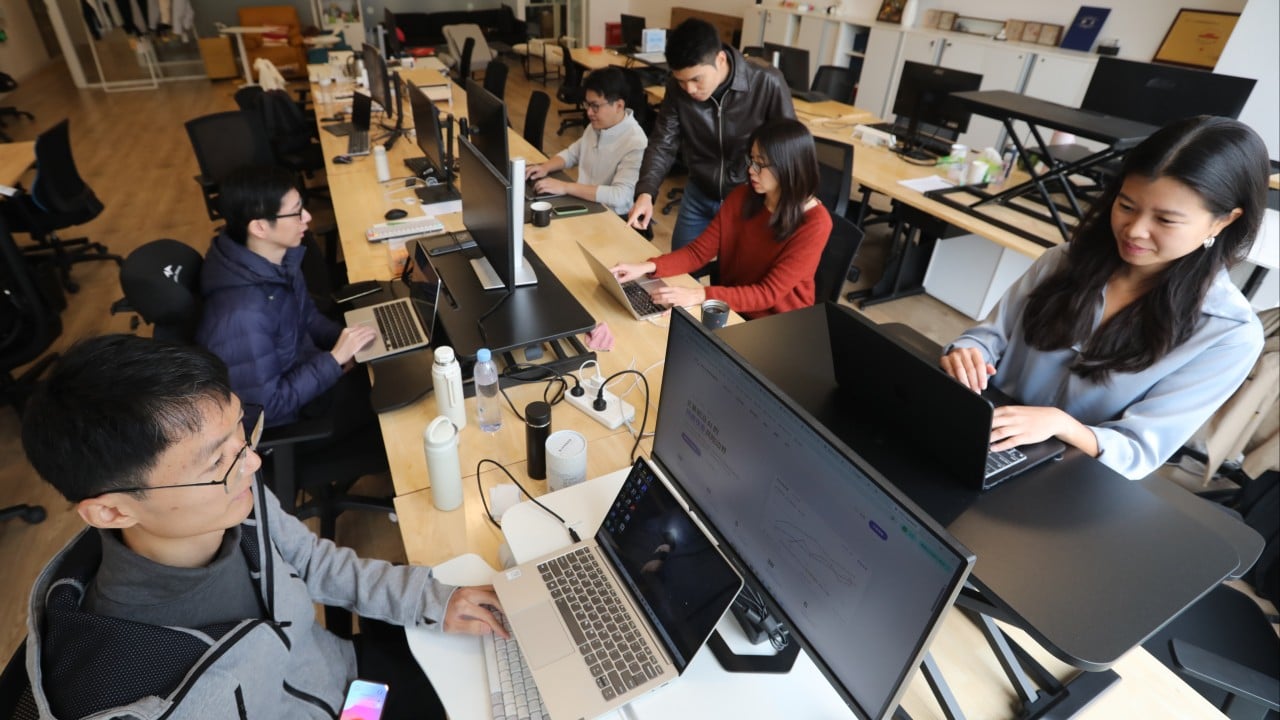
Western tech media loves a fairy tale. Give a reporter a vague press release about a "little-known Beijing AI safety group" sitting down with Alibaba, Tencent, and Baidu, and watch the narrative write itself.
They will tell you it is an inspiring story of grassroots academics suddenly winning the hearts and minds of ruthless corporate executives. They will frame it as China’s version of Silicon Valley’s effective altruism movement—a band of idealistic researchers nudging trillion-dollar monopolies toward ethical enlightenment.
That is pure fiction.
If you have spent any time watching how technology, capital, and state power actually collide in Haidian District, you know that major Chinese tech firms do not take advice from obscure think tanks out of sudden moral awakening. They do not suddenly care about existential risk because a grad student handed them a white paper on alignment.
When a small Beijing research outfit suddenly gets direct lines to the C-suites of China’s biggest AI labs, it is not because the giants want philosophy lessons. It is because those giants need a political survival manual, and this group happens to hold the translation key between technical reality and state enforcement.
The Lazy Consensus Around Chinese AI Governance
To understand why the standard media framing is completely backwards, look at the lazy consensus dominating Western coverage of Chinese tech.
Outside observers almost always fall into one of two traps. The first trap is assuming China has zero AI guardrails—a wild-west race to the bottom where engineers ignore safety to beat American rivals. The second trap is projecting Western AI politics onto Beijing, assuming that when Chinese labs talk about "AI safety," they mean the exact same thing as researchers in San Francisco or London.
Both views miss the mechanics on the ground.
In Silicon Valley, "AI safety" split into two warring camps years ago. On one side, you have long-term existential risk theorists worrying about rogue superintelligence wiping out humanity. On the other, you have near-term algorithmic fairness advocates focusing on bias, copyright, and misinformation. Tech giants in California hire safety teams largely to manage PR, appease institutional investors, and lobby Washington for regulatory moats that crush open-source competitors.
In Beijing, the incentive structure is inverted.
Chinese tech giants—whether ByteDance, Baidu, Zhipu AI, or Moonshot—operate under an immediate, existential constraint that has nothing to do with sci-fi apocalypse scenarios. Their existential threat is regulatory paralysis. Under the Cyberspace Administration of China (CAC) and its Interim Measures for the Management of Generative AI Services, shipping an unapproved foundation model or failing a security assessment does not result in a polite fine three years later. It gets your product pulled from app stores overnight. It freezes your enterprise contracts. It wipes billions off your market cap before Monday morning.
I have watched engineering leads in Beijing burn through millions of dollars in compute training a flagship model, only to watch the deployment stall for months because their red-teaming protocols failed to anticipate how a state auditor would test historical edge cases. You cannot patch your way out of a regulatory freeze with a clever PR blog post.
Who Actually Holds the Keys in Beijing
This brings us back to that "little-known" Beijing AI safety group—organizations like Concordia AI, the Beijing Academy of Artificial Intelligence (BAAI) safety committees, or university-affiliated labs spinning out of Tsinghua and Peking University.
Calling them "little-known" is a classic Western blind spot. They are only unknown if your reading list stops at San Francisco newsletters. Inside Beijing’s policy and engineering circles, these groups sit at a very specific, high-leverage intersection.
Look closely at what these groups actually do. They are not running isolated academic exercises. They are doing three things that China’s tech giants desperately need and cannot easily do themselves:
- Translating Western technical benchmarks into domestic compliance frameworks. When frontier labs in the US and UK publish new evaluation suites for model deception, CBRN (chemical, biological, radiological, and nuclear) risks, or jailbreak resistance, Beijing regulators pay close attention. They do not want China’s safety standards to look amateurish on the global stage. Small, agile research groups ingest those global frameworks, strip out the ideological baggage, and map them onto technical tests that satisfy Chinese ministries.
- Acting as a neutral sandbox for competitors. Alibaba Cloud and Tencent will never share their internal red-teaming failures directly with each other. Doing so exposes proprietary vulnerabilities and invites regulatory scrutiny. A third-party safety institute provides a pre-competitive buffer zone. Companies can test model behavior, share threat intelligence, and establish baseline safety metrics without handing ammunition to a rival.
- Managing Track II diplomacy. When high-level AI safety summits happen in Bletchley Park, Seoul, or Paris, Beijing needs credible technical voices who speak fluent English, understand frontier transformer architectures, and do not sound like state media mouthpieces. Founders and senior researchers from these Beijing safety groups fill that exact role. They represent Chinese technical competence abroad while bringing international regulatory signals back home.
Tech giants are not paying attention to these groups out of charity. They are paying attention because these researchers are effectively co-authoring the grading rubric before the exam is administered.
Safety Means Control, Not Alignment
To grasp the nuance that mainstream tech coverage misses, you have to define terms with surgical precision. When a Western researcher talks about AI alignment, they usually mean ensuring a model’s internal optimization goals match human intent and values.
When Beijing’s policy ecosystem talks about AI safety (rengong zhineng anquan), the word anquan carries a dual meaning: safety and security. It encompasses technical reliability, data protection, infrastructure resilience, and—above all—content and ideological control.
If you confuse Western alignment with Chinese anquan, you will misread every move Beijing’s tech sector makes.
Consider how a large language model behaves under pressure. A model trained on vast swaths of internet text is inherently stochastic. It hallucinates. It follows adversarial prompts into restricted territory. For a consumer-facing chatbot in China, generating politically sensitive text or violating core socialist values is not a minor bug; it is a critical system failure.
Early on, tech companies tried to solve this with brute-force keyword filters and rigid refusal templates. The result was terrible user experience. Models became so lobotomized by hard-coded blocks that they refused to answer basic historical questions or summarize benign business documents. Enterprise adoption tanked because nobody wants to pay for an API that panics every time a prompt contains a mildly ambiguous word.
This is where specialized AI safety researchers proved their worth. Instead of clumsy keyword blocking, they introduced sophisticated mechanistic interpretability, constitutional fine-tuning, and automated red-teaming tailored specifically to Chinese regulatory boundaries. They showed tech giants how to build models that remain commercially useful and creative while maintaining rock-solid behavioral guardrails.
That is not idealism. That is product engineering under severe constraint.
The Open-Source Paradox Nobody Wants to Discuss
There is a massive contradiction sitting right in the middle of Beijing’s AI ecosystem, and almost every glowing profile of Chinese AI safety groups glosses right over it.
While major Chinese labs and safety advisers are building elaborate governance frameworks and participating in international safety dialogues, China has simultaneously become the global powerhouse of open-weight foundation models. Companies like Alibaba (with Qwen), DeepSeek, and 01.AI have released frontier-grade models whose weights anyone on earth can download, modify, and run without guardrails.
Think about the tension here.
You can spend six months working with a Beijing safety institute to harden your hosted API against prompt injections, biological weapons queries, and sensitive political topics. You can pass every CAC security audit with flying colors. And then, the very next week, your own company releases the underlying model weights under an open license—allowing any developer with a cluster of GPUs to strip out the safety fine-tuning in an afternoon.
Why do Chinese tech giants do this? Because open-source is their sharpest geopolitical and commercial weapon.
Trailing behind Nvidia’s top-tier export-restricted chips and locked out of major Western cloud markets, Chinese AI companies use open weights to commoditize the model layer. If developers worldwide build their applications on Qwen or DeepSeek architectures, Chinese firms win ecosystem dominance regardless of US export controls.
For the safety groups advising these giants, this creates an acute credibility problem. How do you pitch yourself as the architect of rigorous AI governance when the very companies taking your advice are distributing unthrottled model weights across Hugging Face?
Most safety researchers in Beijing handle this by focusing heavily on downstream deployment governance and compute-level monitoring rather than trying to stop open-weight releases. They argue that restricting open weights only hurts domestic startups trying to catch up to OpenAI and Anthropic, while doing little to stop determined bad actors.
It is a pragmatic argument, even if it exposes the limits of their influence. At the end of the day, when commercial survival and geopolitical catch-up collide with theoretical safety principles, commercial survival wins every single time.
Dismantling the Top Myths About Chinese AI Safety
If you are trying to make strategic decisions—whether you are an investor, an enterprise buyer, or a policy analyst—relying on surface-level narratives will get you burned. Let’s strip away the most common misconceptions.
Are Chinese tech companies falling behind because of strict safety rules?
No. If anything, early regulatory friction forced Chinese labs to get much better at post-training alignment, synthetic data filtering, and reinforcement learning from human feedback (RLHF) faster than many Western peers anticipated. When you cannot rely on raw compute scale alone because of semiconductor sanctions, you optimize data quality and post-training efficiency. Navigating strict compliance forced engineering discipline.
Do these safety groups have veto power over product launches?
Never. Anyone claiming an independent safety group can halt a major product rollout at Tencent or ByteDance does not understand corporate governance in China. Influence is strictly advisory and reputational. Their power comes from proximity to regulators, not formal authority over corporate boards. If a tech giant ignores a safety group's recommendation, nothing happens—unless that recommendation later shows up in an official ministry standard.
Is China’s push for global AI safety cooperation just a stalling tactic?
That is too simplistic. Beijing genuinely wants international rules on areas like autonomous weapons, critical infrastructure protection, and cross-border AI incident reporting. Why? Because uncontrolled frontier development favors whoever holds the largest compute clusters—currently the United States. International guardrails slow down runaway compute advantages and give China a seat at the rule-making table. Cooperation here is driven by calculated self-interest, which makes it far more durable than naive goodwill.
The Real Takeaway for Tech Leaders and Investors
Stop reading articles about Beijing’s AI safety scene through the lens of Western tech drama. There are no heroes and villains here, and nobody is secretly plotting a utopian alignment breakthrough in a quiet Haidian office.
What you are actually watching is the maturation of an industrial compliance ecosystem.
As AI moves from novelty chatbots into banking, healthcare, manufacturing, and state infrastructure, the winners will not be the labs with the flashiest demo videos. The winners will be the organizations that can guarantee predictable, auditable, and legally compliant model behavior at scale.
In China, that requirement arrived years earlier than it did in the West because the state demanded it from day one. Those "little-known" Beijing safety groups saw the bottleneck coming before the giants did. They positioned themselves as the indispensable bridge between raw frontier capability and institutional acceptability.
They didn't conquer Big Tech with moral philosophy. They sold Big Tech the only thing it couldn't build on its own: permission to operate.