Moscow’s Bauman State Technical University does not look like a front line. To a casual observer walking past its massive neo-classical facade on the banks of the Yauza River, it is merely the "Russian MIT," a rigorous engineering school where students lose sleep over fluid dynamics and orbital mechanics. But behind that academic veneer lies the most efficient factory for state-sponsored hacking in the world. This is not just a school; it is the primary nervous system for the Kremlin’s military intelligence (GRU) and domestic security (FSB) apparatus.
While Western discourse often focuses on "lone wolf" hackers or shadowy criminal syndicates, the reality of Russian cyber warfare is institutional. Bauman is the anchor point. By integrating specialized military departments directly into a civilian technical curriculum, the Russian state has created a seamless transition from the classroom to the keyboard of a state-led disruption campaign.
The Academic Mask of the GRU
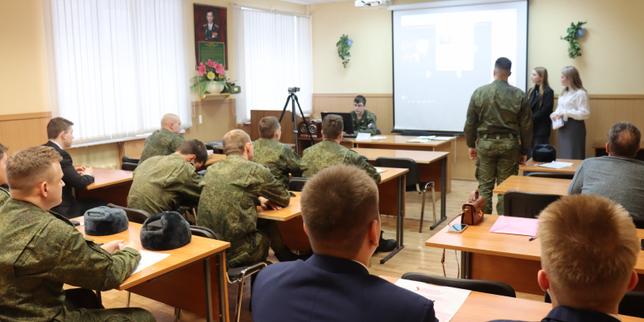
Bauman’s role in the Russian power structure is unique because it combines high-level engineering with deep-rooted military integration. Since the Soviet era, the university has housed "Military Training Centers" that are far more than just ROTC programs. These are specialized pipelines where students are vetted by the security services long before they receive a diploma.
The curriculum is designed to solve specific problems for the Ministry of Defense. When a student enters the Department of Information Security, they aren't just learning how to build firewalls; they are learning how to find the cracks in Western SCADA systems—the software that controls power grids and water treatment plants. This isn't theoretical. The university maintains a direct relationship with Unit 74455, also known as Sandworm, the GRU group responsible for some of the most destructive cyberattacks in history, including the 2017 NotPetya outbreak.
The connection is functional. Professors at Bauman often hold dual roles, acting as consultants for the state’s offensive cyber programs while teaching the next generation of operators. This ensures that the research being conducted in university labs—ranging from cryptography to satellite communications—is immediately applicable to the battlefield.
Recruitment Through Coercion and Prestige
In Russia, the path to a high-paying job in the private sector is often blocked by the requirement of military service. For a brilliant coder, the choice is simple: spend a year in a freezing infantry barracks or join a "Scientific Platoon."
These platoons are the brain-child of the Ministry of Defense, designed to keep the country’s best minds from fleeing to Silicon Valley or the European tech hubs. By joining a scientific platoon at a place like Bauman, a student can complete their service while working on state-of-the-art offensive tools. It is a brilliant, if cynical, retention strategy. The state offers these young men—and they are almost exclusively men—a combination of legal immunity, a steady paycheck, and the feeling of being "cyber-warriors" for the Motherland.
This creates a culture where hacking is viewed not as a crime, but as a patriotic duty. The psychological conditioning starts early. Students participate in state-sponsored "Capture the Flag" (CTF) competitions that serve as unofficial auditions for the FSB. If you rank high enough, you don't get a trophy; you get a business card and a quiet invitation to a government office.
Weaponizing the European Infrastructure
The output of the Bauman pipeline isn't just felt in the abstract. It is felt in the flickering lights of a regional power station or the sudden failure of a hospital's patient records. Russian hybrid warfare relies on the principle of "permanent conflict," where the line between peace and war is intentionally blurred.
Bauman graduates are the architects of this blur. They specialize in Living off the Land (LotL) techniques, which involve using a target’s own legitimate administrative tools to conduct an attack. This makes attribution incredibly difficult. When a French logistics firm or a German energy provider is hit, the forensic trail often leads back to a series of compromised servers in a third country, but the fingerprints of the tradecraft—the specific way the code is written and deployed—often point back to the labs in Moscow.
The university also serves as a hub for "dual-use" research. For example, research into autonomous drone navigation or AI-driven signal processing is ostensibly for civilian space exploration. In reality, it is the foundation for the next generation of electronic warfare tools currently being tested in the Ukrainian theater and pointed toward the rest of Europe.
The Myth of the Rogue Hacker
Western media often falls into the trap of depicting Russian hackers as teenagers in hoodies working from dark basements. This narrative is dangerous because it underestimates the scale of the threat. The operators coming out of Bauman are disciplined, well-funded, and backed by the full legal and logistical weight of a nuclear-armed state.
They operate within a rigid hierarchy. There is a clear chain of command that moves from the Kremlin’s Security Council down through the GRU leadership and into the technical execution cells staffed by Bauman alumni. This is industrial-scale sabotage.
Furthermore, the university provides a veneer of "plausible deniability." When the Kremlin is confronted with evidence of a cyberattack, they can point to the university’s status as a civilian institution. They claim the research is purely academic, even as the "academics" in question are being awarded medals of honor in closed-door ceremonies.
The Failure of Western Deterrence
Sanctioning individual hackers or even specific GRU officers has proven largely ineffective. For a graduate of Bauman, being placed on an FBI most-wanted list is often a badge of honor that guarantees a lifetime of employment within the Russian security state. They have no intention of traveling to the West, and their assets are held in rubles or crypto-assets shielded from the global banking system.
The West’s reliance on defensive posture—building higher walls and faster detection—is a reactive strategy that plays into Russia's hands. As long as the Bauman assembly line continues to produce thousands of highly skilled operators every year, the volume of attacks will eventually overwhelm any defense.
We are seeing a massive asymmetry in cost. It costs a Bauman-trained team very little to develop and launch a spear-phishing campaign or a supply-chain compromise. Conversely, it costs European governments and private companies billions of euros to remediate the damage and harden their systems. This is an economic war of attrition, and Russia is using its premier technical university to ensure it has the cheaper, more sustainable labor force.
The Shadow of the Military-Industrial Complex
To understand the threat, you have to look at the "Bauman-2" project, a massive expansion of the campus that includes high-tech clusters dedicated to "critical technologies." These clusters are not designed for open-source collaboration. They are high-security zones where civilian students work alongside uniformed officers.
This integration is the realization of the Russian "total war" doctrine. Every aspect of society, especially higher education, must be subordinated to the needs of the state. Bauman is the pilot program for this transformation. It has successfully militarized the intellect of an entire generation of engineers.
The global community needs to stop viewing Bauman as a school and start viewing it as a military installation with a library. The "secret school" is only secret if you choose to ignore the thousands of graduates who leave its halls every year to go to work in the windowless buildings of the GRU.
Breaking the Cycle
If the goal is to actually mitigate the threat of Russian hybrid warfare, the focus must shift from the keyboard to the classroom. This doesn't mean bombing a university; it means dismantling the incentives that make Bauman such an effective recruitment tool.
The most potent weapon against the Bauman pipeline isn't a better firewall—it's the brain drain. The Russian state is terrified of losing its technical elite. In the early days of the 2022 invasion of Ukraine, tens of thousands of IT professionals fled Russia. The state responded by offering them massive tax breaks, mortgage subsidies, and, crucially, exemptions from the draft.
Western policy should be focused on making it easier for these individuals to defect and work for the side of global stability. Every brilliant engineer who leaves Moscow for a job in Warsaw, Berlin, or London is a person who isn't writing the next piece of malware for the GRU.
The battle for Europe's digital sovereignty won't be won in a server room in Brussels. It will be decided by whether the West can offer a more compelling future to the students currently sitting in a lecture hall in Moscow, deciding whether to serve their country or their conscience. Until that dynamic changes, the assembly line at Bauman will keep moving, and the next NotPetya is only a few lines of code away.