Leaving an equal share of a multi-billion dollar fortune to eight different heirs sounds like a fair way to handle an inheritance. In reality, it is a perfect recipe for corporate paralysis. When billionaire Leonardo Del Vecchio died in June 2022, he didn't just leave behind EssilorLuxottica, the massive global entity behind Ray-Ban, Oakley, and Sunglass Hut. He left behind a structural time bomb inside Delfin, the Luxembourg-based holding company that controls the empire.
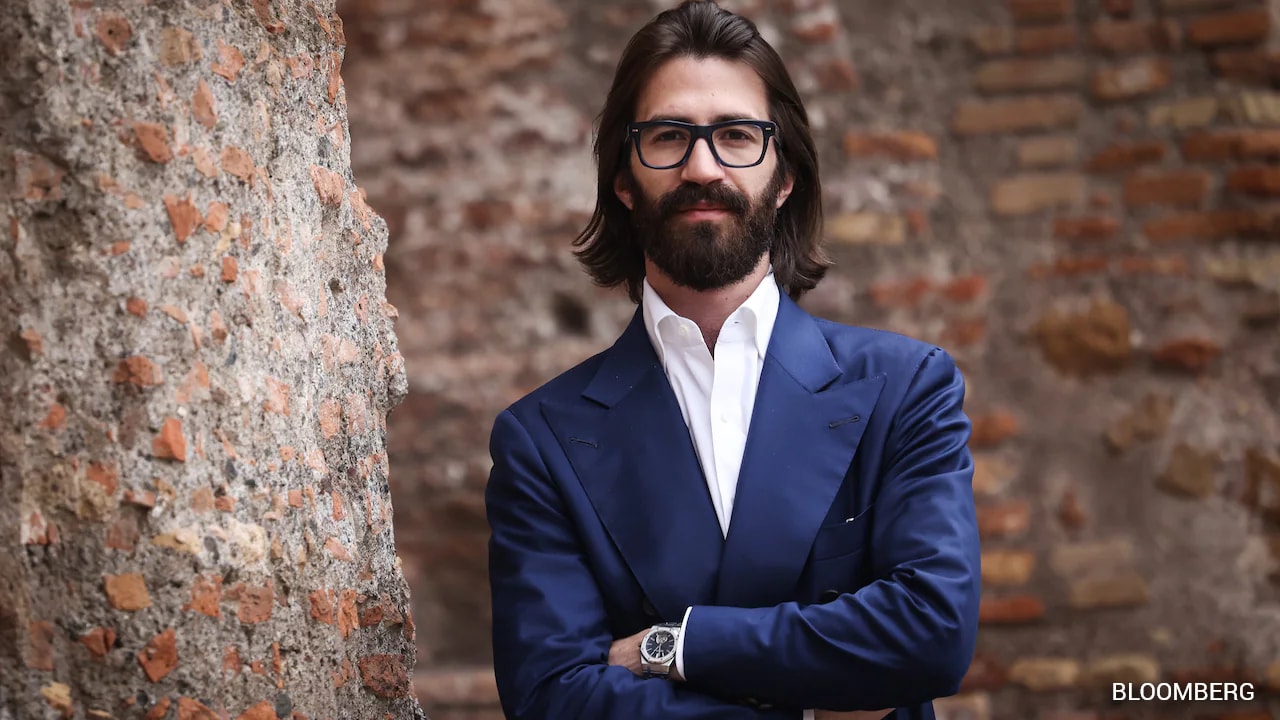
The latest explosion in this long-running family feud comes from Leonardo Maria Del Vecchio, the late founder's 31-year-old son. He has publicly turned up the heat on the company board, forcing a high-stakes showdown just days before a critical June 30 shareholder meeting. For another view, read: this related article.
This isn't just another story about rich kids fighting over yachts and real estate. The fight over Delfin is a battle for the steering wheel of a $100 billion industrial colossus. Delfin holds a dominant 32.4% stake in EssilorLuxottica. It is also the top shareholder in Italian bank Monte dei Paschi di Siena and maintains multi-billion euro positions in financial heavyweights like Assicurazioni Generali and UniCredit.
When a single family holding company controls that much strategic capital, its internal deadlock becomes a problem for the entire European business sector. Further analysis regarding this has been shared by Business Insider.
The Anatomy of an Eleven Billion Dollar Buyout
Leonardo Maria Del Vecchio currently serves as EssilorLuxottica's chief strategy officer and president of the Ray-Ban brand. He is currently the only direct heir actively working inside the operational business. He wants to end the gridlock that has frozen the family business since his father's passing.
His plan is aggressive. He wants to execute a €10 billion buyout to acquire the combined 25% stakes held by his siblings, Luca and Paola. If he pulls it off, his personal ownership inside Delfin will skyrocket from 12.5% to 37.5%. That would instantly make him the single largest individual shareholder, giving him a massive advantage in determining the company's future direction.
Instead of funding this out of pocket, Leonardo Maria is coordinating a massive private debt and bank financing package. He has been in intense negotiations with major institutions including UniCredit, BNP Paribas, and Crédit Agricole. The banks are willing to play ball, but they want guarantees. They need clarity on future dividend payouts, capital stability, and long-term corporate strategy.
That is where the plan hits a wall. Leonardo Maria took the unusual step of publishing a fiery open letter in Quotidiano Nazionale, a major Italian newspaper group that he happens to own. He openly blasted the Delfin board, accusing them of failing to take a clear, unified stance on the financing conditions. He questioned why the board started wavering and raising governance concerns only after a majority of shareholders had already approved the basic framework of his buyout.
The public nature of this attack shows how bitter the internal struggle has become. It's a direct challenge to the establishment running the company.
Why Equal Inheritances Cause Corporate Paralysis
To understand how the family reached this point, you have to look at the bizarre governance structure the patriarch left behind. Leonardo Del Vecchio built Luxottica from a tiny northern Italian workshop into a global monopoly. He was a corporate genius, but his estate planning created a structural nightmare.
He divided Delfin into eight identical 12.5% blocks. The stakes went to his six children from three different relationships, his widow Nicoletta Zampillo, and her son Rocco Basilico from a prior marriage.
Splitting a company equally among eight people with different mothers, different motivations, and different levels of business experience is dangerous. To make matters more complicated, the company bylaws require massive supermajorities—either two-thirds or 88% depending on the specific issue—to pass critical decisions.
The consequences of this setup have been disastrous for capital allocation.
- Frozen Dividends: Because the heirs can't agree, Delfin has been legally restricted to distributing just 10% of its baseline profits to shareholders. Billions in cash are effectively trapped.
- Board Vacancies: The shareholders haven't been able to agree on how to properly reconstitute the Delfin board, leaving a skeleton crew in charge.
- Unpaid Legacies: Even the cash payouts earmarked for the founder's most trusted executive allies have remained frozen in legal limbo for years.
Luca and Paola Del Vecchio previously tried to break away by moving their shares into separate entities to make them easier to trade or liquidate. The other heirs blocked them. With their exit options cut off, selling directly to their ambitious brother Leonardo Maria became the most viable path out of the family trap.
The Gatekeeper in the Middle of the Crossfire
You can't analyze this power struggle without looking at Francesco Milleri. He was the late founder's closest confidant, transitioning from an IT consultant to the absolute head of the empire. Today, Milleri holds the incredibly powerful dual role of chairman of Delfin and chief executive of EssilorLuxottica.
Milleri is the ultimate corporate insider. The late patriarch trusted him completely, giving him the operational keys to the kingdom. But the current board friction suggests that the relationship between the professional management team and the rising heir is deteriorating.
Leonardo Maria's public letter directly targets the board that Milleri leads. By accusing the board of shifting its stance and failing to provide transparent answers, the young heir is drawing a line in the sand. He is demanding that the professional executives stop managing the family fortune like a private fiefdom and start answering to the person who intends to own more than a third of it.
This introduces a classic corporate dilemma. Do you trust the seasoned, hand-picked professional executive who has successfully managed a global eyewear monopoly? Or do you back the young, aggressive blood relative who wants to consolidate power and reshape the family holding?
The Media Empire and the Private Money Trail
While the fight over Ray-Ban gets the headlines, Leonardo Maria has been busy building his own independent power base. He isn't just relying on his inheritance.
Through his personal investment vehicle, LMDV Capital, he has quietly assembled a diverse business portfolio outside the family empire. He has bought into high-end hospitality brands, beach clubs, healthcare firms, and real estate ventures.
Most importantly, he has bought heavily into Italian media. He controls a 30% stake in the daily newspaper Il Giornale and holds a controlling interest in the group that publishes regional titles across Italy. When he published his open letter attacking the Delfin board, he didn't leak it to an independent reporter. He published it directly on his own media platform.
That is an incredibly sophisticated power move. It signals to the Italian financial establishment that he has the wealth, the banking connections, and the media megaphone to control the public narrative. He is positioning himself not just as an heir, but as an independent industrialist who cannot be ignored by Wall Street or Milan.
Resolving Legal Minefields and Moving Forward
The path to the June 30 meeting has been messy. Just a few weeks ago, Leonardo Maria was locked in a nasty legal battle with his stepbrother, Rocco Basilico. Basilico had formally challenged the validity of the shareholder vote that approved the €10 billion buyout framework. In response, Leonardo Maria challenged Basilico's right to full ownership of his inheritance block.
The two heirs managed to reach a provisional agreement to drop their cross-lawsuits. That truce cleared a massive obstacle, but the underlying structural problem remains unsolved.
Even if the bank financing closes and Leonardo Maria successfully buys out Luca and Paola to reach 37.5%, he still won't have total control. The Delfin bylaws still require those crushing two-thirds and 88% voting thresholds for major structural changes. He will still need to build alliances with his remaining siblings and his stepmother to actually alter the dividend policies or remove board members.
The immediate next step rests on the upcoming annual general meeting. The board must address the financing demands of the lending banks. If the board refuses to provide the strategic guarantees the banks require, they risk collapsing the €10 billion buyout entirely. If that happens, the public war between the heirs and the executives will spiral out of control.
The reality of managing a massive family enterprise is that equality often equals inertia. If you find yourself designing a succession plan for a family business, remember the chaos gripping Delfin. Do not mistake equal distribution for stability. True stability requires clear lines of authority, decisive leadership, and an exit mechanism that doesn't require a ten billion euro bank loan just to settle a family dispute.


