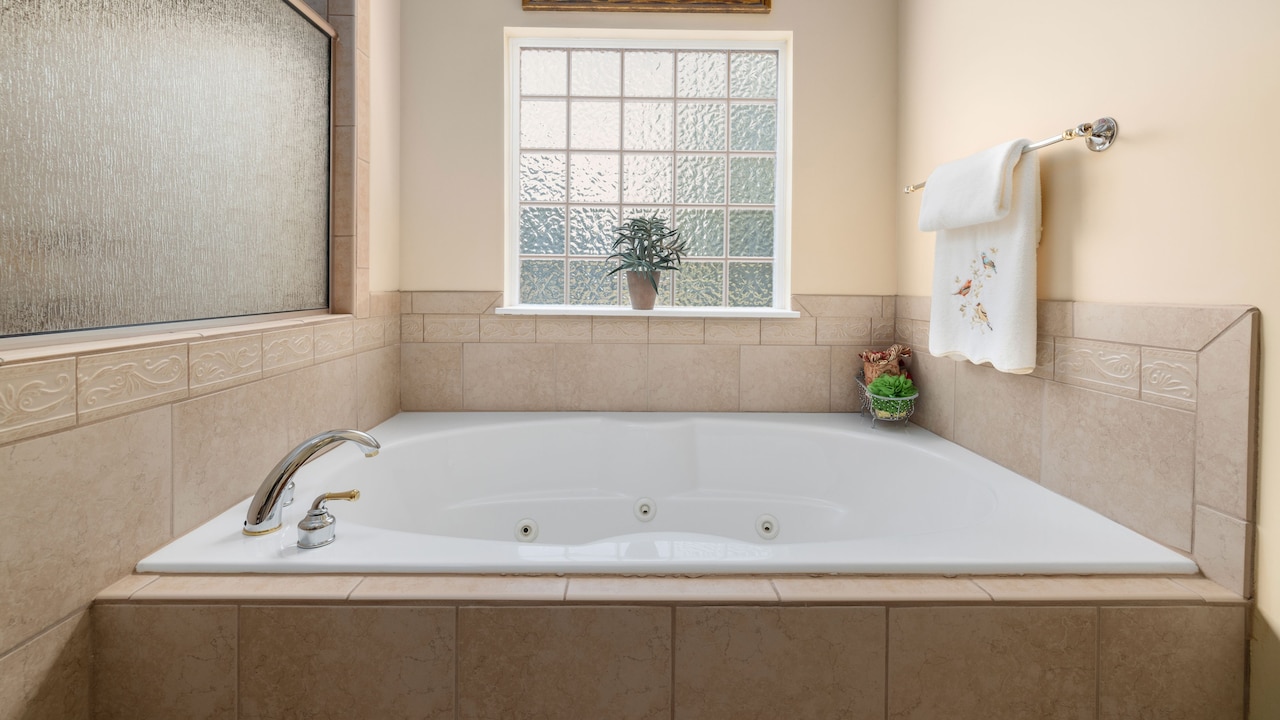
The media loves a miracle. When news broke that an elderly Oregon woman survived nine days trapped on her back in a bathtub, the internet did what it always does. It swooned. Headlines splashed words like "miraculous," "indomitable spirit," and "defying the odds." Warm, fuzzy human-interest pieces painted the tub as a vessel of survival, suggesting that water droplets from the tap or the ceramic insulation kept her alive.
It is a beautiful narrative. It is also dangerously wrong.
As an emergency medicine consultant who has spent fifteen years pulling bodies out of environments they should have survived—and environments they should not have—I am tired of the collective shrug we give to domestic design failures. Survival in these extreme scenarios has nothing to do with miracles. It has everything to do with cold, hard physics, metabolic slowdowns, and the sheer luck of environmental variables.
Worse, by framing this as an act of god or a triumph of the human spirit, we ignore the architectural death traps we build into our own homes. The truth is simple: the modern bathroom is engineered to kill you, and surviving a week inside one is a lesson in biology, not theology.
The Myth of the Hydrating Bath Tap
Let us dismantle the first and most pervasive lie told about this case: that she survived by drinking condensation or droplets from the faucet.
You cannot survive nine days on a few stray drops of rusty tap water while immobilized on your back. To understand why, you have to understand the human renal system. Under normal conditions, the human body requires roughly one to two liters of water daily to maintain glomerular filtration—the process by which your kidneys filter waste.
When you stop drinking, your body does not just politely ask for water. It enters a state of hypertonic dehydration.
Dehydration Timeline:
Phase 1: Saliva dries -> Cellular fluid shifts to bloodstream -> Heart rate rises.
Phase 2: Kidneys conserve water -> Urine becomes highly concentrated -> Toxins accumulate.
Phase 3: Blood volume drops -> Blood pressure plummets -> Multi-organ failure begins.
If she had been active, sweating, or exposed to direct sunlight, she would have been dead in seventy-two hours. Her survival was not due to "drinking from the tap." It was due to profound, involuntary metabolic conservation.
The Cold Ceramic Sarcophagus
People look at a porcelain or acrylic bathtub and see a household fixture. I look at it and see a massive heat sink.
The human body at rest generates about 100 watts of heat. In a standard room, air is a poor conductor, allowing you to retain that heat. But when you are pinned against a massive block of cast iron or dense ceramic, thermodynamic laws take over. Heat moves from a warmer object to a cooler one.
Normally, this causes hypothermia, which is a rapid killer. Why did it not kill her?
Because of a cruel metabolic paradox. The cool surface of the tub likely slowed her metabolic rate down to near-estivation levels. Like a hibernating mammal, her heart rate slowed, her oxygen consumption dropped, and her body’s demand for water plummeted. She did not survive because the tub was safe; she survived because the tub put her into a biological deep freeze, barely keeping her organs above the threshold of total shutdown.
This is not a "miracle survival strategy" you should hope to emulate. It is a biological tightrope where a two-degree shift in ambient temperature either way would have meant a corpse.
Why Your Bathroom is Engineered to Kill You
We obsess over outdoor survivalism. We buy water purifiers, tactical knives, and emergency blankets. Yet we ignore the most hazardous room in the house.
The bathroom is a masterclass in terrible design. It is small, constructed of slick, non-porous materials, filled with hard, angular edges, and isolated from the rest of the home behind heavy, acoustic-damping doors.
- The Leverage Trap: A standard bathtub is a deep, narrow trough. Once an individual loses the ability to pivot their hips or find friction on the wet acrylic, the tub becomes a physical lock. There is nothing to grip, nothing to push against, and no leverage to be gained.
- The Acoustic Dead Zone: Bathrooms are almost always tiled. Tile reflects high-frequency sound but absorbs low-frequency vibrations. When you scream for help inside a tiled room behind a closed, solid-core door, the sound bounces off the walls and dies before it reaches the hallway.
- The Hypothermia Accelerant: Water is 25 times more conductive than air. A damp environment, even without standing water, accelerates heat loss from the skin, speeding up the onset of exposure.
If you wanted to design a chamber specifically to trap an elderly or injured person and prevent their cries from being heard, you would design a modern bathroom.
Dismantling the "People Also Ask" Nonsense
When events like this go viral, search engines fill with questions from terrified homeowners. The answers provided by lifestyle blogs are overwhelmingly useless. Let us answer them with some cold reality.
"How long can you survive without water in a house?"
The generic internet answer is "three days." This is a lazy rule of thumb. In reality, survival time is entirely dependent on ambient humidity and physical exertion. If you are trapped in a humid, cool basement without moving, you can survive up to ten days. If you are trapped in a hot attic, you will be dead in forty-eight hours. The variable is sweat, not time. Stop counting days and start counting ambient temperature.
"Can you drink bathwater to survive?"
Absolutely not if it is soapy or stagnant. Consuming gray water induces vomiting and diarrhea. In a survival scenario, gastrointestinal distress is a death sentence. It evacuates whatever precious hydration you have left in your colon and accelerates cardiovascular collapse. If you are trapped, ignore the dirty water. Focus on heat retention.
"Should I install grab bars even if I am young and healthy?"
Yes. The pride that prevents people from installing basic safety hardware is the leading cause of domestic orthopedic injuries. A slip in the shower at age thirty can leave you with a herniated disc; at eighty, it leaves you trapped for nine days. It is not an "old person" accessory; it is basic risk mitigation.
The Uncomfortable Truth About Safe Design
The solution to this is not celebrating the rare, statistical anomalies who survive these ordeals. The solution is demanding better home design.
We have building codes for electrical wiring, staircase rise and run, and window placement. Yet we allow contractors to install deep, slick soaking tubs in homes intended for aging populations without a single structural anchor point for support.
If you want to prevent your loved ones from becoming a sensationalized news story, stop relying on miracles. Do the unglamorous work. Strip out the deep, high-walled acrylic tubs. Install low-threshold walk-in showers. Replace hollow-core bathroom doors with doors that can be popped off their hinges from the outside. Mount commercial-grade grab bars into the wall studs—not with suction cups, but with heavy-duty toggle bolts.
Relying on your body's ability to enter a near-death metabolic freeze while lying on hard porcelain is a terrible retirement plan. The universe does not hand out miracles to those who ignore basic physics. It just occasionally forgets to collect the bill.