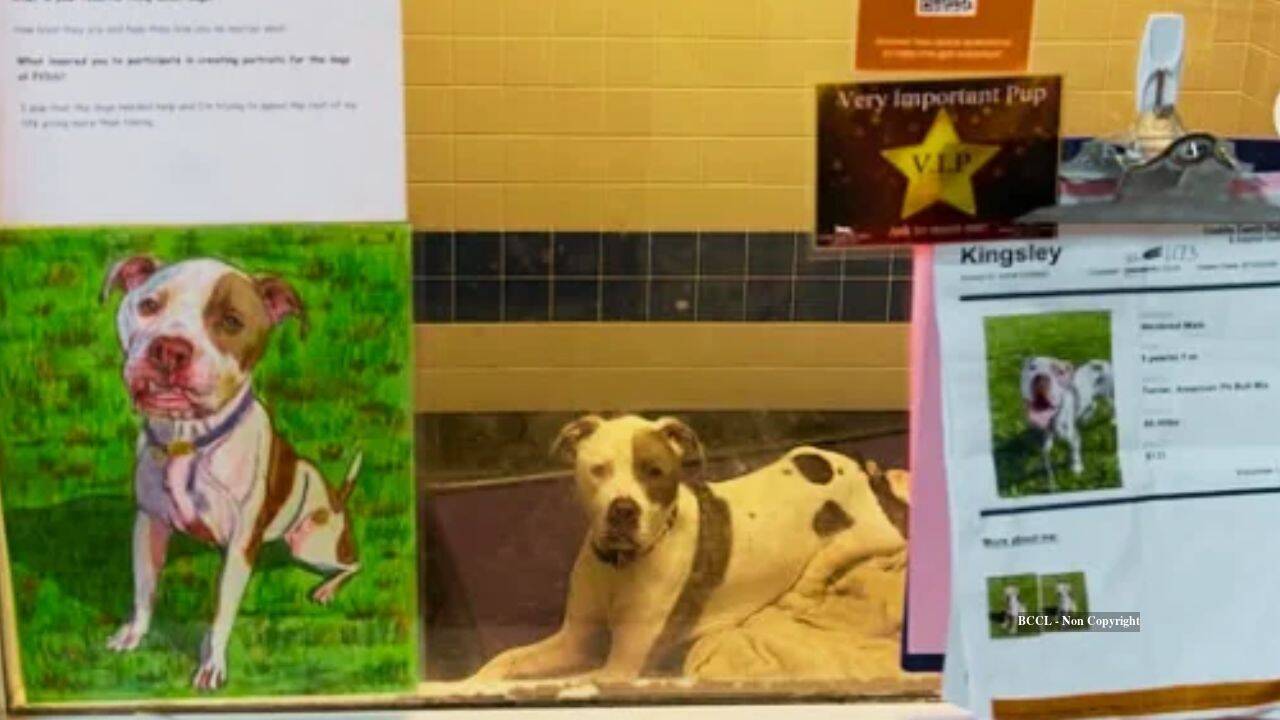
In an Ohio county jail, incarcerated artists put paint to canvas to create custom portraits of overlooked shelter dogs, an initiative that directly led to 18 animals finding permanent homes. While local headlines treat this as a simple feel-good story, the reality runs much deeper into the economics of municipal animal shelters, the psychology of correctional rehabilitation, and the hard marketing truth of pet adoption. Standard shelter photography often fails long-term canine residents, leaving them to languish in concrete runs while municipal budgets bleed dry. By pairing inmates with art supplies and shelter rosters, administrators accidentally stumbled onto a dual-purpose solution that bypasses bureaucratic gridlock and forces the public to look twice at animals they would otherwise scroll past.
Most local news outlets stop at the heartwarming surface. They show a smiling sheriff, a colorful painting of a pit bull mix, and a happy family walking out of a shelter lobby. That framing misses the structural failures that made such a program necessary in the first place. Municipal shelters across the Midwest are operating at or beyond capacity, driven by inflation, housing restrictions, and post-pandemic surrender surges. Simultaneously, county jails remain warehouses for individuals awaiting trial or serving short sentences, often with minimal access to meaningful cognitive programming.
The Marketing Failure of the Modern Animal Shelter
Walk into almost any county dog pound or browse its website, and you will see the same visual disaster. Harsh fluorescent lighting bounces off cinderblock walls. A terrified terrier presses itself against a chain-link fence, eyes wide, ears pinned back, captured in a blurry smartphone photo taken by an exhausted kennel tech.
Adopters do not buy dogs; they buy a projected future. When a prospective owner looks at a standard intake photo, their brain registers stress, confinement, and potential behavioral baggage. Even the sweetest family companion looks like a liability under bad lighting behind steel bars. Animal welfare researchers have known for years that visual presentation is the single strongest predictor of length of stay for shelter pets, often outweighing breed, age, and size.
This is where the Ohio jail portrait program disrupted the standard adoption funnel. A hand-painted portrait does something a photograph rarely achieves in a crowded digital feed. It strips away the institutional environment entirely.
Instead of a prisoner behind bars, the viewer sees a subject worthy of artistic labor. The brushstrokes soften harsh features. The chosen color palettes inject warmth and personality onto the canvas. When those portraits are displayed alongside the dogs—or posted on social media feeds saturated with identical intake mugshots—the cognitive friction stops the scroll. Adopters suddenly perceive the dog as an individual with a soul, rather than an inventory number waiting for an expiration date.
Why 18 Adoptions Matter More Than You Think
Eighteen dogs might sound like a modest number to an outsider, yet anyone who has managed a shelter ledger knows the compounding math behind that figure. Every dog occupying a municipal kennel represents a daily drain on taxpayer funds, staff hours, medical supplies, and sanitation resources.
Consider a hypothetical example of a mid-sized county shelter operating with 40 total kennels. If 18 of those runs are occupied by "long-timers"—dogs passed over for months due to age, coat color, or breed stigma—nearly half the facility's capacity is frozen. Intake stalls. Stray dogs on the street cannot be picked up, or worse, euthanasia rates spike to clear floor space for incoming cruelty cases.
Moving 18 hard-to-place dogs out the door does not just save those 18 lives. It unlocks immediate rotational capacity for dozens of subsequent animals over the following months. The portraits acted as a targeted liquidity injection for a jammed system.
Inside the Cellblock Economy of Purpose
To understand why inmates poured hours of intense focus into painting dogs they had never met, you have to understand the crushing monotony of county lockup. State prisons, for all their flaws, usually offer long-term vocational tracks, libraries, and structured industry. County jails are transient holding pens. Time moves differently there. Days bleed together in fluorescent gray, defined by headcounts, commissary schedules, and the low-grade anxiety of pending court dates.
Idleness in a correctional facility is not neutral; it is corrosive. It breeds depression, institutional friction, and recidivism.
When jail administrators introduce an art program tied to a tangible external outcome, the psychological dynamic shifts immediately. Psychologists studying correctional environments refer to this as prosocial identity reconstruction. For months or years, an incarcerated person is defined entirely by their worst mistake, reduced to an armband number and a booking sheet.
Giving that person a brush, acrylics, and the responsibility of helping a homeless animal survive flips the script. Suddenly, they are no longer just a liability to society; they are an active contributor. They possess agency.
The Mechanics of Earned Empathy
There is a specific, quiet discipline required to paint a portrait from a reference photo. The artist has to study the curve of an ear, the catchlight in an eye, the asymmetry of a snout. That prolonged attention forces a state of mindfulness rarely accessible in a noisy pod.
More importantly, it builds a bridge of empathy without triggering defensive posturing. Many individuals cycling through county jails carry deep trauma and distrust toward authority figures and other people. Asking them to open up in a traditional group therapy circle often hits a brick wall of pride and self-preservation.
Dogs carry zero judgment. Painting a shelter dog allows an incarcerated artist to practice care, patience, and emotional investment safely. When word filters back to the cellblock that a specific painting helped a dog get adopted, the validation is immediate and undeniable. That feedback loop reinforces a simple truth that punitive systems routinely fail to teach—that their hands can build something valuable.
The Unspoken Friction and Institutional Pushback
Whenever a correctional facility partners with an animal welfare group, the PR rollout looks effortless. Behind the scenes, these programs survive only because a handful of stubborn staff members refuse to let bureaucracy kill them.
Corrections culture is built on risk aversion. To a jail commander, every outside object entering a housing unit is a potential weapon, a piece of contraband, or a logistical headache. Paintbrushes have wooden handles that can be snapped and sharpened. Certain pigments contain toxic solvents. Canvases can conceal hidden items.
Getting an art program approved requires exhaustive vetting. Supplies must be strictly inventoried before and after every session. Brushes are often restricted to short, flexible plastic handles. Paints must be non-toxic and water-based. One misplaced supply item can trigger a facility-wide shakedown and permanent cancellation of the initiative.
The Critics in the Comment Section
Beyond internal security hurdles, sheriffs and shelter directors have to navigate predictable public backlash. Whenever tax-funded institutions announce creative programming for inmates, a vocal segment of the public reacts with outrage. The argument rarely changes—why are people accused or convicted of crimes getting art classes while law-abiding citizens struggle to pay bills?
This criticism fundamentally misunderstands both the funding mechanisms and the return on investment. Most jail-based art and animal programs operate on zero taxpayer dollars, relying instead on donated brushes, leftover house paint, community grants, or commissary profit funds generated by inmates themselves.
Even if public funds were used, the fiscal argument holds no water. Keeping a cellblock calm reduces overtime pay for correctional officers, cuts down on medical costs from inmate altercations, and lowers the likelihood of an individual reoffending upon release. A single avoided felony re-arrest saves a county tens of thousands of dollars in court, policing, and detention expenses.
Why Most Feel-Good Jail Programs Quietly Die
The graveyard of criminal justice reform is full of brilliant pilot programs that vanished the moment a progressive sheriff retired or a passionate volunteer burned out. Sustainability is the Achilles' heel of grassroots partnerships.
In the Ohio portrait initiative, the magic relied heavily on coordination between two entirely different worlds—law enforcement and animal rescue. Both sectors suffer from chronic understaffing and high turnover. If the shelter's volunteer coordinator leaves, the reference photos stop arriving at the jail. If the jail's programs sergeant gets reassigned to road patrol, the art supplies sit locked in a storage closet until the paint dries out.
Furthermore, novelty wears off. The first batch of portraits generates local television coverage and a spike in shelter foot traffic. By the fourth or fifth batch, the local media moves on to the next weather event or city council scandal. Without a permanent digital pipeline—such as automated auction platforms, consistent social media integration, or partnerships with local coffee shops to display the art—adoption momentum inevitably slows.
Separating Real Impact from Correctional Washing
As a veteran observer of both municipal governance and institutional reform, I look closely at who benefits most when a program goes viral. There is a legitimate ethical gray area in prison and jail labor, even when that labor is voluntary and artistic.
Critics rightly point out that correctional facilities sometimes use heartwarming community partnerships to polish their public image while ignoring systemic issues inside the walls—such as inadequate mental health care, predatory phone rates, or subpar nutrition. Celebrating 18 adopted dogs should never serve as a smokescreen for inhumane detention conditions.
At the same time, perfection cannot be the enemy of immediate relief. For the 18 dogs sleeping on living room rugs instead of concrete floors, the philosophical debate over correctional optics is irrelevant. For the inmates who spent three hours a day lost in color mixing instead of staring at a ceiling, the relief was real.
The true measure of success for initiatives like this is not the initial press release. It is whether the model is simple, cheap, and repeatable enough to survive leadership changes.
What Other Counties Get Wrong When Copying the Model
When stories like this break out of Ohio and hit national syndication, dozens of county administrators attempt to replicate them within weeks. Most fail within six months because they overcomplicate the execution.
They try to build elaborate puppy-training programs inside jails that were never designed to house animals. Dog-training programs are phenomenal when done right, particularly in state prisons with outdoor yards and long-term residents. In a county jail where the average stay is measured in weeks, bringing live animals onto the floor creates massive liability, sanitation bottlenecks, and constant disruption when inmate handlers suddenly bond out or get transferred.
The portrait model succeeds precisely because the animals never enter the jail.
It bypasses every biosecurity risk, allergy concern, liability waiver, and sudden-release complication associated with live-animal programs. All it requires is a printer for reference photos, basic acrylic supplies, a secure room for two hours twice a week, and a shelter worker willing to pick up the finished canvases.
The Blueprint for High-Impact Shelter Partnerships
If animal shelters and county jails want to turn a one-off viral moment into permanent infrastructure, they need to treat the art not as a cute craft project, but as a commercial-grade adoption engine.
First, shelters must stop handing inmates photos of their easiest-to-adopt puppies. Puppies sell themselves within hours of hitting the adoption floor. The canvas space should be reserved exclusively for the invisible population—senior dogs, black-coated breeds, bonded pairs, and animals with medical quirks that scare off casual browsers.
Second, the artwork needs to follow the dog. Including the original inmate-painted portrait as a complimentary gift with the adoption fee creates an immediate heirloom for the adopter. People love a story attached to their pet. Telling guests that a shelter dog came with a custom portrait painted by an incarcerated artist turns an adoption into a conversation piece, driving word-of-mouth referrals back to the shelter.
Third, shelters should auction prints or high-resolution scans of the portraits online while the dog is still available, funneling the proceeds directly into a dedicated medical fund for heartworm treatments and orthopedic surgeries. That closes the financial loop, paying for both the art supplies and the veterinary bills that keep hard-to-place dogs alive long enough to find a home.
Eighteen dogs walked out of an Ohio shelter because people behind bars gave them a dignity the camera lens could not capture. Until municipal shelters fix how they present their animals—and jails rethink how they treat human potential—a few dollars' worth of acrylic paint remains one of the smartest investments either institution can make.