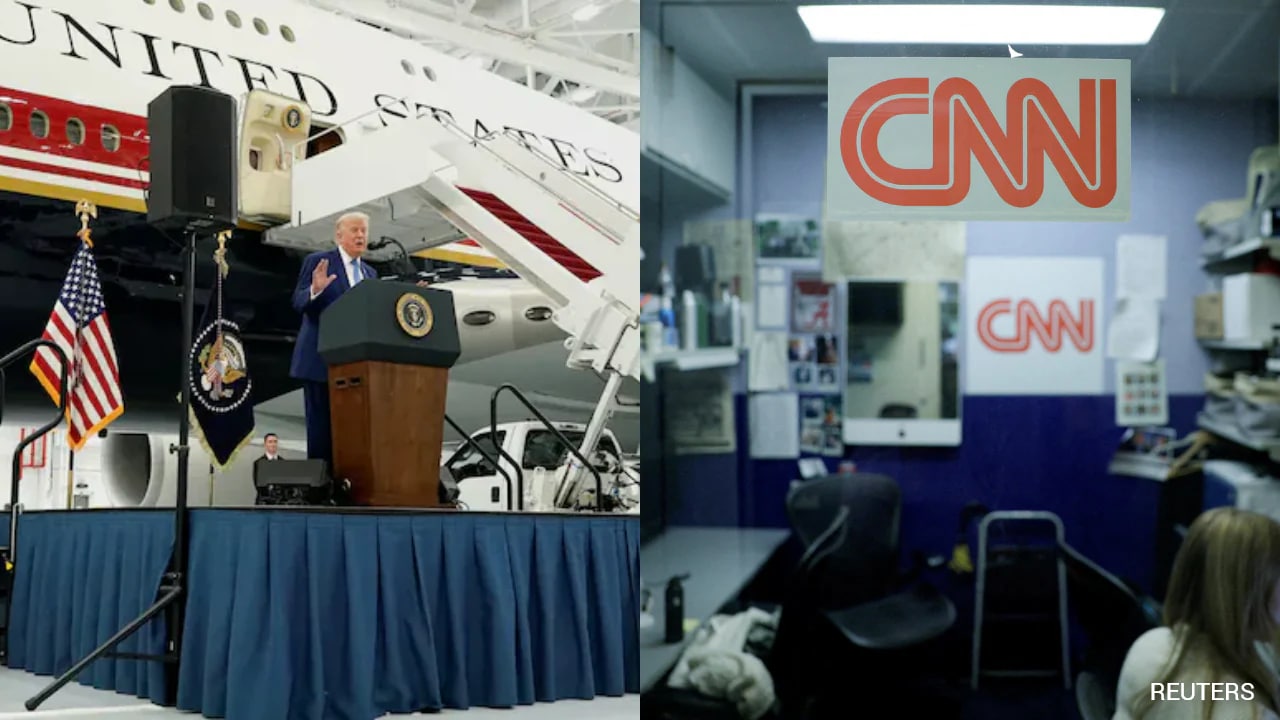
Everybody is losing their minds over press access. The collective hand-wringing across media Twitter whenever a political administration restricts a network from boarding Air Force One follows a predictable, exhausted script. We get the solemn op-eds about the sanctity of the Fourth Estate, the breathless warnings about authoritarian creep, and the sanctimonious declarations that democracy dies in a dark cabin flying at 30,000 feet.
Stop buying the outrage.
The lazy consensus treats physical proximity to power as objective proof of journalistic integrity. If you are on the plane, you are holding power accountable. If you are left on the tarmac, freedom of the press is bleeding out. It is a comforting myth peddled by legacy institutions that care more about their VIP badges and institutional perks than the actual craft of reporting.
Strip away the melodrama, and you realize that traveling in the press pool on Air Force One is not an adversarial interrogation room. It is a co-dependent luxury resort.
I have watched reporters trade their independence for the privilege of munching dry turkey sandwiches out of the same galley as the Chief of Staff. When you spend hours breathing recycled air with administration officials, swapping casual gossip in the press cabin, and feeling the warm glow of being part of the inner circle, your edge blunts. The access becomes the asset. And when you protect the asset, you stop asking the questions that actually make people uncomfortable.
The notion that credentialing disputes equal censorship is a category error. A government airplane is government property, not a public square. Denying a specific network a seat on a charter flight does not stop them from broadcasting, reporting, publishing, or filing Freedom of Information Act requests. It forces them off the government-subsidized tour bus and back onto commercial travel where they belong—observing from the outside rather than participating in the choreography.
The Myth of the Access-Driven Watchdog
Let us look at how the pool actually functions. For decades, the pool report has operated as an administrative convenience disguised as an investigative vanguard. A handful of reporters rotate through the cabin, pool their notes, and distribute them to the rest of the industry.
What actually happens on those flights? Most of the time, it is background chatter, off-the-record spin sessions, and carefully managed photo-ops. The administration gets to dictate the tempo of the news cycle by dropping hints to reporters who are desperate for a scoop to justify their travel budget. It is access journalism in its purest, most compromised form.
When an administration yanks credentials from a major outlet, the outcry assumes that the network was doing hard-hitting, aggressive accountability reporting that rattled the West Wing. More often than not, exclusion is a retaliation for tone, not a response to rigorous scrutiny. But the solution to bad behavior by politicians is not clutching pearls about norms that were broken long before this administration took office. The solution is recognizing that the press pool was never a sacred trust. It was a PR arrangement.
If you rely on a seat next to the press secretary to do your job, you are not an independent investigator. You are a dependent passenger.
Why Removal Breeds Better Reporting
Look at what happens when journalists are shut out. They stop relying on spoon-fed press gags at the back of the plane. They are forced to dig into local records, track regulatory filings, analyze data sets, and talk to mid-level bureaucrats who actually understand how policy breaks down on the ground.
Physical exclusion destroys the lazy habit of stenography. When you cannot ask a quick question as the President steps down the stairs into the rain, you have to build an airtight case using primary sources. You stop being a passive recipient of proximity and start acting like an investigator.
We romanticize the golden age of political journalism as an era when brave reporters cornered powerful men in smoke-filled rooms. The reality is that those rooms were filled with mutual back-scratching. The reporters got their exclusive quotes; the politicians got their preferred framing. By cutting off access, administrations inadvertently shatter the cozy cartel of insider journalism. They make it harder for networks to play the courtier and easier for them to rediscover their teeth.
The Real Threat to the Press
The real danger to modern journalism is not an empty seat on a presidential charter. It is the voluntary surrender of skepticism in exchange for institutional proximity.
When newsrooms spend millions of dollars and countless hours fighting legal battles over charter seats, they are signaling to the public that their primary concern is status, not substance. They want the badge, the lanyard, and the photo on the tarmac. Every hour spent complaining about plane seating is an hour not spent investigating procurement corruption, judicial appointments, or legislative backroom deals that actually affect millions of lives.
The public sees right through this theater. They watch media organizations throw tantrums over elite perks while everyday economic realities slip past unexamined. That disconnect is why trust in mainstream media sits in the basement. People do not hate the press because politicians ban them from airplanes; they hate the press when it acts like a bruised aristocracy mourning the loss of its royal box.
Stop Fighting for the Wrong Battles
If you want a vibrant, adversarial press corps, stop mourning the loss of the press pool seat. Celebrate the eviction.
Being an outsider is the native state of a true journalist. The moment you become comfortable enough to board the presidential aircraft without a second thought, you have already lost the argument. Let the politicians fly alone. The best reporting has always been done from the ground anyway.